Jakarta is a massive city — its urban area is ranked second most populous in the world, after Tokyo, at an estimated 34 million people – with terrible traffic, a cruise port well away from the urban centre, and no reliable public transit to the port. So, much as we dislike ship-organized tours, that was our only real option if we wanted to see anything of the place.
Interestingly, because of the layout of the port, the Queen Elizabeth was actually backed several hundred metres to her docking slot, which we got to watch while having breakfast.
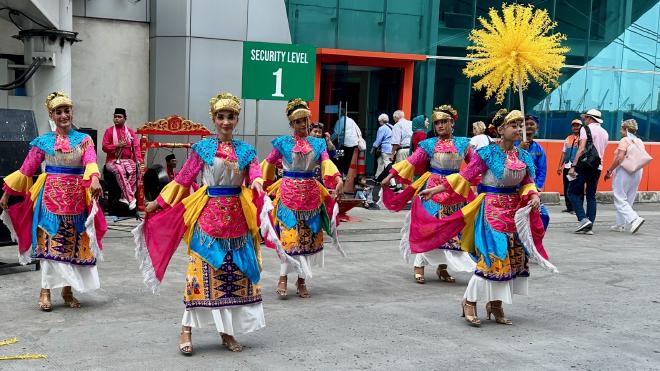
We were met by traditional dancers and musicians as we left the ship.
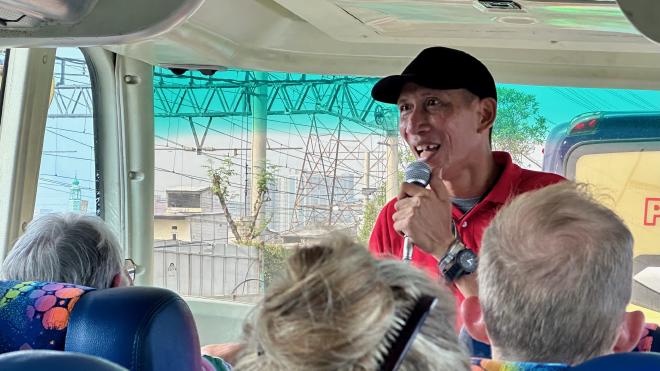
Our tour guide, Aire Saksono, had a terrific sense of humour and was cracking jokes almost continuously. He did a great job of making our time stuck in traffic more bearable. And we were better off than most traffic, as our tour bus convoy had a police escort directing traffic around us. (Which likely made things even worse for the other drivers. Conflicted? Us? Yes.)
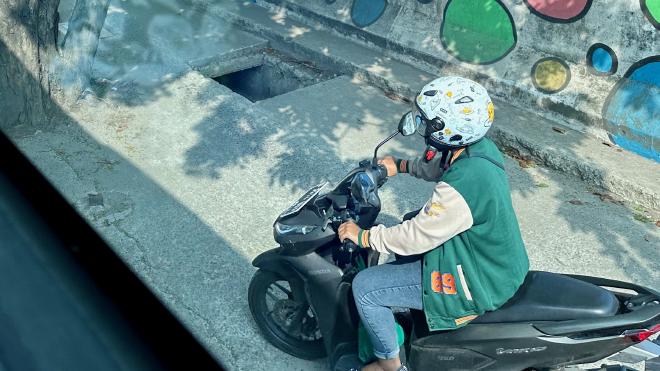
If you want to get around Jakarta kind-of quickly, motorcycle is your best option. You see them everywhere, splitting lanes and, as here, riding on the sidewalks. Motorcycle taxis are a big thing in the city, recognizable by the green helmets their drivers wear. But the sidewalks are nothing like safe – most of the stretch from the port into the city centre had huge, open holes, like this one.
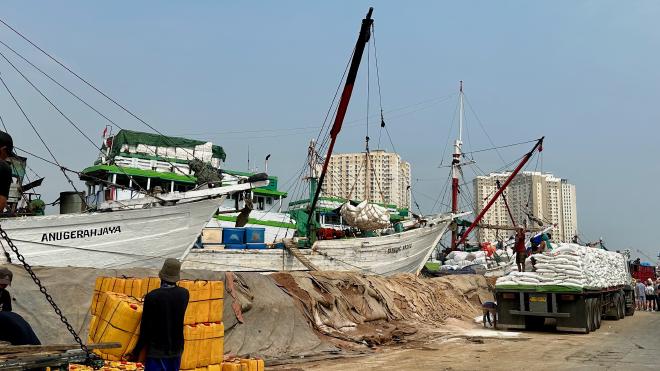
Our first stop was Sunda Kelapa, the old port of Jakarta. The only ships allowed here are pinisi, the traditional Indonesian wooden two-masted sailing ships. These carry cargo to the other Indonesian islands, of which there are over 17,000. All the pinisi have been converted over to diesel power, but there is talk of switching some back to sail, at least partially.
From Sunda Kelapa we next went to Taman Mini Indonesia Indah (“Beautiful Indonesia Mini Park”), a theme park showcasing Indonesian culture. It is organized into pavilions, one for each of Indonesia’s provinces, which demonstrate the traditional architecture, art, and clothing of each. The park also houses recreation facilities, restaurants, and fifteen different museums covering everything from insects to oil and gas.
From the port to the park is 32 kilometres. It took us well over an hour to get there, even with our escort, and mostly on major highways. See what I mean about the traffic?
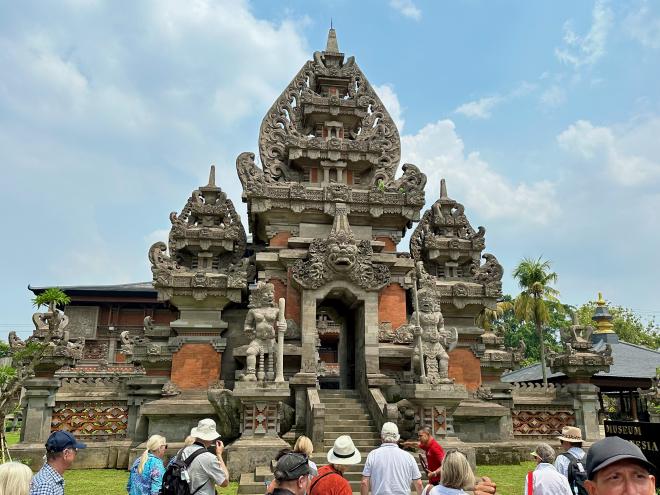
This is the entrance to the Indonesia Museum, which is constructed in Balinese style. It provided a good overview of Indonesia as a whole – and Indonesia is a big, complicated country with a complicated history. One exhibit talked about the planned move (next year!) of Indonesia’s capital from Jakarta, where it’s been since independence in 1945, to Nusantara on the island of Borneo. The official reason is to more equitably distribute economic activity, which is currently very concentrated on the island of Java. The unofficial reason is that Jakarta is sinking.
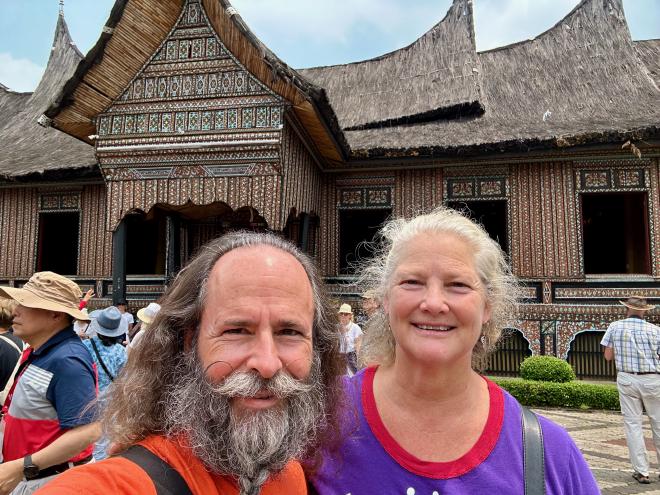
From the museum we went to the West Sumatra pavilion, which featured beautiful inlay-work on all the buildings.
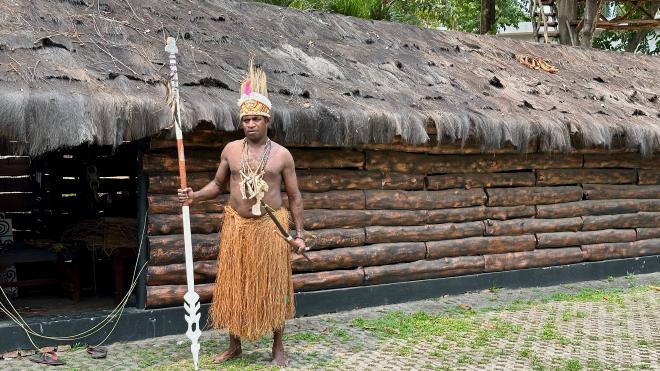
Our final stop at Taman Mini was at the Papua pavilion. This gentleman was in shorts and a t-shirt when we arrived, but he quickly scurried into the longhouse behind him and changed for our photographs. Papua is the least-developed province in Indonesia.
As it always seems with this type of tours, our visit to Taman Mini was far too rushed – we could easily see spending several days there visiting all the pavilions and museums to get a more in-depth appreciation of Indonesia, its people, and its culture. Perhaps if we ever go back.
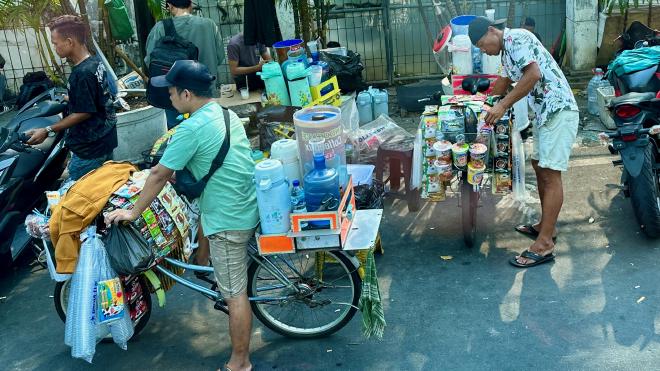
En route to our next stop Greg managed to snag this photo of the ubiquitous bicycle vendors, here selling water, coffee, and snacks at a motorcycle taxi stop.
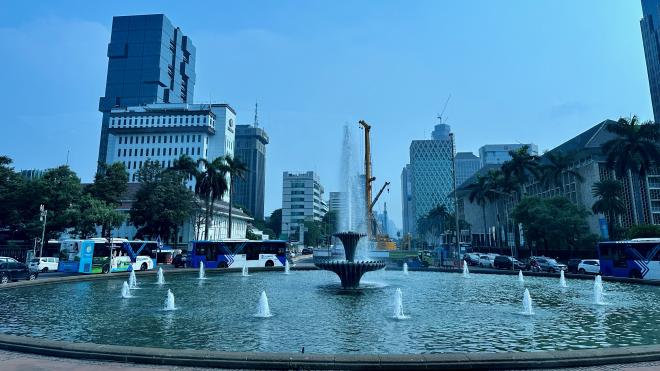
Of course, Jakarta is the capital of a large and rapidly-developing country, and parts of it are modern and indistinguishable (at a distance) from any other big city.
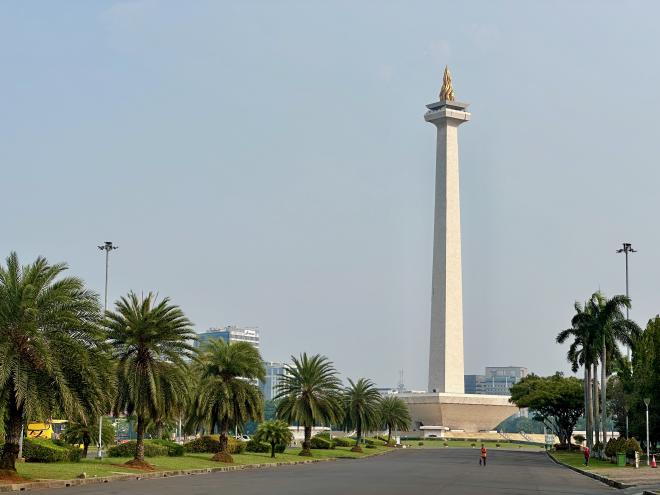
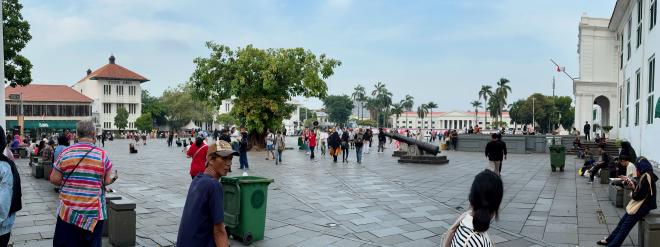
There’s a lot more to see in the Square, but unfortunately we only stopped there long enough for a few photographs.
Our final stop of the day was Kota Tua Jakarta, the Jakarta Old Town. This is the remainder of Old Batavia, the 17th century Dutch settlement, and has a distinctly Dutch architectural flavour.
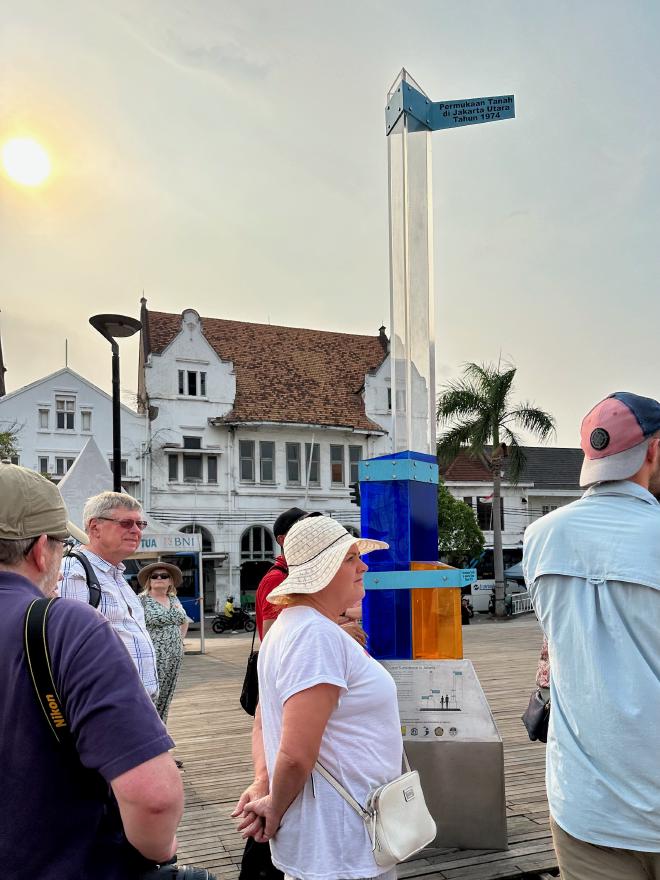
In the centre of Kota Tua is this display, erected by The Project for Promoting Countermeasures against Land Subsidence in Jakarta. The three blue bands represent the ground levels in 1974 of (bottom to top) East Jakarta, West Jakarta, and North Jakarta. Much of the sinking has been blamed on the excessive exploitation of groundwater, to support Jakarta’s enormous population.
Fatahilla Square is the centre of Kota Tua. Unfortunately this is as much of it as we saw.
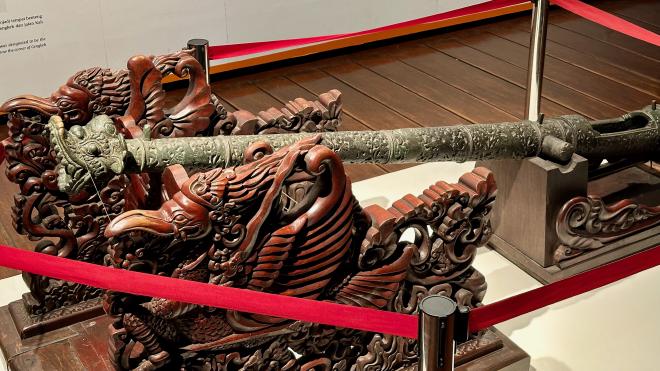
While in Kota Tua we paid a brief visit to the Jakarta History Museum, where we saw this ornate canon. The museum contains a mix of exhibits, many of which focus on the history of Indonesia during the Dutch colonial era.
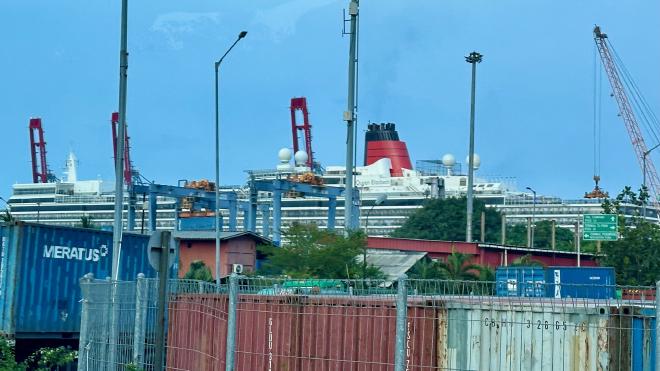
From Kota Tua it was back to the Queen Elizabeth. Here you can see her poking up above the cargo-handling equipment in the industrial port.
The Queen Elizabeth pulled out of port while we were eating dinner, forwards this time, and we were on our way to Bali.