Our next port of call was Safaga, an important industrial port on the Red Sea but also a (more-or-less) reasonable jumping-off point for a visit to Luxor, which includes the Valley of the Kings and the Karnak Temple Complex.
As a rule, we don’t like doing tours that are organized by cruise lines since they tend to be (a) for forty people at a time, which is too large a group, (b) expensive, and (c) rushed. However, to visit Luxor there was no other viable choice, so we’d booked the tour in advance of departure. (If you’re doing an organized tour, the one advantage of doing a tour organized by the cruise line is that the ship will wait for you if you’re late getting back. Privately organized tours, not necessarily.)
However, when we boarded the ship we were regretfully informed by the Purser’s staff that the Egyptian Government had recently begun requiring visas for all Canadians and that it was only possible to obtain one at a consulate. Without a visa we would not be permitted to leave the ship. So we cancelled the tour and took a refund, consoling ourselves that maybe we’d dodged an unpleasant experience.
Then, the very next day, we were told that the Egyptian Government was making a one-time exception for Canadians on our cruise, and we would be able to go ashore after all. After a bit of agonizing, we decided to rebook.
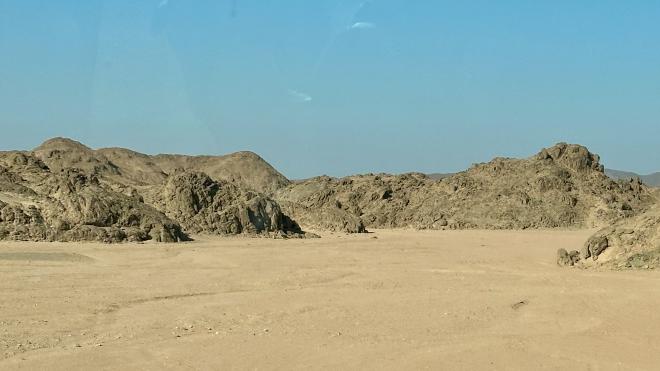
We left the ship at 6:30 in the morning, loaded into our bus (we were number seventeen of eighteen buses going to Luxor), and headed west across the desert. This was the landscape for the first couple of hours.
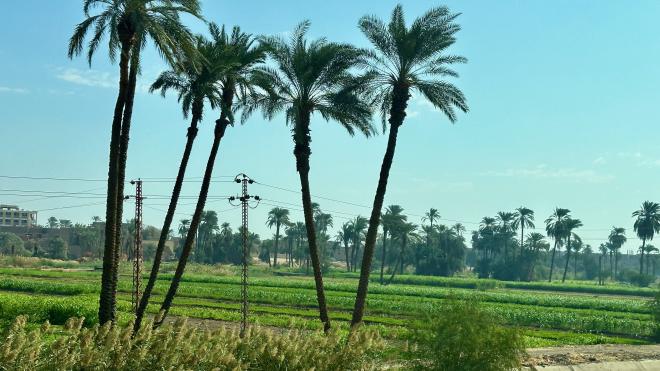
Eventually we reached the Nile and its tributaries, and found ourselves in lush farmland.
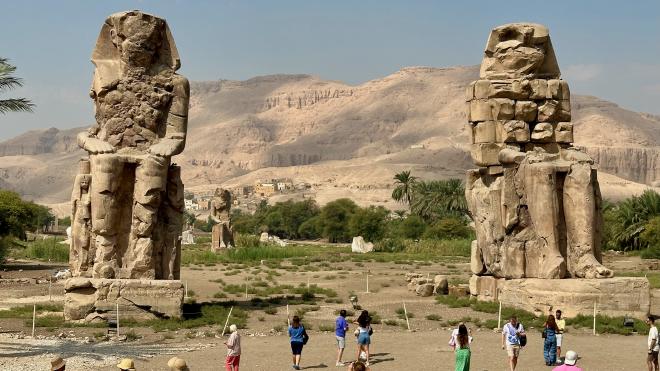
Our bus stopped briefly at the Colossi of Memnon for a photo opportunity. This was also an opportunity for the hordes of vendors to descend on us, hawking alabaster carvings, clothing, painted papyrus, and all manner of other kitsch. Everything is “just one dollar”, unless you’re crazy enough to actually pull out your wallet, at which point the hard-sell starts. We are attempting to buy nothing on this trip, other than a souvenir magnet for each city, so saying “no” was pretty easy.
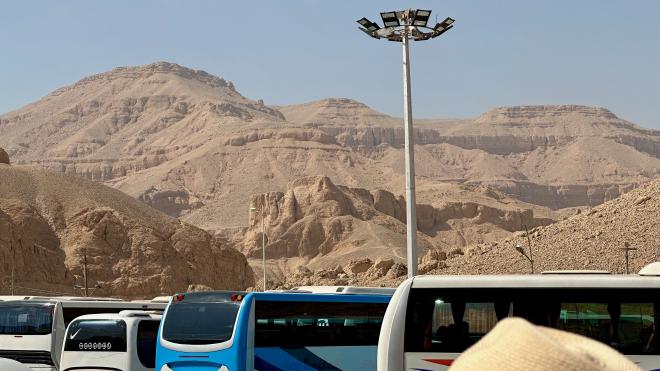
Eventually, after about four hours on the bus, we arrived at the Valley of the Kings.
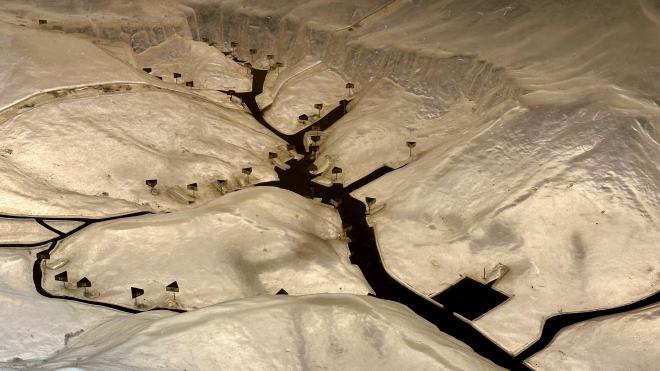
After running the obligatory gauntlet of vendors (here formalized in an actual bazaar), we were in the entry lobby where we found this three-dimensional map of the Valley. Each of the points marked by the triangular blocks is a tomb site. There are a total of sixty-four known tombs in the Valley, the most recent having been discovered in 2011. Not all of them are open to the public. Those that are, are open on a rotating basis, just a few each day, to help conserve them.
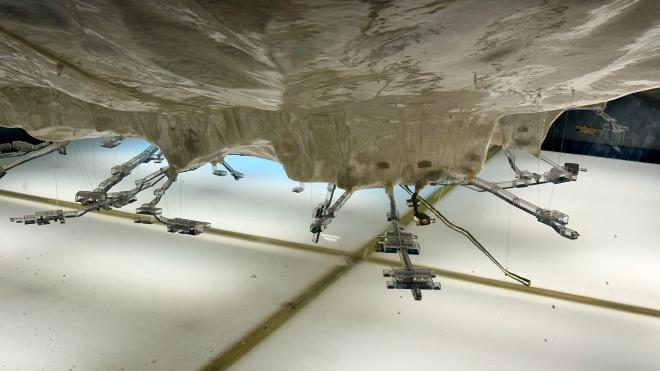
This is the more interesting side of the map, showing the tombs under ground. To Greg, they looked vaguely reminiscent of space stations.
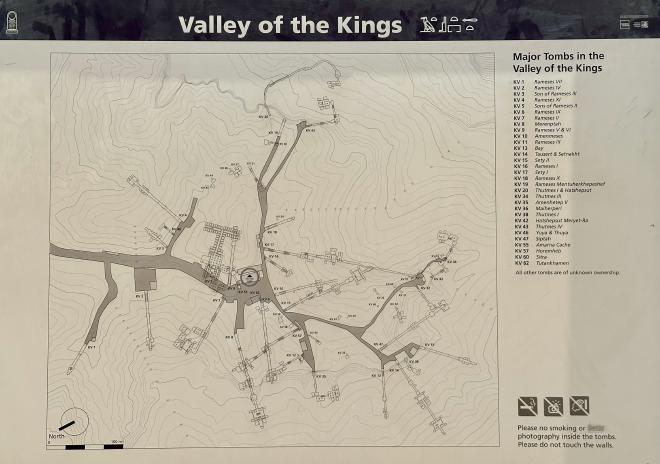
A ticket to the site entitles you to visit three of the tombs that are open that day. A couple of the tombs, including the tomb of Tutankhamen, require a special ticket that wasn’t included in our tour. We visited the tombs of Rameses IV (KV 2), Rameses IX (KV 6), and Rameses I (KV 16). The story behind “KV” numbering is a bit complex, but numbers roughly indicate order of discovery.
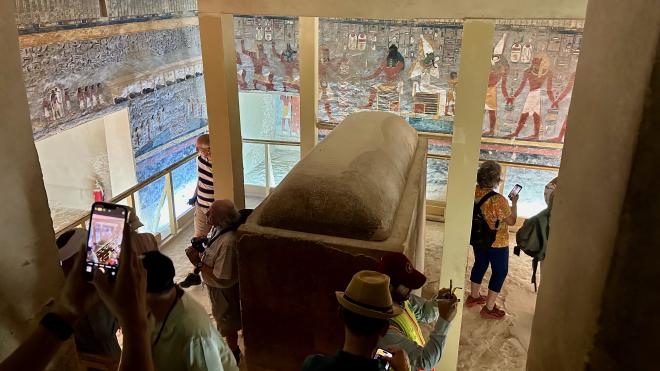
The tomb of Rameses IV, dating from about 1149 BCE, is a long, straight series of corridors terminating in this burial chamber. All the mummies from the Valley have been moved to museums, except for the mummy of Tutankhamen.
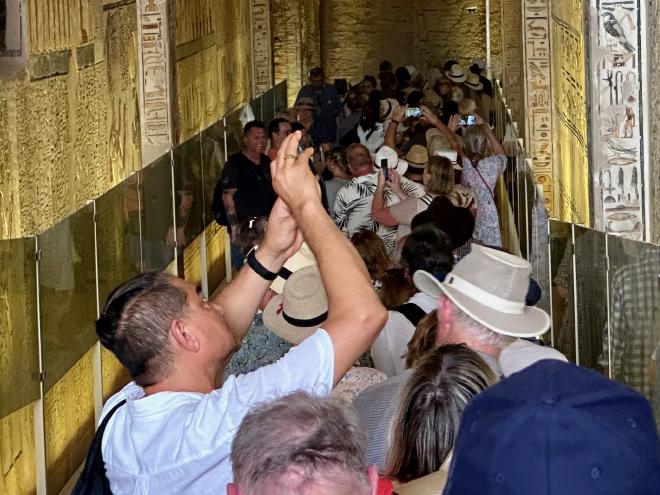
Our guide gave us “ten minutes” to visit each tomb. This actually ended up being more like twenty minutes, because of the long queues – but it still felt very rushed.
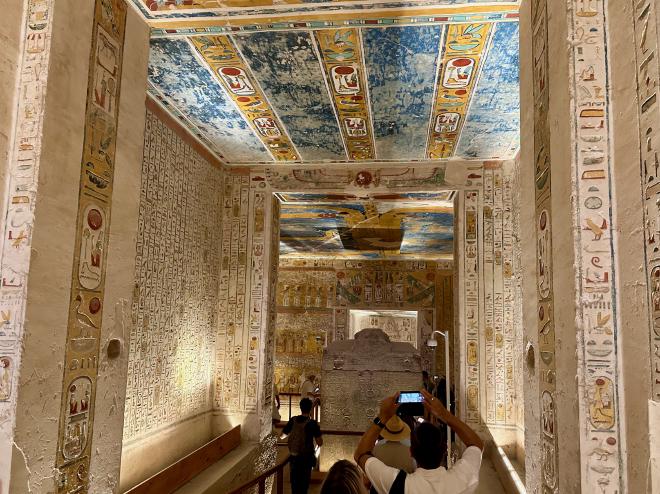
This is the queue inside the tomb of Ramses IX. If it wasn’t for all those damned tourists </irony> we could have had a very pleasant visit! In addition to crowded, it was also extremely hot and humid in the tombs – at least 10ºC warmer than the already-hot valley.
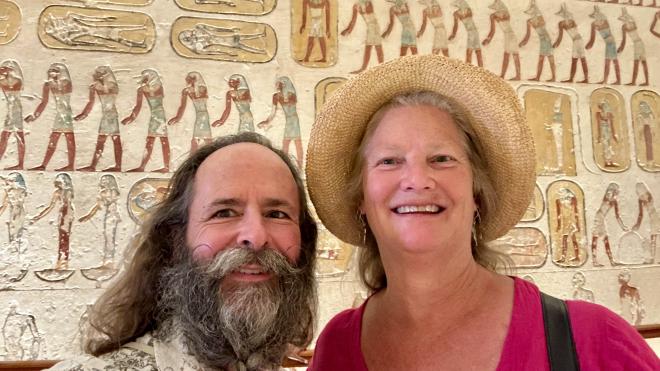
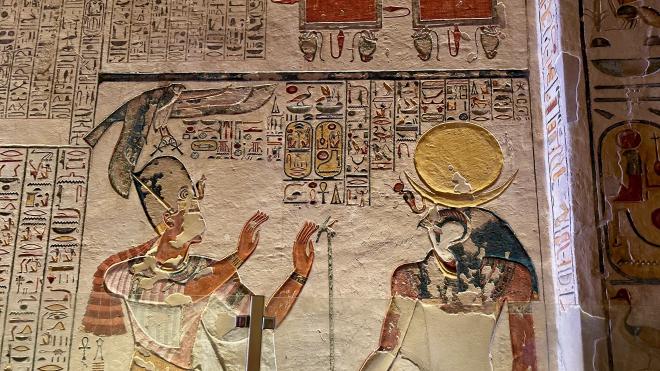
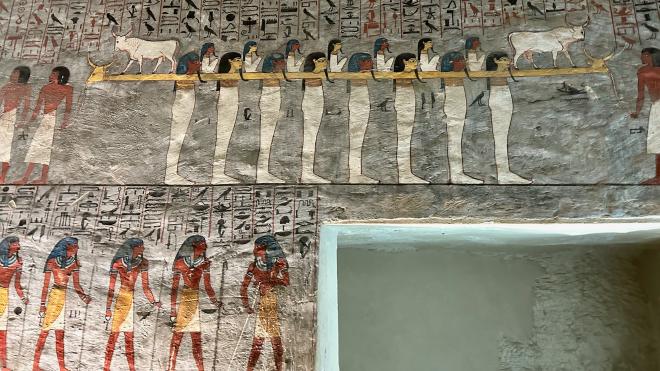
However, despite the crowds and the heat, the tombs were still beautiful and awe-inspiring.
The last tomb we visited, of Rameses I, was significantly less crowded, probably because it had a very steep ramp leading down to the burial chamber.
The tomb was discovered in 1817 and is very well preserved, with beautiful paintings in rich colours.
We left the Valley of the Kings and drove forty minutes to the Jolie Ville Luxor
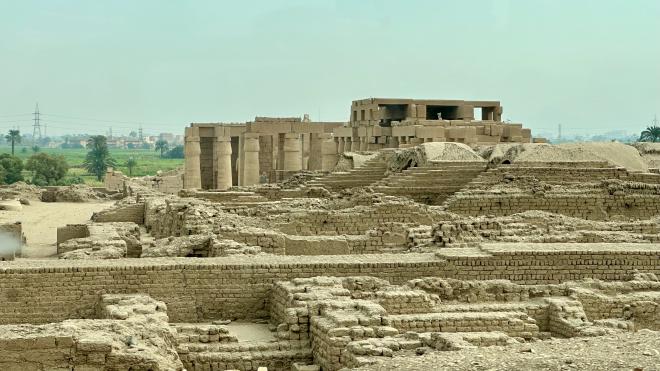
Hotel & Spa where we had an excellent buffet lunch, including many Egyptian dishes (and typical Western dishes for the less adventurous). Along the way we passed a number of other archaeological sites.
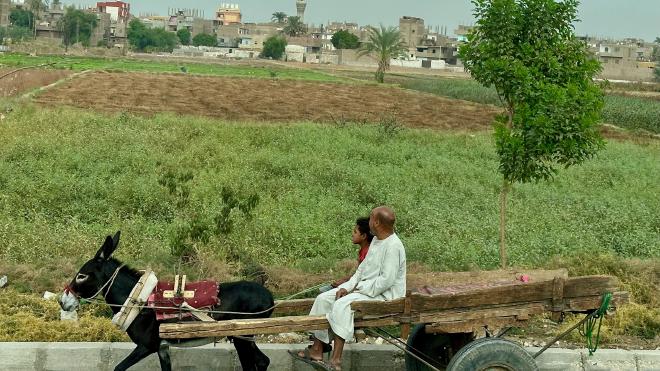
After lunch it was back on the bus for another thirty minute drive. Donkeys are still widely used in local agriculture.
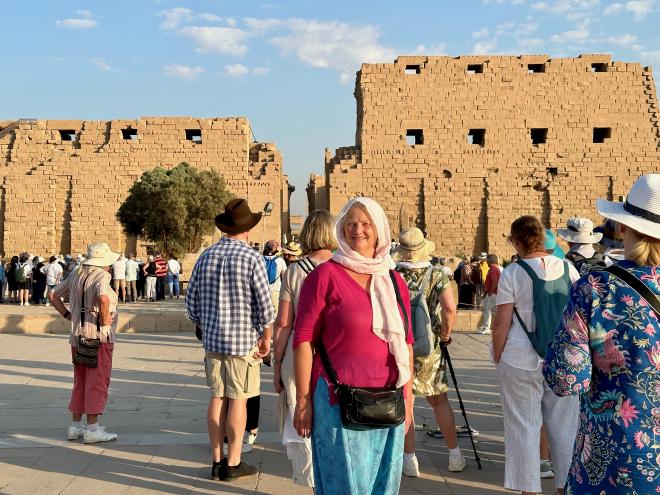
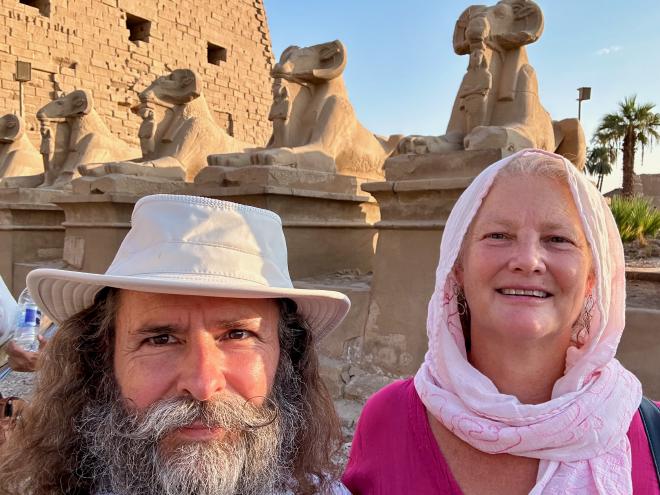
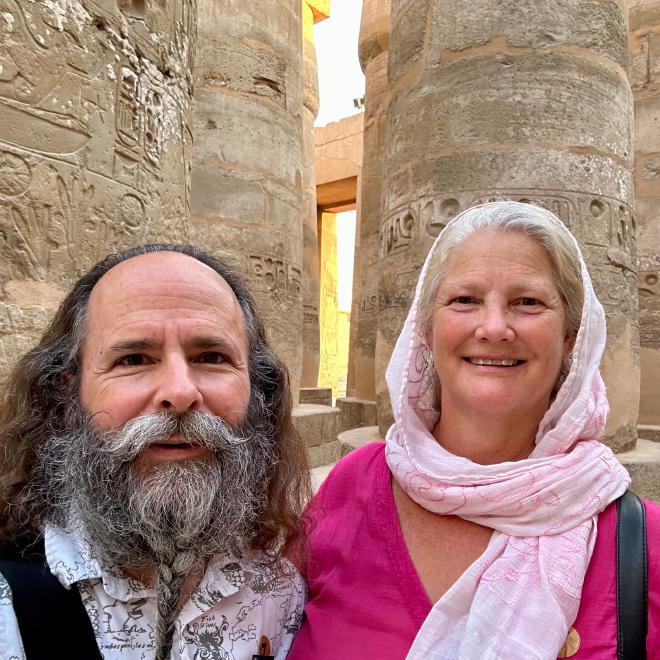
Our last stop of the day was the Karnak Temple Complex. We only had a bit over an hour here, which was nowhere near enough time – left to ourselves, we could easily have spent an entire day exploring the site. And before you ask, no, Karen wasn’t required to wear a headscarf for any religious reason; it’s just a sun shade.
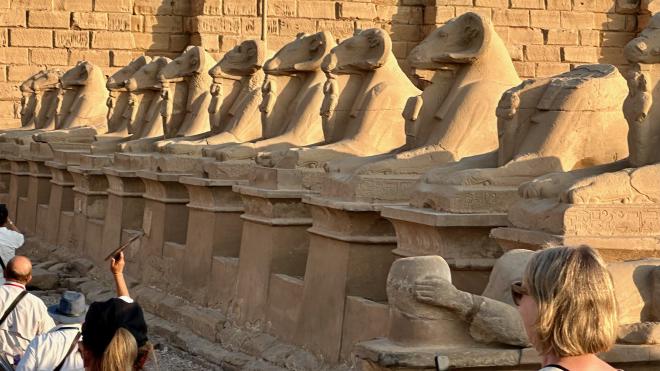
The entrance to the Temples is lined with dozens of these ram-headed sphinxes.
Yes, we were here.
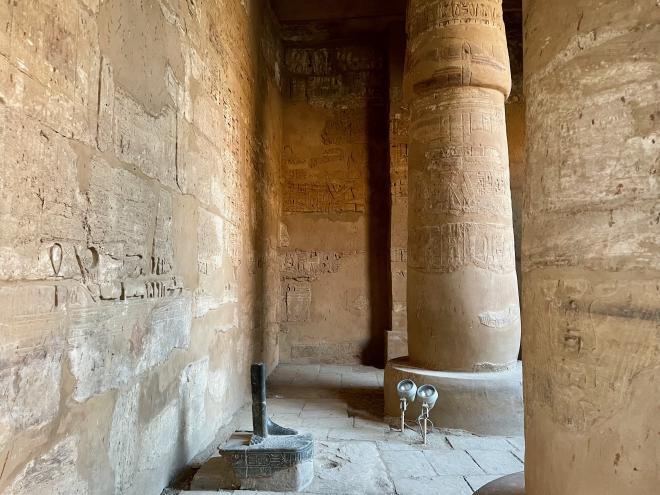
This area of the Temple reminded us of a scene from one of our favourite movies. Can you guess which one? Shoot us a note at widdershins@phillipses.net and we’ll tell you if you’re right.
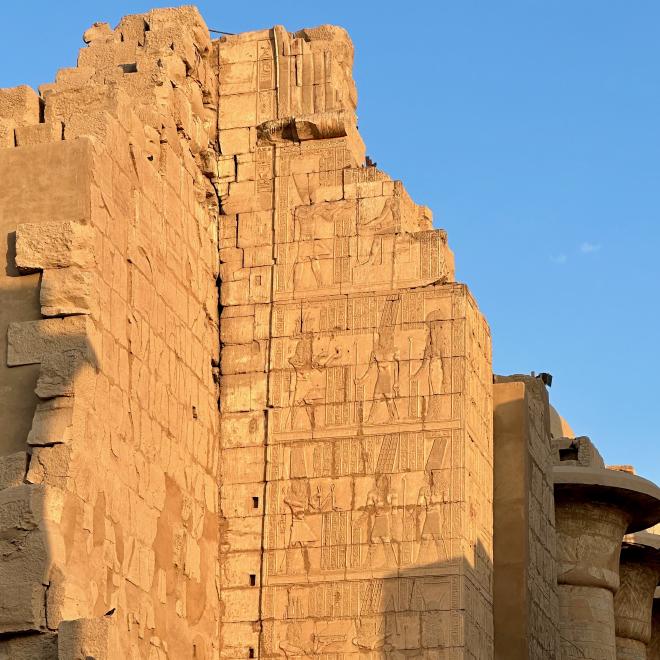
The Temple complex is enormous, and almost every surface is either sculpted or richly carved.
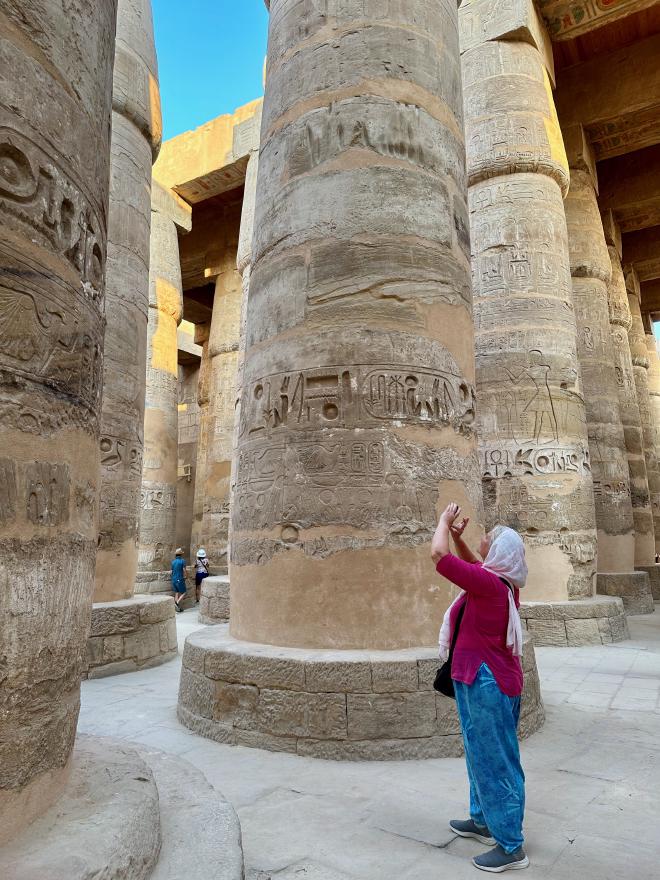
This is the Great Hypostyle Hall, which includes 134 of these enormous columns. In antiquity, the entire area was covered by a roof.
Here’s a picture of Karen taking a picture of a column.
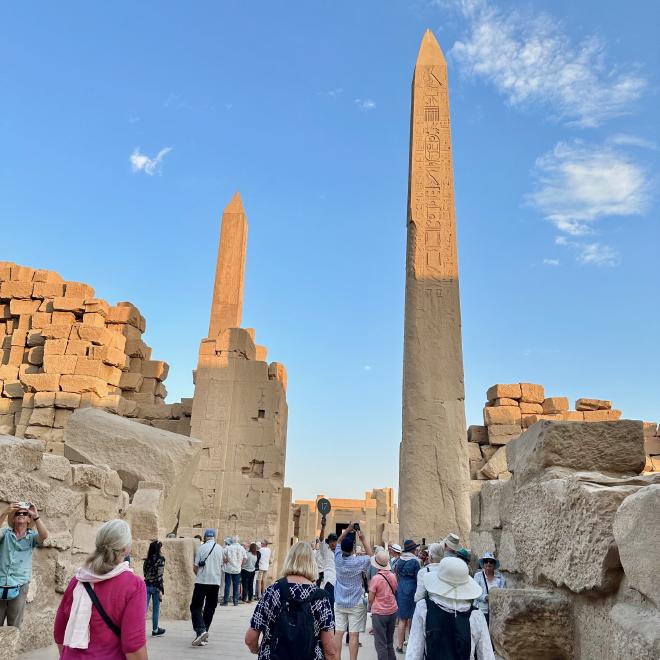
The last area we visited, beside the Sacred Lake, included these two enormous obelisks. Each is a single piece of granite, quarried in Aswan and transported over two hundred and fifty kilometres down the Nile before being erected here.
Then it was back on the bus for the return journey to Safaga and the ship. We were aboard just after 9 pm. That makes a fourteen and a half hour trip, mostly spent on the bus, with about three hours visiting the actual sites and another hour and a quarter for lunch.
Are we glad we went? Yes; this is likely the only chance we’ll ever get to visit the Valley of the Kings and the Karnak Temple Complex. Did we actually enjoy ourselves? We still haven’t decided.