After an uneventful night on the ferry from Genoa, we arrived in Barcelona around nine the next morning.
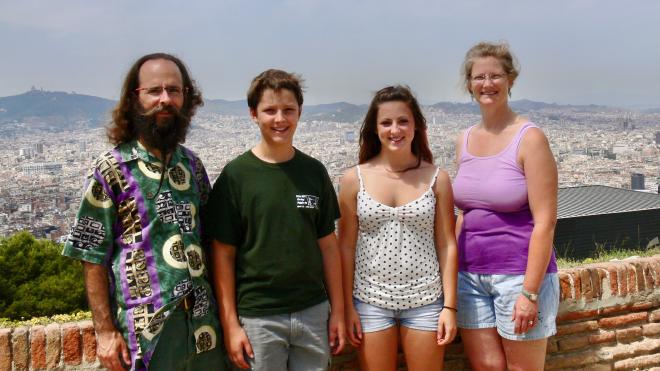
We had visited Barcelona with our kids in 2009, when we were living in Toulouse, France during Greg’s first sabbatical. This is a photo taken by Jared of the rest of the family on Montjuic, after we had ridden the cable car to the top. We had fond memories of the city and were excited to be back.
Once we’d exited the ferry terminal (a feat which involved a compulsory but rather pointless two hundred metre bus ride) we walked to our AirBnB in Plaça Reial, about a kilometre and a half away.
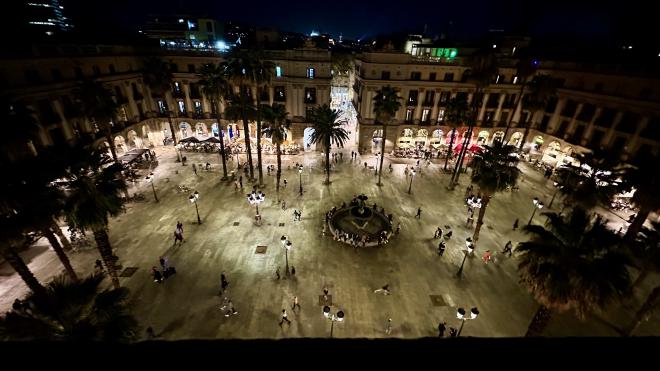
The Plaça Reial (Royal Square) was built just after 1885, on the site of a convent that had been demolished during the Confiscation of Madoz. These days it’s lined by restaurants and bars, and a bustling place at any time of day. This is a view of the Plaça at night, from the rooftop terrace outside our apartment.
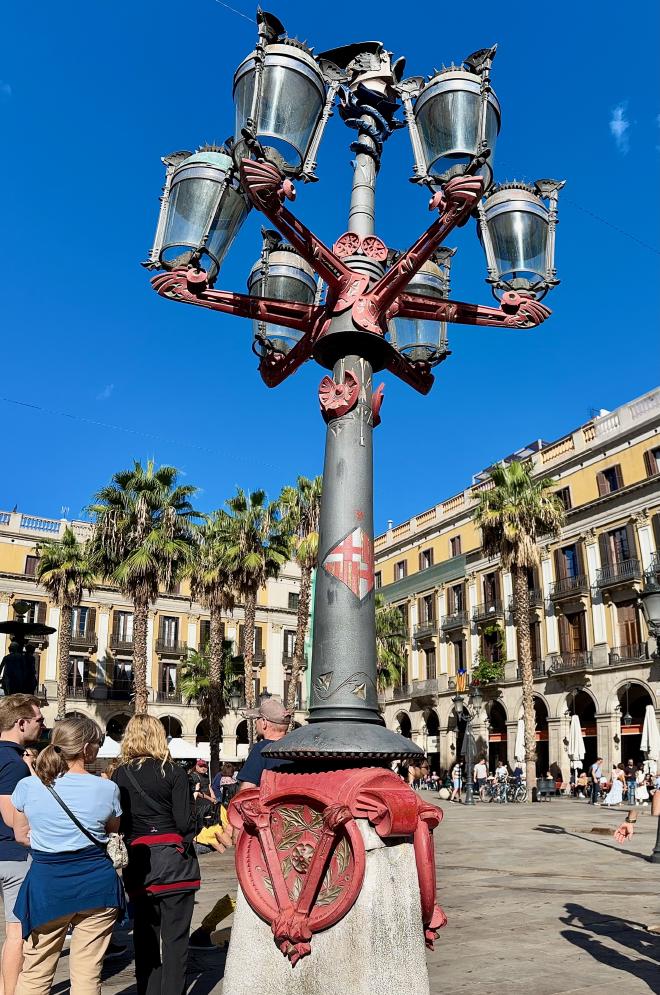
And here’s a view of the Plaça by day, featuring a lamp designed by famed Barcelona architect Antoni Gaudí (1852–1926). Remember that name, because it’s going to appear repeatedly in this entry.
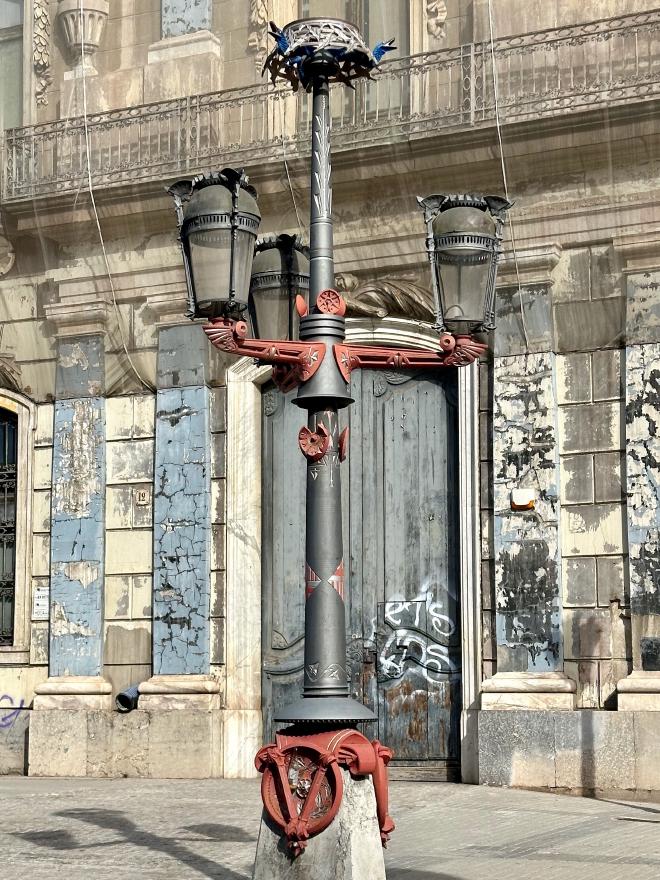
And while we’re on the subject of Gaudí and lamps, here’s another of his designs, located in Pla de Palau.
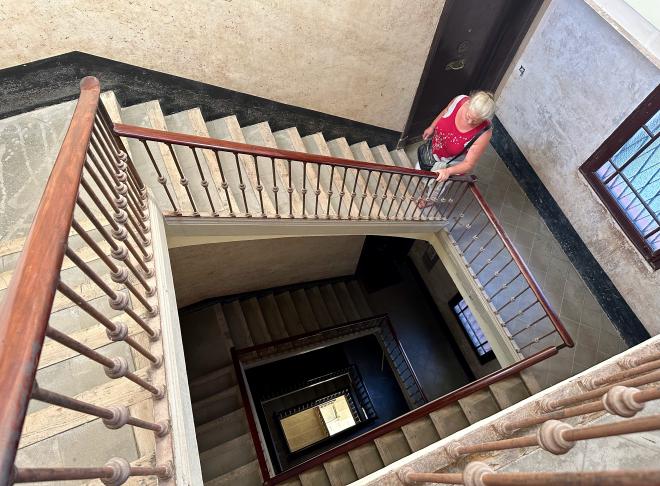
The apartment was on the “third floor” of the building, but actually the European fifth (North American sixth) because older buildings in Barcelona have a planta baja (ground floor), an entresuelo (mezzanine) and then a piso principale (main floor) before the floor numbered 1. And of course, no elevator. But the AirBnB listing was quite explicit, so we weren’t surprised.
Our host was Mercedes, a retired architect who rents out three rooms in her penthouse apartment to AirBnB guests. Normally we avoid that kind of arrangement – mainly the “other guests at the same time” part – but the (over seven hundred!) reviews for Mercedes’ place made it clear this was something special. And we agreed; our own review read:
We were there for three nights and had a wonderful stay. Yes, it’s quirky, there are lots of stairs, the rooms are small, there are a dog and two cats in the space, and there will be other guests. But Mercedes is up-front about all of that, is a wonderful host, takes breakfast and cocktail hour seriously, and has endless, excellent recommendations for what to do and where to eat and drink. The bed was comfortable and the place was surprisingly quiet, given that it’s just off the square. Totally recommended.
One bonus was that Mercedes was perfectly happy for us to drop our bags off and hang out in the living room, even though our bedroom was still being cleaned from the previous guests. Plus she offered us breakfast.
Our first task was to try and get tickets to visit the interior of Sagrada Familia, Antoni Gaudí’s still-unfinished masterpiece. (Better-organized travellers than us would have arranged tickets well in advance, especially knowing we were going to be in Barcelona over a weekend. But hey.) After playing chicken with the ticketing web site for half an hour – slots kept appearing randomly then disappearing before he could purchase them – Greg managed to land what may well have been the last two available tickets for that day. The remainder of the weekend was already completely sold out.
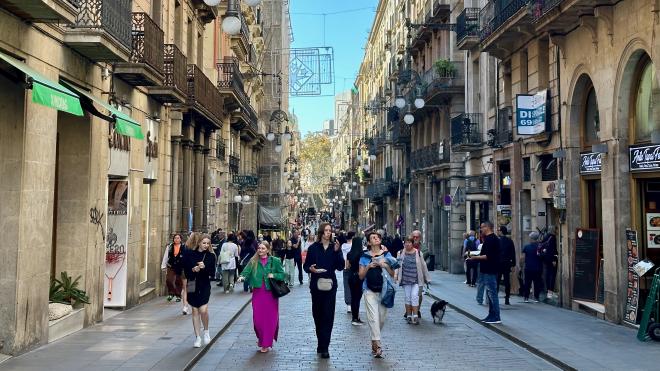
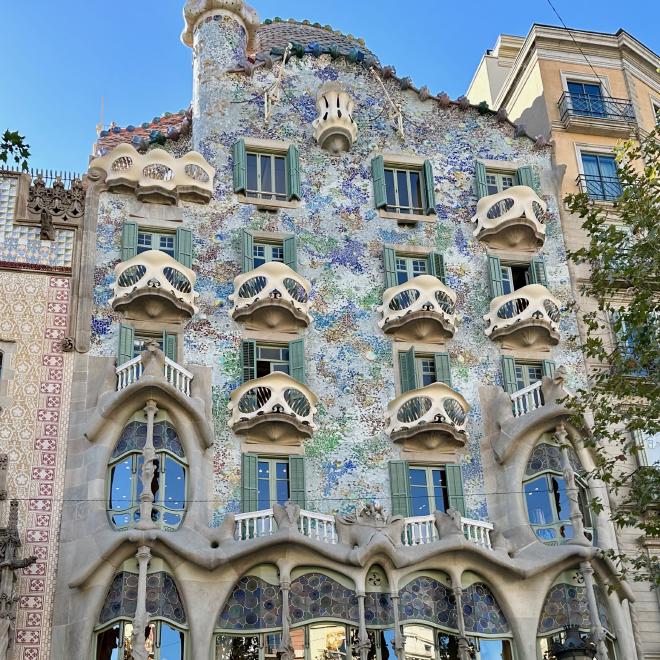
Tickets in hand, we decided to walk to Sagrada Familia, by way of the Barcelona Cathedral and Casa Battlò, an apartment building also designed by Antoni Gaudí. This is Carrer de Ferran, a major pedestrian shopping street that runs just north of the Plaça Reial.
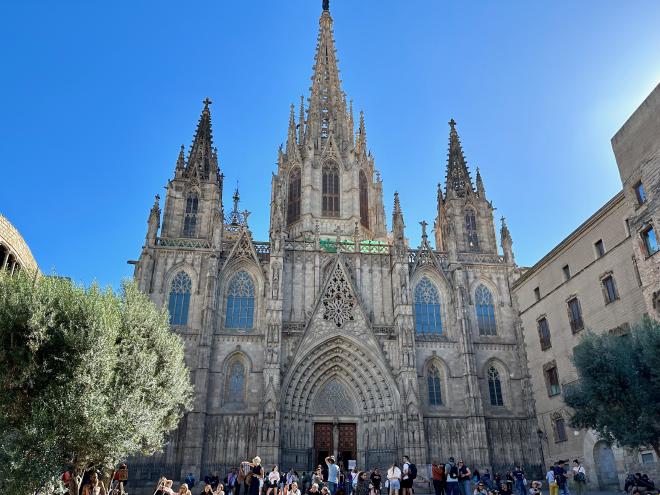
The Catedral de la Santa Creu i Santa Eulàlia (Barcelona Cathedral) was constructed mainly in the fourteenth century and completed in 1448. The neo-Gothic façade you can see here was added between 1890 and 1913, and was typical of the era. Hold this style in your mind as we head towards Sagrada Familia.
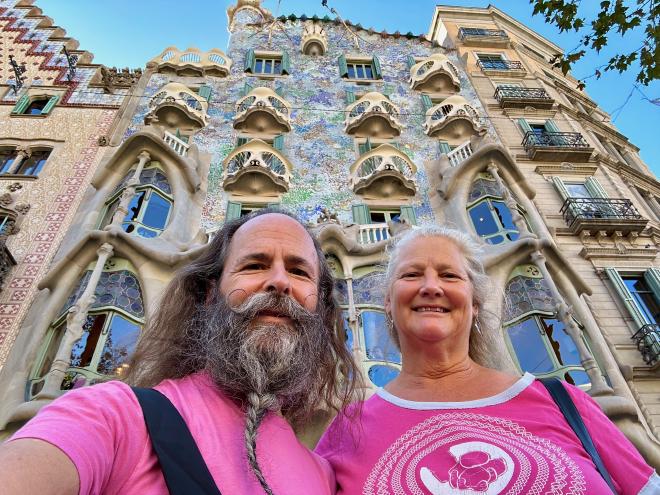
Casa Battlò is considered one of Gaudí’s masterpieces. A redesign of an existing building, it was renovated between 1904 and 1906. Along with several other of Gaudí’s creations, the Casa is part of a Unesco World Heritage site, the Works of Antoni Gaudí.
The interior of Casa Battlò is supposed to be quite spectacular and the building is open to the public. Maybe we’ll visit it next time we’re in Barcelona.
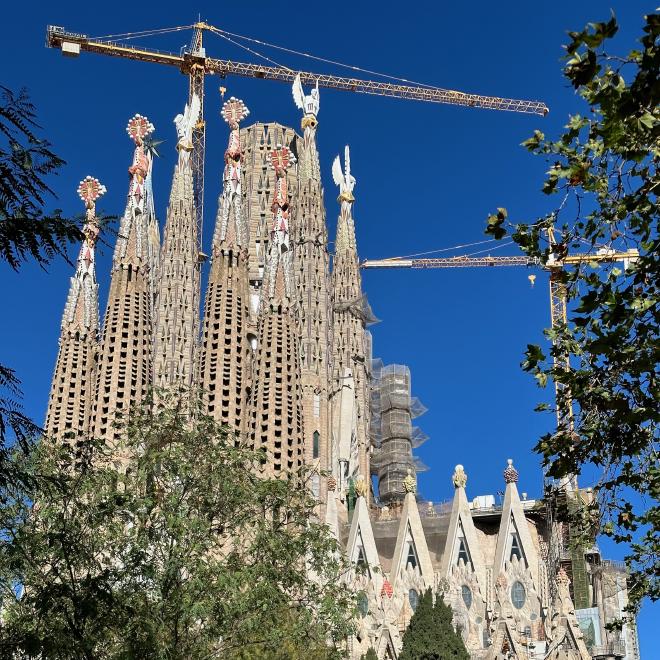
Our first view of the the Basílica i Temple Expiatori de la Sagrada Família (Basilica and Expiatory Temple of the Sacred Family, or Sagrada Familia for short) was from Plaça Sagrada Familia, the park just to the south-west. Even from here we could see that construction of the towers had progressed significantly since 2009. The Basilica, designed primarily by Antoni Gaudí, is the largest unfinished Catholic Church in the world. Construction started in 1882 and completion of the main structure is projected for 2026. Now compare the architectural style with the 1890’s façade of the Barcelona Cathedral, a few photos back.
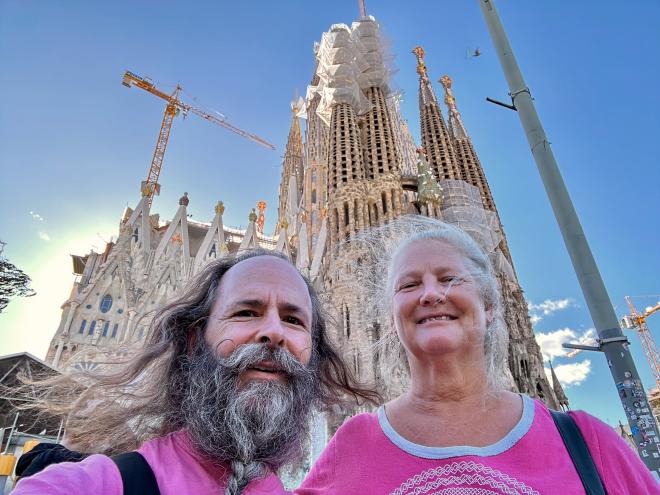
This is the north-east side, which is currently being used as the main entrance. In the original plans, the main entrance is on the south-east, and is supposed to include monumental steps and front onto a large plaça. Currently there’s a rather inconvenient street and two city blocks’ worth of apartments and shops in the way, so it’s not clear whether that part of the vision will ever be realized. As you can see, it was a bit of a windy day.
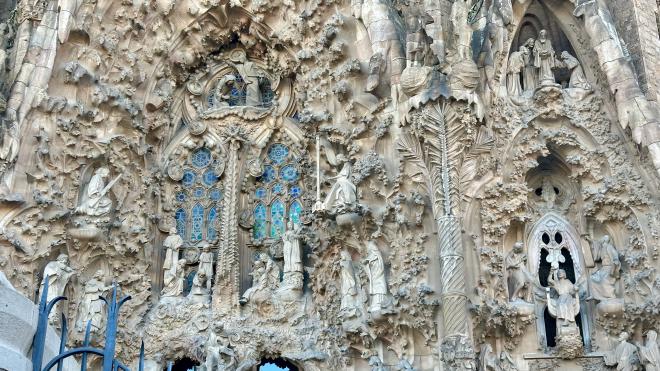
Three of the four sides of Sagrada Familia each tell a different religious story. This shot shows detail from the north-east side, which depicts the Nativity of Christ. It was designed by Gaudí and completed in 1936, ten years after his death. Our admission to the Basilica included a surprisingly-good audio guide, which did a fine job of explaining what we were seeing.
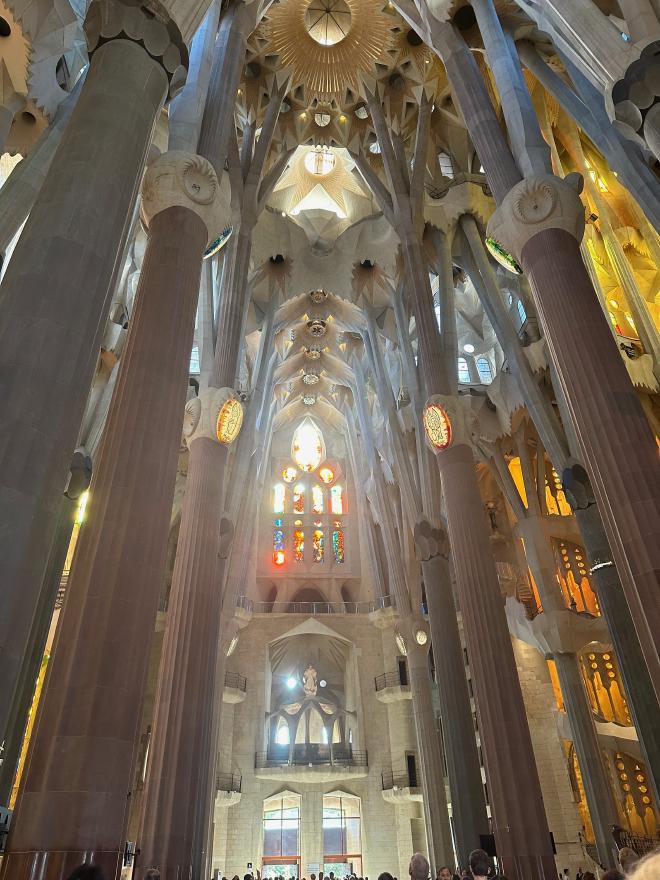
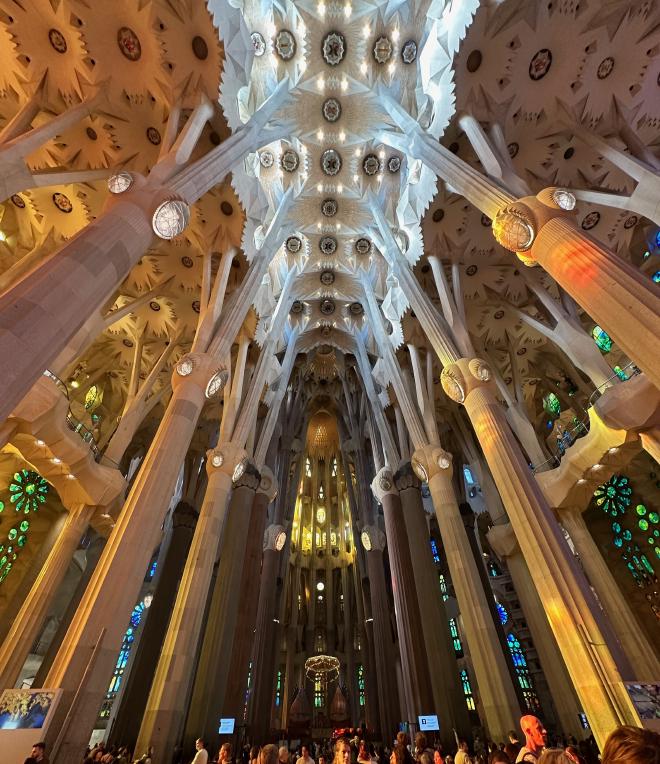
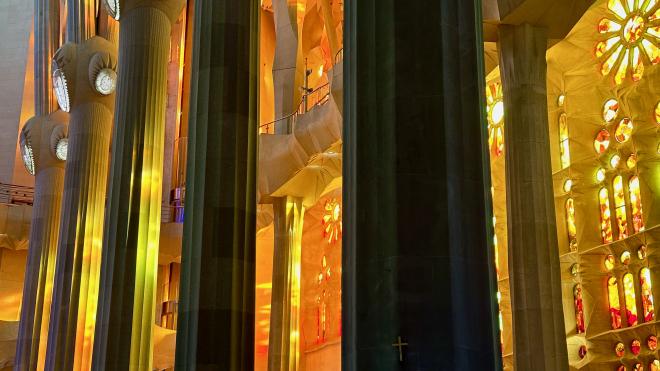
The interior of Sagrada Familia is startling, magnificent, and awe-inspiring. The exterior gives no hint of what you will be faced with as you walk through the doors. Gaudí intended the interior to feel like a stone forest, and we believe he succeeded admirably.
The previous picture is looking across the Basilica from the side. This is lengthwise, showing more of the forest.
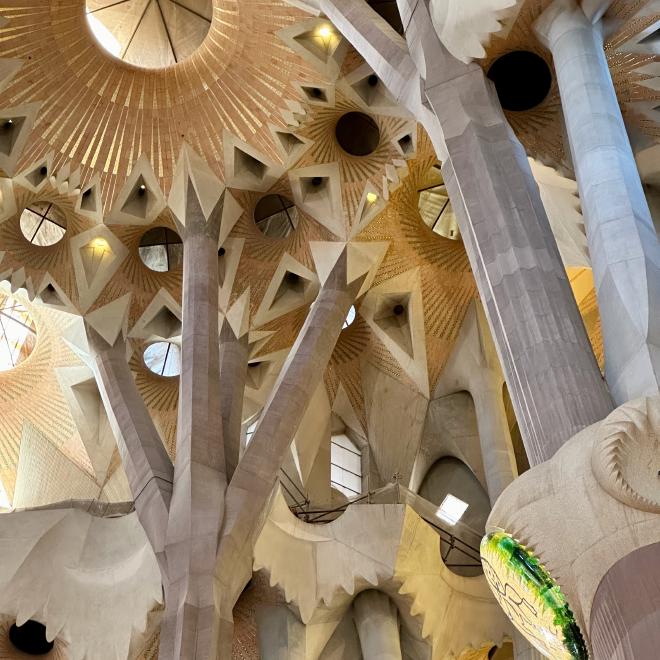
Gaudí’s design was so far ahead of its time that it wasn’t obvious how it would be realized. For example, the complex geometry of the branching columns, which give a tree-like effect while also spreading the support for the roof, were extraordinarily difficult. This partially explains the rather slow pace of construction (’though there were many other factors, including, e.g., the Spanish Civil War, destruction of many of Gaudí’s original plans, and more recently, the global pandemic). Since the advent of computer modelling and computer-assisted manufacturing, the pace has significantly increased.
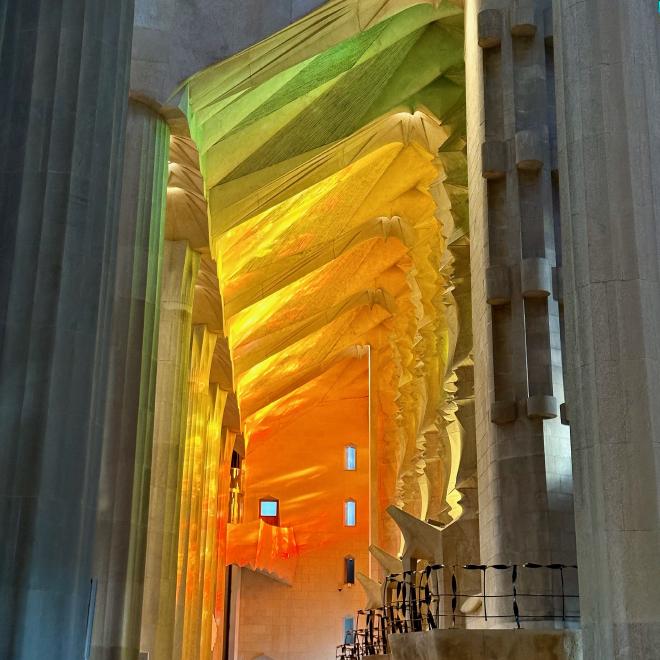
From the outside there is absolutely no hint of the extraordinary lighting inside. We were there late afternoon, so the sun was coming in from the south-west. The stained glass on that side is yellows, oranges and reds, with a bit of green, giving this magnificent effect. The windows on the opposite side are greens and blues, so interior looks completely different in the morning.
Here’s another shot of that amazing light.
And another, because how can we resist?
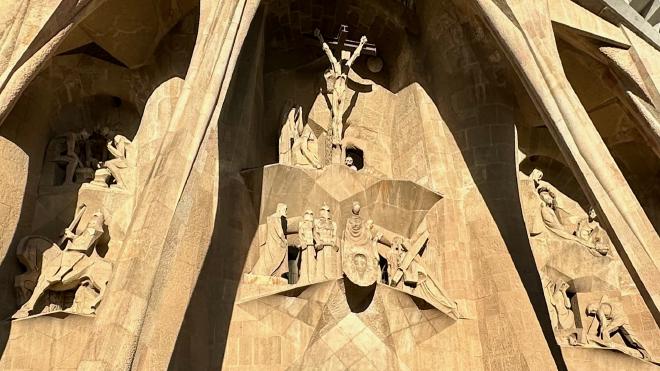
The exit is through the south-west of the building, which depicts the Passion of Christ. It was conceptually designed by Gaudí but realized in detail by Josep Maria Subirachs starting in the 1980s. The stylistic contrast with the entrance side is deliberate. The third side of the Basilica to have a sculptured façade, which is still under construction, will be in yet another style.
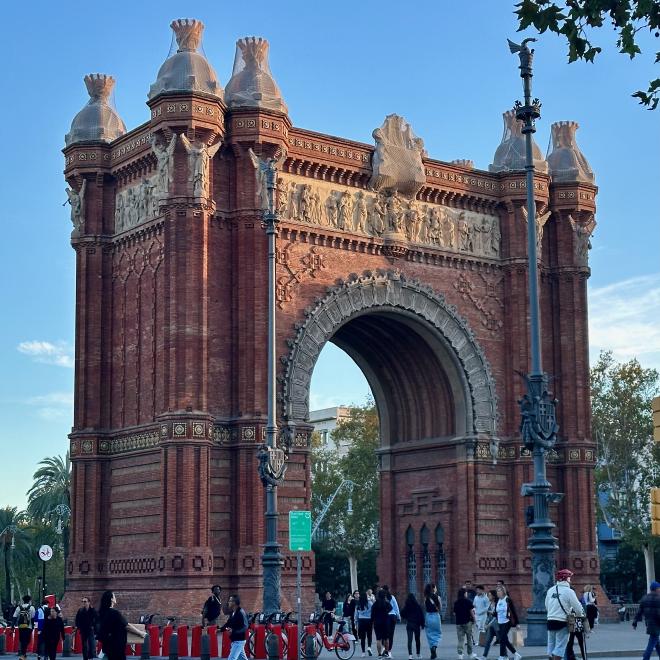
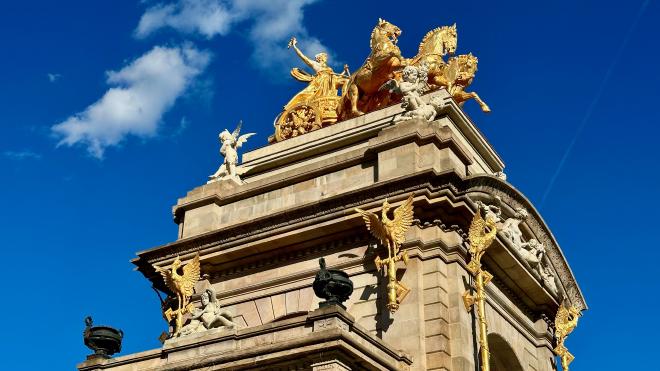
On our way back to our apartment we passed the Arc de Triomf, built as the welcoming gateway for the 1888 Barcelona World Fair. Unlike almost all similar arches in the world, this one is non-military. Which makes the name a bit odd, but then, no one asked us.
On Saturday we decided to take a walk along the waterfront, partly in search of a fabric store so Karen could find some sewing supplies (spoiler: fail, all the ones Google knew about were either closed for the day or non-existent).
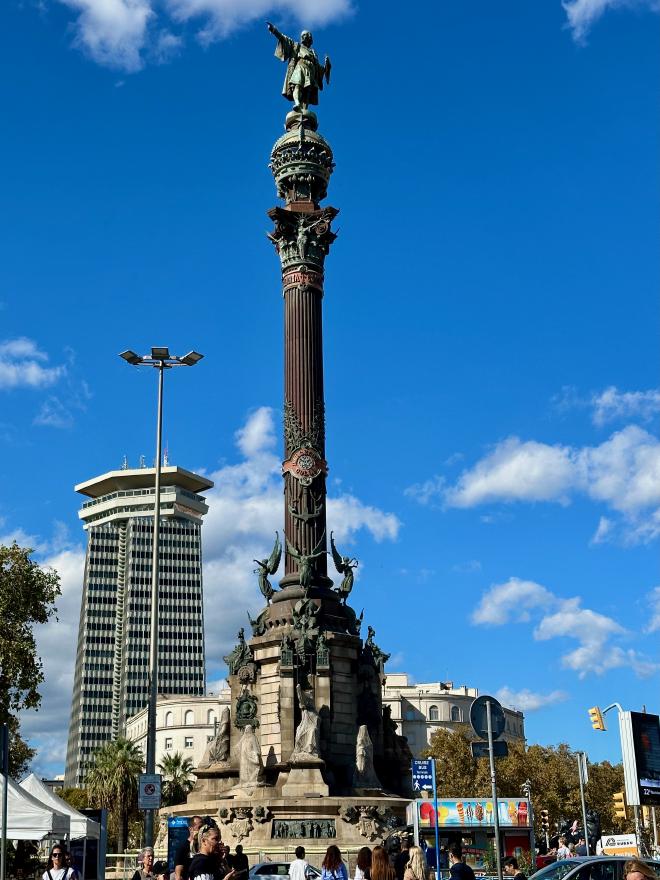
At the base of La Rambla is a statue in honour of Cristóbal Colón, the same guy already mentioned as Cristoforo Colombo in our Genoa diary entry. Apparently, providing the economic basis for a rapacious empire earns you a lot of monuments, under a lot of names.
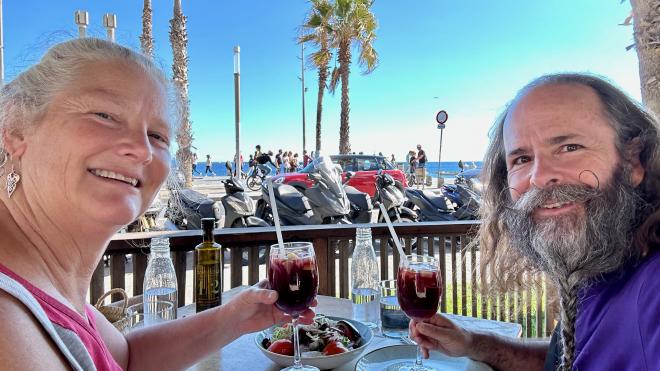
We had a very nice paella lunch with sangria at a restaurant opposite the beach…
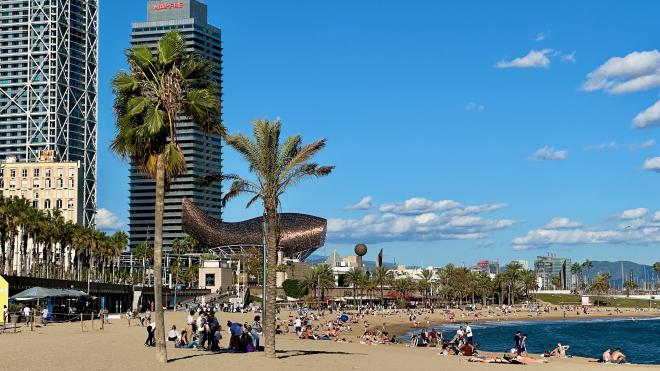
… and then continued down the beach a ways. The bronze-coloured sculpture is Canadian-born architect Frank Ghery’s El Peix, which is 52 metres long.
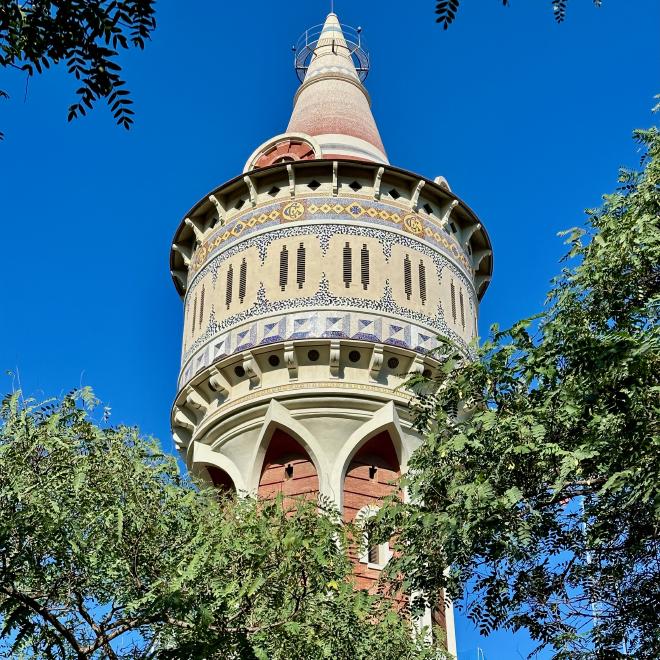
On the way back we walked through Parque de la Barceloneta. This is the Torre de les Aigües del Besòs, a water tower built between 1880 and 1882 to supply the city with drinking water. Its source became salty quite soon afterwards, but it was still used for industrial purposes until 1992.
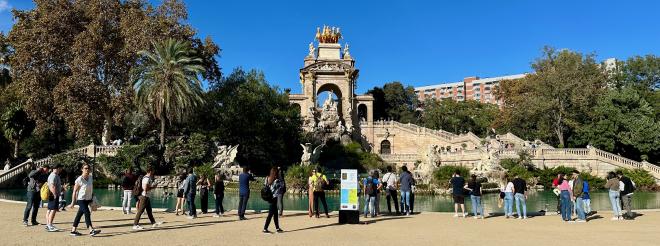
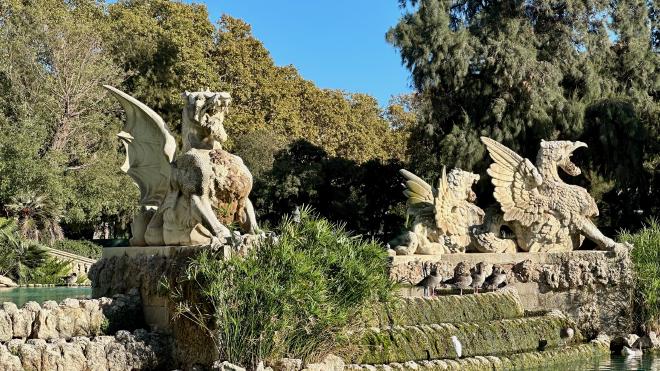
From there, after an adventure in street-crossing, we went into Parque de la Ciutadella. This is the Cascada.
When initially erected in 1881 the Cascada was just the waterfall part (hence the name), and quite plain, but in response to public criticism the fountain and other decorative elements were added between 1882 and 1888.
We quite liked the griffins, despite the fact that they weren’t actually fountaining during our visit.
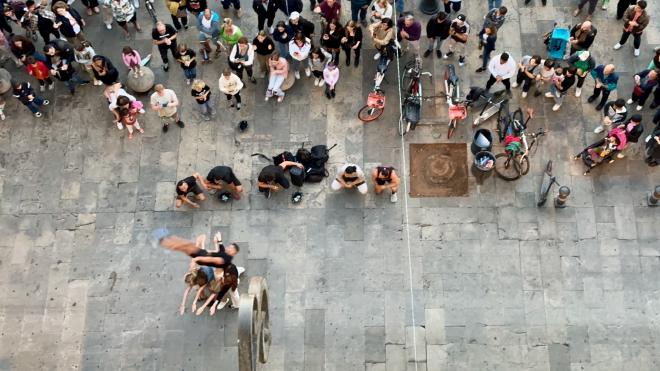
The next morning, while having breakfast on the rooftop terrace in front of the apartment, we got to watch a group of acrobats put on a show below us in the Plaça.
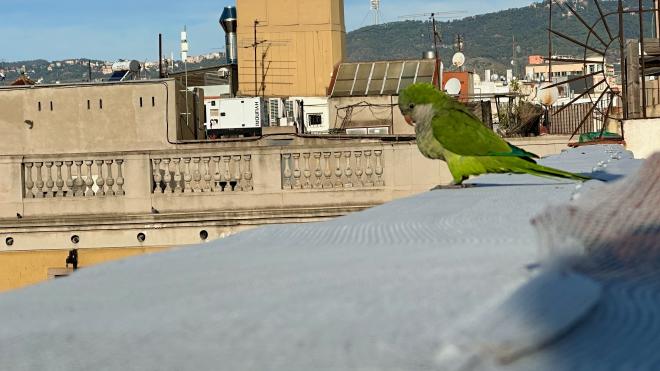
This guy joined us, although he didn’t seem too interested in the acrobats. There is a flock of green parrots living in the trees in the Plaça.
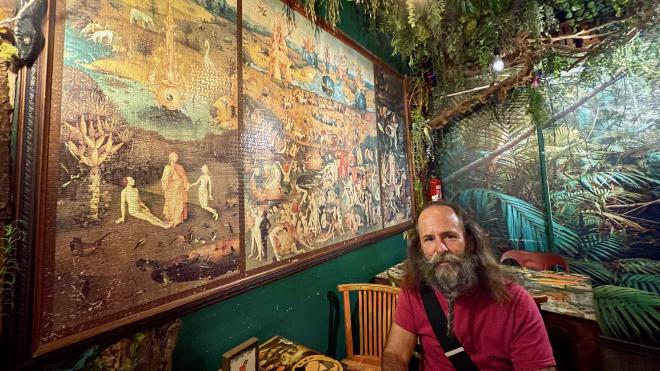
We spent the late morning and early afternoon walking northwards through town, which was very pleasant but apparently didn’t yield much in the way of photographs. We stopped for a very nice lunch at Dona Rosa Cucina Urbana which is a middle eastern, latin, and asian fusion place. The room we were in was decorated as a jungle and featured this 9000-piece puzzle of Bosch’s Garden of Earthly Delights. We saw the original in the Prado Museum in Spain last summer, and have a (different) 6000-piece puzzle hanging on the wall of our own dining room.
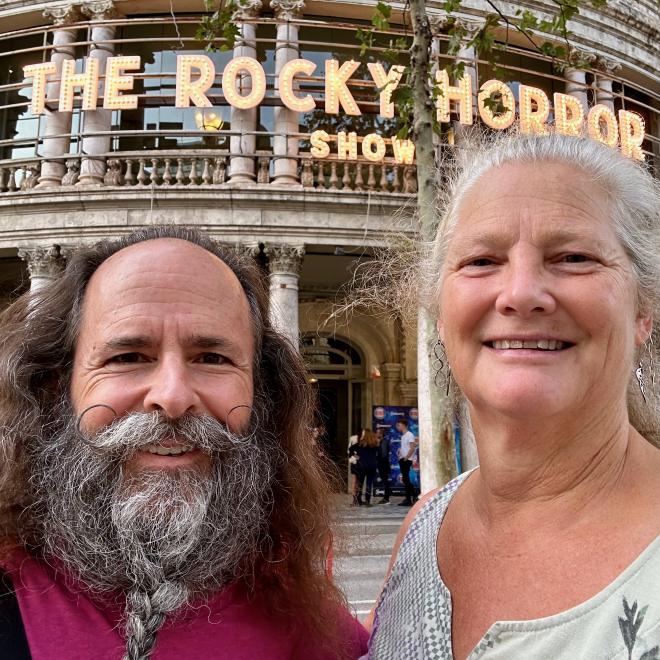
The motivation for our wander north was to see the Rocky Horror Show at the Teatro Coliseum. Greg had spotted an ad for the show on a bus that went past as we were having lunch by the beach the previous day, and there were still a few reasonably-priced tickets available. The production was by a touring company out of London’s West End, and was presented in English with Spanish subtitles on screens flanking the stage. Being able to go to a show in our own language was quite the treat! It was fun trying to spot the differences between the live version and the movie, which both of us have seen, but not for quite a while.
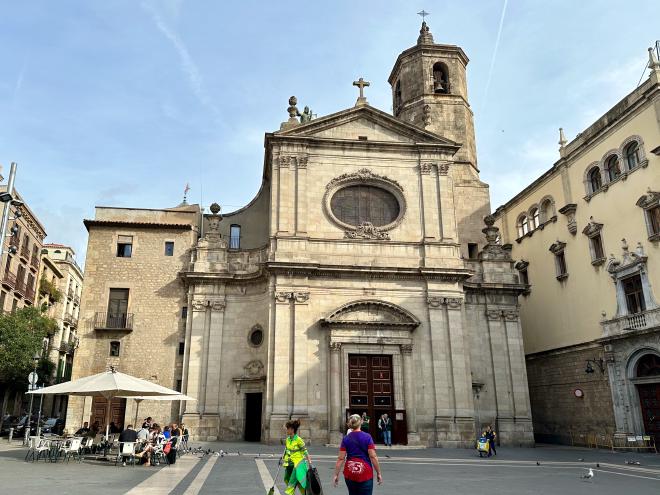
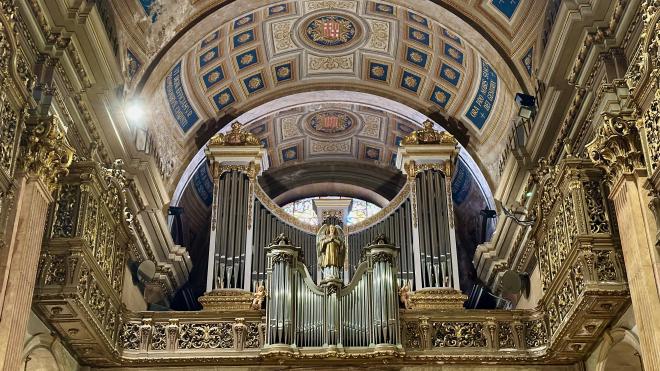
On the way back we passed Yet Another Church, this one the Basilica of Our Lady of Mercy, built between 1765 and 1775.
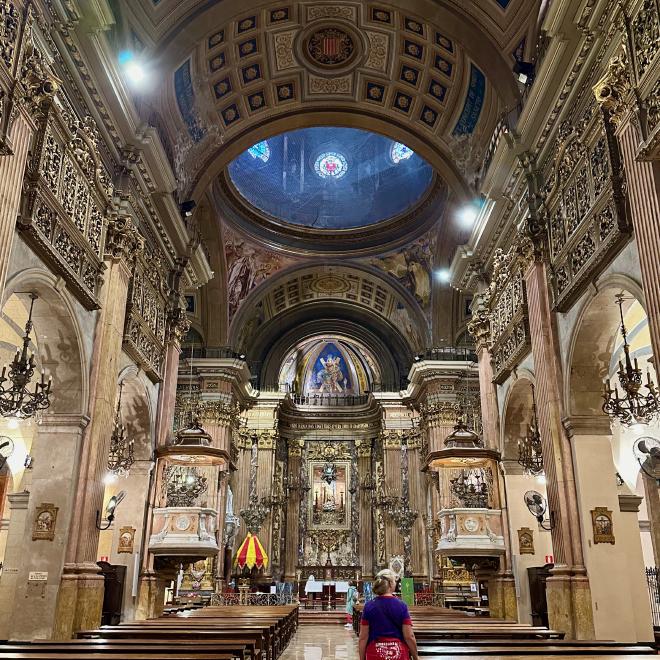
The interior is lavishly decorated in baroque style.
Greg particularly liked the contrast between the mathematical purity of the organ’s pipes and organic complexity of the surrounding decor.
Then it was back to the apartment for one last night, and on Monday, onto the ship – but that’s for the next entry.