We walked back to the Florence train station and had a fun time finding the track our train was departing from. The signage in the station is actually pretty good, except that the commuter train tracks are around a corner from all the others and there is absolutely no indication where – and of course we were on a commuter train. But eventually we found someone to ask.
The first leg of our trip was from Florence to Pisa, so we did get our visit to Pisa in, but only for fourteen minutes at the train station. And since our train from Florence to Pisa was a local commuter, there was no storage for large bags. Greg sent Karen to a seat and stood in the car entrance with the luggage for an hour, reading his book. We did have proper seats and luggage storage for the two and a half hours from Pisa to Genoa.
Fun fact: Genoa is on almost exactly the same latitude as our home in Kingston.
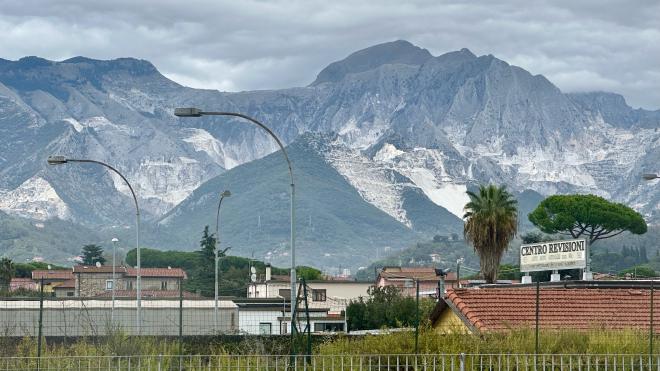
The white patches on the mountains are the famed Carrara marble quarries, visible from the train tracks north of Pisa. We had investigated doing a quarry tour, which looked very cool and had been suggested by Karen’s sister Paula, but we couldn’t make the logistics work. Maybe next time.
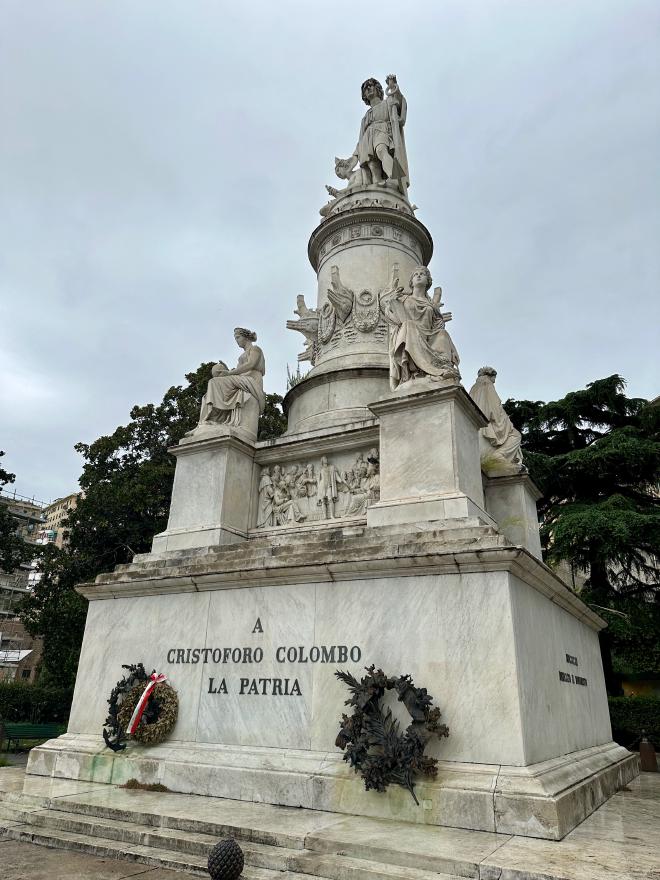
Just outside the Genoa train station we found this monument to Christoforo Colombo, a Genoan explorer most famous for having mis-estimated the westward distance from Europe to Asia and accidentally initiating continuous contact between Europe and the Americas, with immediately disastrous results for the indigenous residents.
We walked from the train station into the the old city of Genoa, which is a twisty mess of very narrow, mostly pedestrian streets. Phones generally have trouble getting a correct GPS position, and neither Google Maps nor Apple Maps have any real understanding of which streets connect.
Fortunately, our AirBnB hosts were very much aware of this, so we met our hosts’ mother in Piazza della Meridiana, an easily-found landmark, and walked to the apartment from there.
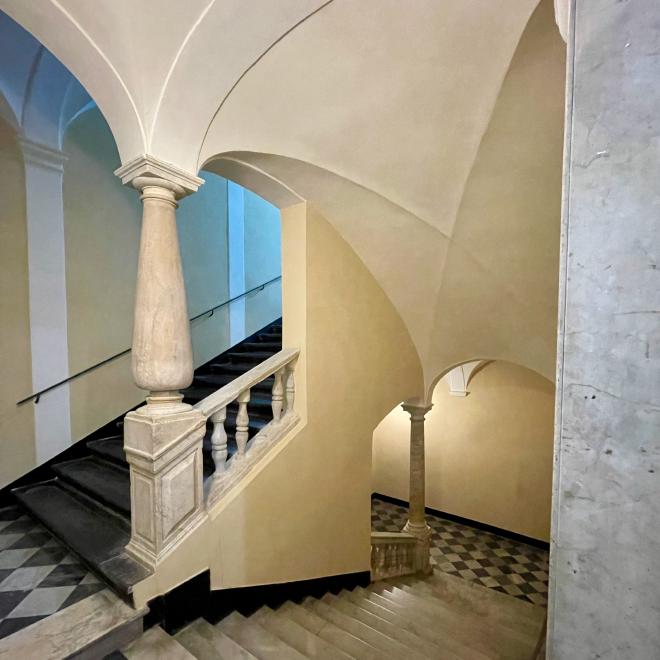
The apartment was in an elegant old building that was once on the official list of buildings that minor nobility were permitted to stay in when visiting Genoa. In the post-war years the building was allowed to run down, like many buildings in Genoa, and it has only recently been partly rehabilitated. This is the main staircase.
In preparing this entry we discovered that neither of us took a representative picture of the Genoa city streets. However, if you want a look, here’s Google’s street view of the street leading to our apartment.
We spent Monday evening wandering the streets looking for an open restaurant, which was way more challenging than it should have been. Thanks for nothing, Google. Ultimately we settled on Pastificio Artigianale di Canneto, which has a counter-service vibe but does really delicious pasta.
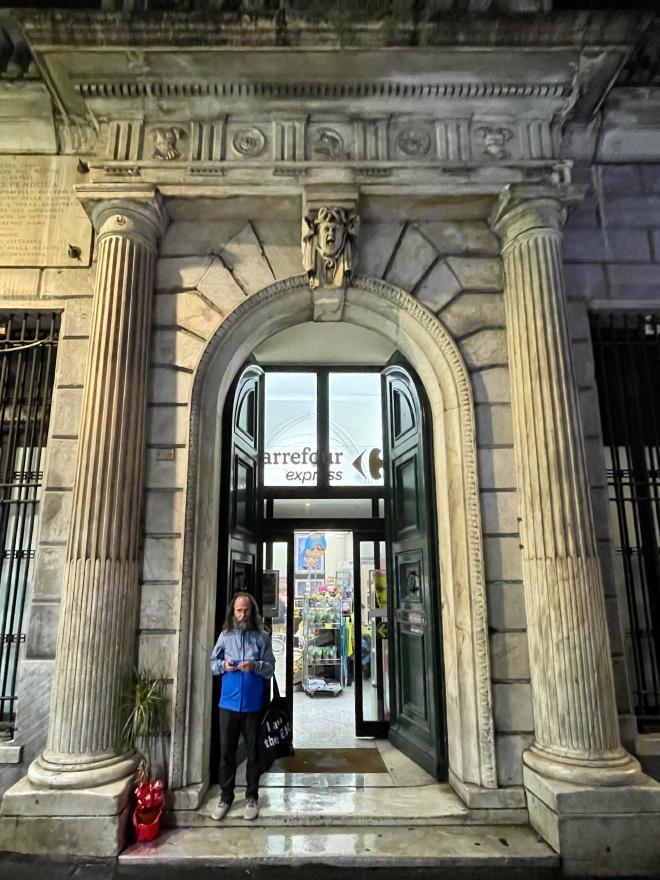
After dinner we popped into a nearby mini-grocery to pick up some breakfast food. Don’t all your corner stores look like this one?
Tuesday morning was pouring rain and we were whacked from the previous few days, so we didn’t get out the door until mid-afternoon. We decided to just wander and see what we found, rather than having any specific objective.
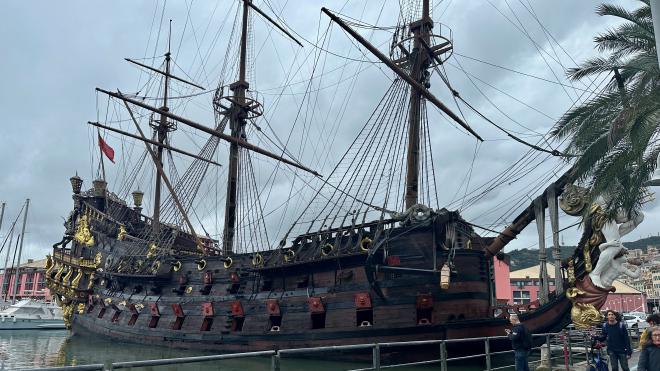
From the apartment we headed down to the harbour, which was about two hundred metres away. This is the Neptune, a replica galleon built in Tunisia in 1985 for Roman Polanski’s film Pirates.
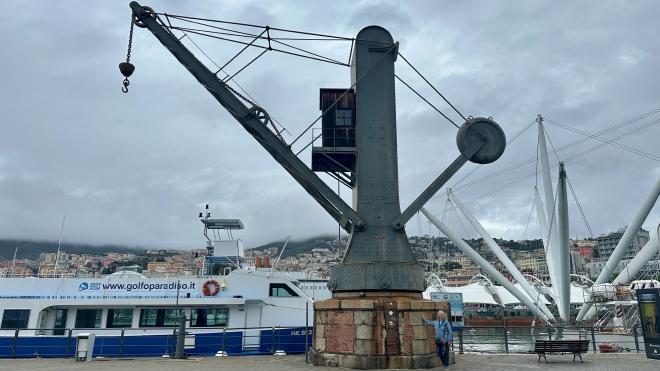
A bit more authentic is this original steam crane, part of the very first efforts at mechanizing the Port of Genoa.
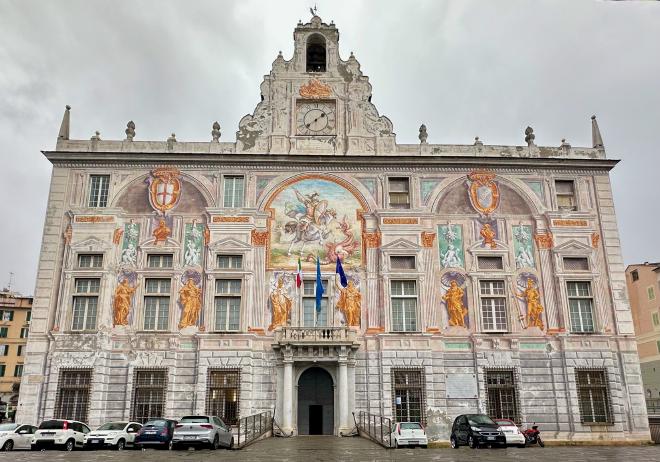
Facing the harbour is Pallazo San Giorgio, built in 1260 and at one time a prison. After the Venetian explorer Marco Polo was captured by the Genoese during a skirmish in 1296, he was imprisoned in the Palazzo. It was there that he told the tales of his explorations that were later turned into The Travels of Marco Polo.
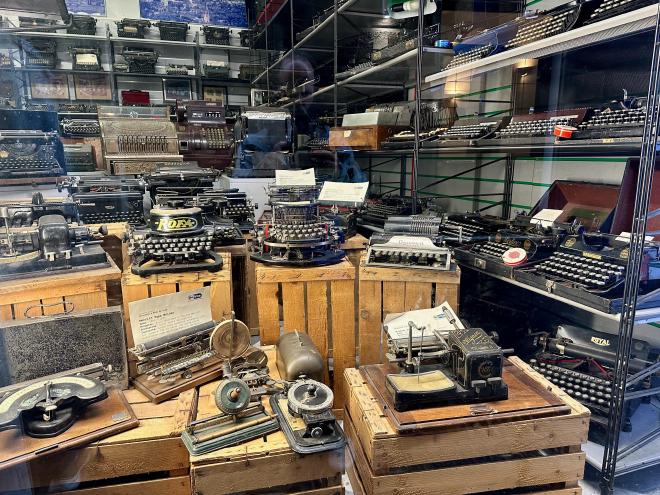
This lovely display of old typewriters is in the window of De Vita Office & Communication just around the corner from our apartment. Greg took it specifically to send to his sister-in-law Elizabeth, creator of Demand Poetry which she types on a manual typewriter.
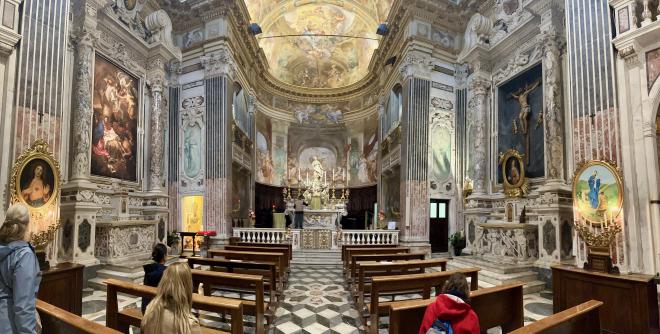
Also near our apartment is Chiesa San Luca, originally constructed in 1188. We weren’t able to get a good exterior shot because of the narrow streets mentioned above. The interior is covered with beautiful frescoes and trompe l’oeil painting.
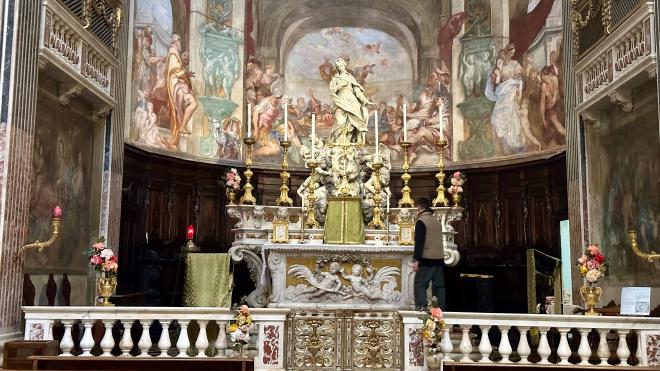
Here’s a closer view of the Chiesa San Luca altar and fresco.
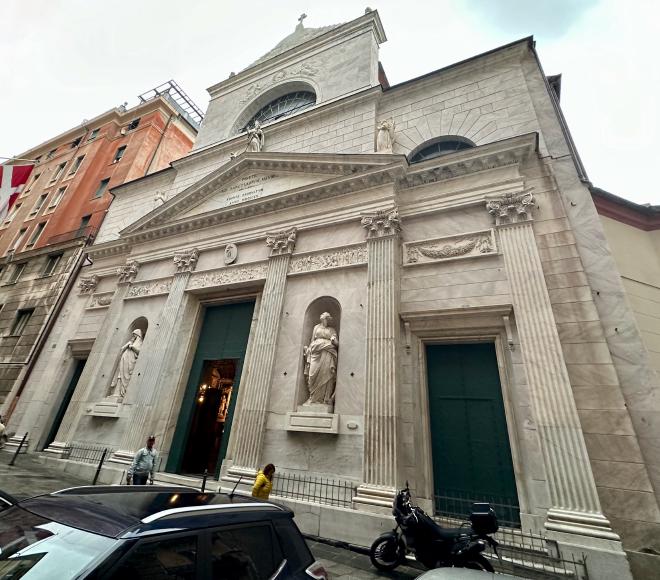
Just around the corner from the Chiesa San Luca is the Basilica San Siro. The Basilica was originally built between the tenth and twelfth centuries, but it was destroyed by fire in 1478 and substantially reconstructed one hundred years later. As with Chiesa San Luca, no good picture of the exterior, but here’s a bad one.
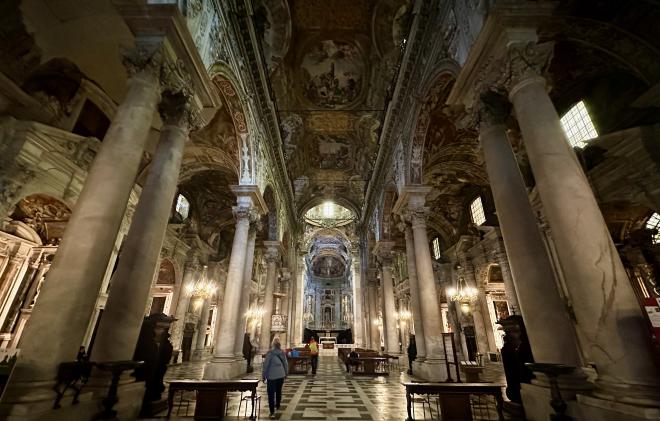
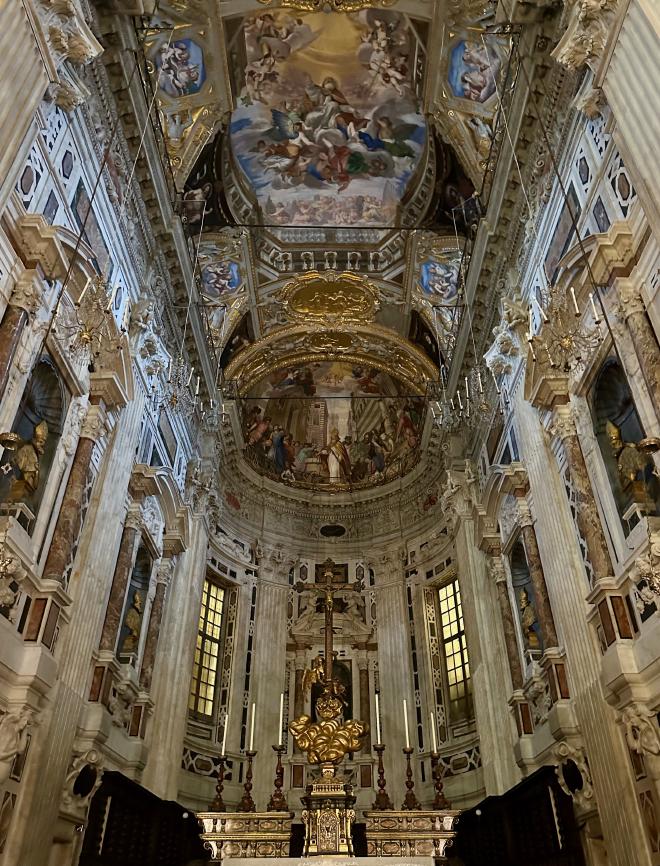
The interior is beautifully decorated, with many important works of art.
Here’s a closer shot of the altar and some of the ceiling frescoes.
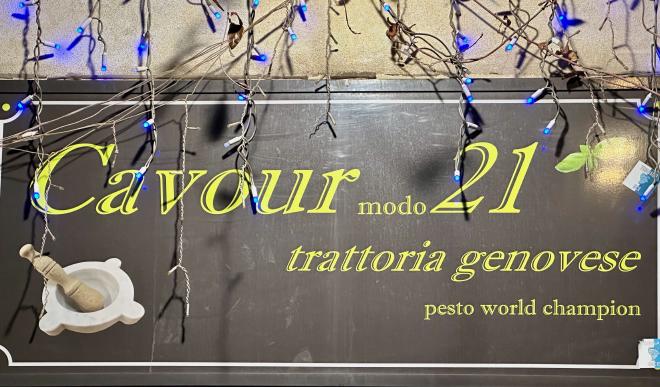
Dinner that evening was at Cavour modo 21, a restaurant near the waterfront that had been recommended by our hosts as “amazing food, amazingly cheap”. Everything we tried was delicious, but the lasagne with pesto was amazing – as one would expect from a “pesto world champion” in the city that originated the dish.
Wednesday was also a rainy morning, clearing in the afternoon, leading to a late start again. Or maybe we’re just lazy, your choice. We decided to walk towards some of the newer parts of the city, east of the old centre, then along the coast.
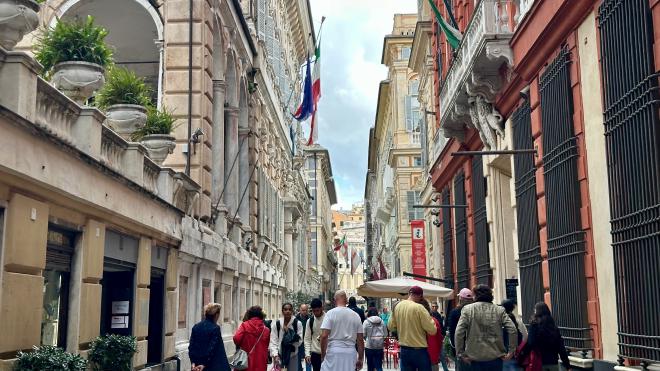
Via Giuseppe Garibaldi was built between 1558 and 1583 and contains a dozen Genoese palazzos on the UNESCO World Heritage List. The red building at right of the photograph is the Palazzo Rosso.
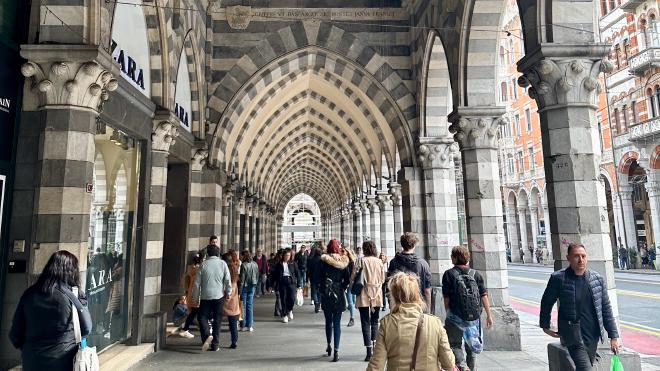
This lovely portico is on Via XX Settembre, one of the main shopping streets.
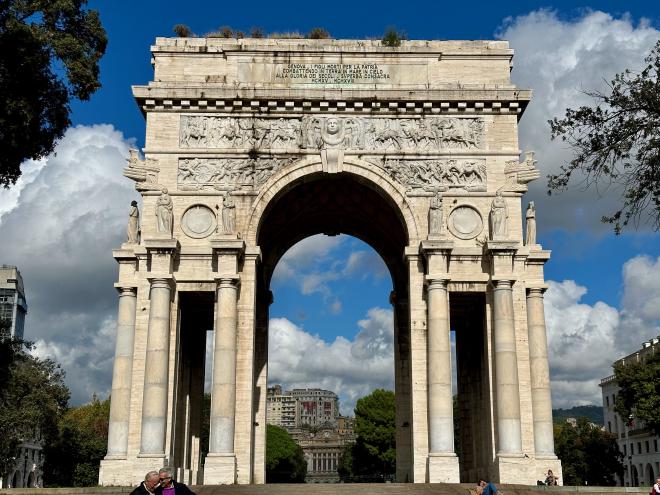
Arco della Vittoria is dedicated to the Genoese who died in World War I. No victory arch for World War II, for some reason.
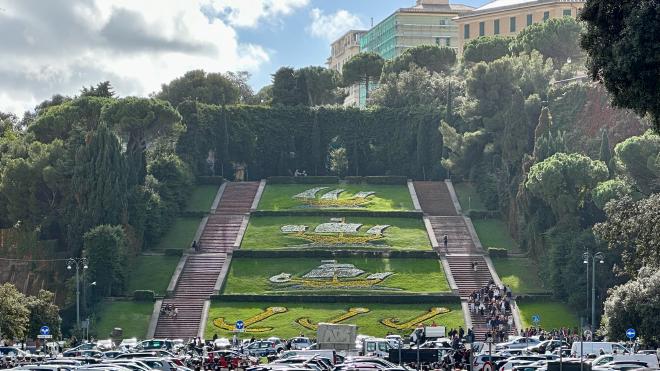
Another monument to that Christoforo Colombo dude. At least this one’s pretty.
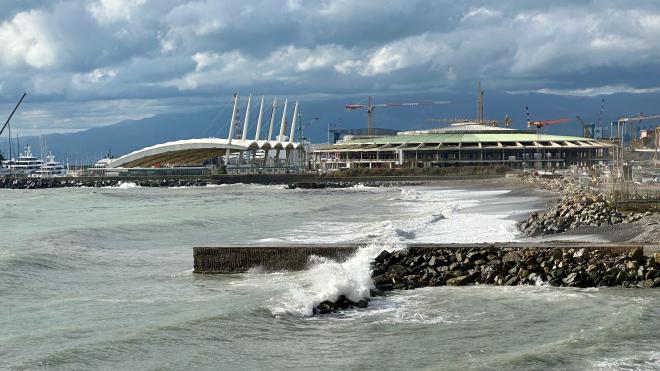
Eventually we made our way down to the waterfront and headed east a ways. The surf was coming in hard and we spent quite a while just watching the waves. See those big yachts at the far left? There’ll be another picture later.
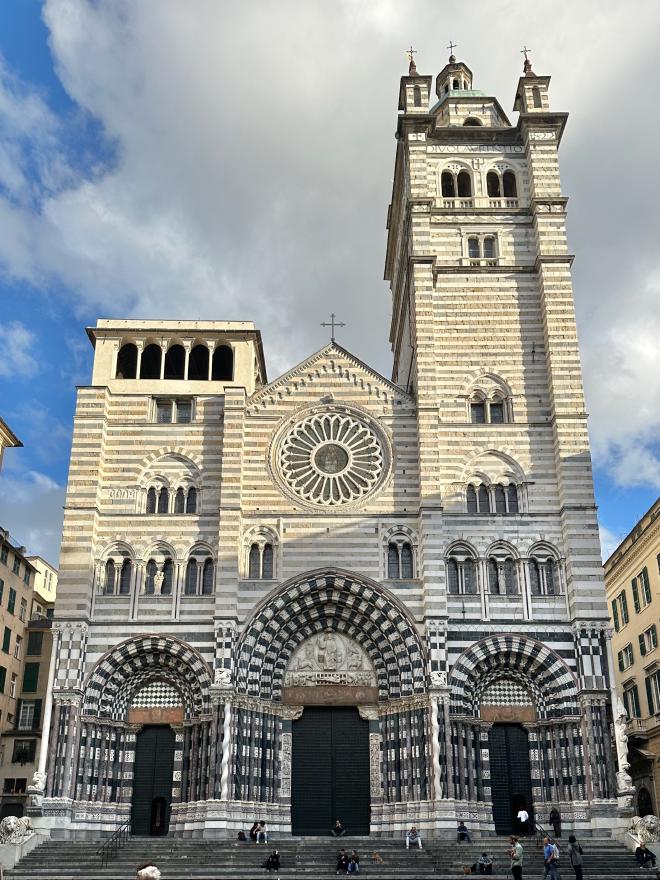
On the way back we visited the Cattedrale di San Lorenzo (Genoa Cathedral), built between the twelfth and fourteenth centuries in a mix of romanesque and gothic styles, having burned and been partially restored along the way. It was accidentally shelled by the British during the second world war, but the armour-piercing shell failed to go off in the relatively soft building material and is still in the Cathedral.
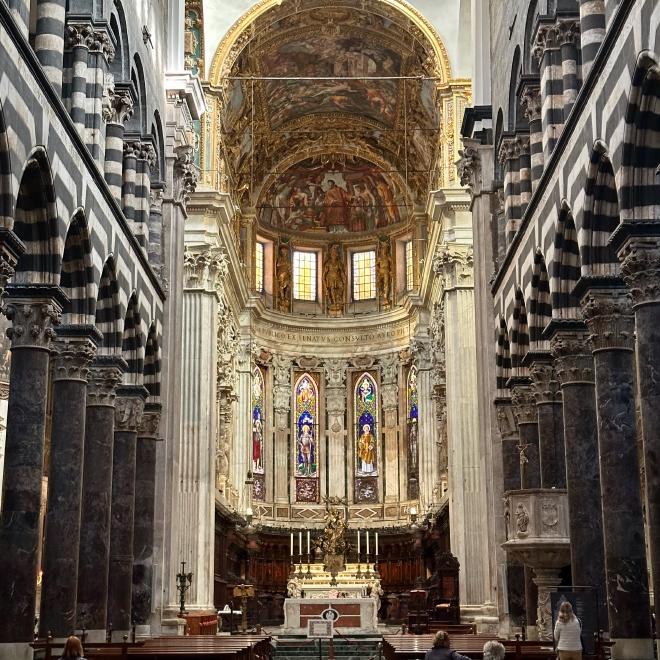
The interior of the Cathedral repeats the striped motif of the exterior and is decorated with lovely frescoes.
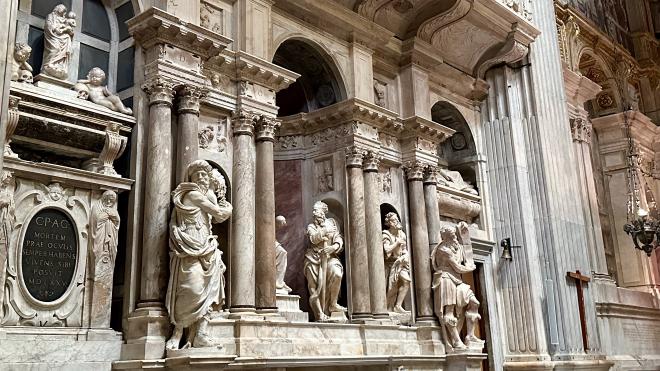
One of the side chapels has some very striking statuary.
We had decided to travel from Genoa to Barcelona via overnight ferry rather than taking the train across France. On the Thursday we checked out of our AirBnB, walked to the nearby bus station, and, after some confusion, eventually found the bus we needed to the ferry terminal.
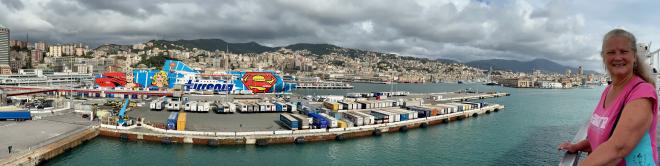
The Port of Genoa is a masterpiece of contempt for ferry foot passengers. However, after some incorrect directions, bad signage, way too long a walk, and some unnecessary stair climbing, we managed to make our way onto the ferry.
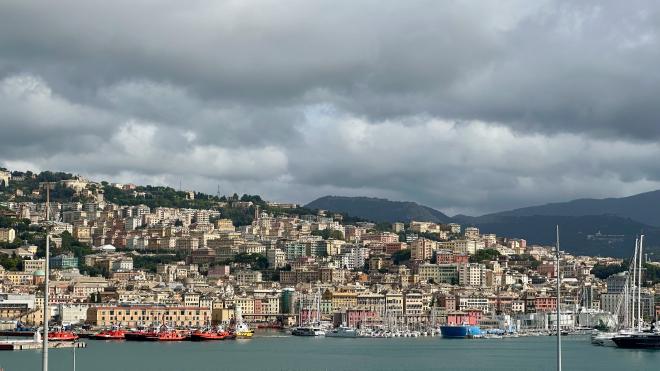
The city looks lovely from the middle of the harbour.
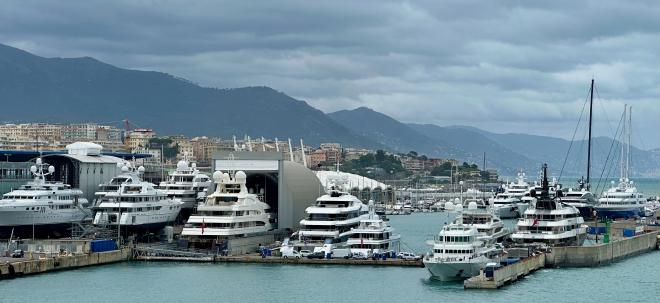
Remember those large yachts from a few pictures ago? Here they are up close, as the ferry was pulling out. Apparently there are a few people with money around Genoa.
And after leaving port, we were on our way to Spain.