Way back when we first started planning this trip, our friends Doreen and Alberto invited us to visit them in Milan – which sounded awesome, of course! Doreen is a professional juggler who performs with Gandini Juggling as well as in her own two-person Pigreco Company with Laura Colonna. Alberto is an associate professor of theoretical astrophysics at the University of Milano Bicocca who specializes in black holes and gravitational waves. Both of them have very busy work travel schedules, so we weren’t sure whether a visit would be possible, but with a bit of flexibility we found a slot.
From Milano Centrale (the train station) we took a bus to Doreen and Alberto’s, where Doreen got us settled in. Alberto was away participating in a scientific panel, making recommendations to guide the European Space Agency’s future research programmes. He returned later that night.
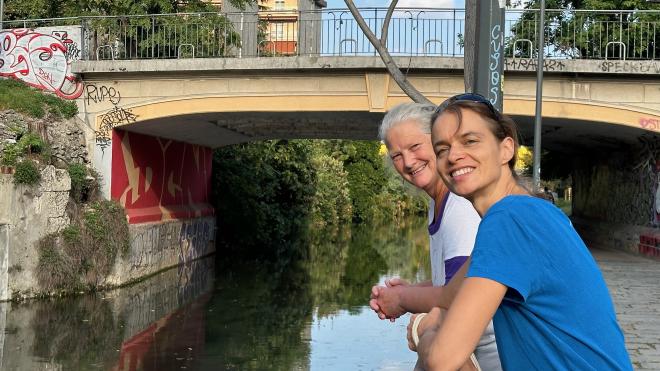
Doreen suggested that we go for a walk through her neighbourhood, so we could get a sense of where we were. They live in a suburban area in the north east of the city, near to the university campus where Alberto works. This canal is quite close to their place, and runs to the studio where Doreen normally trains, so she has a pleasant bike ride along its side on training days.
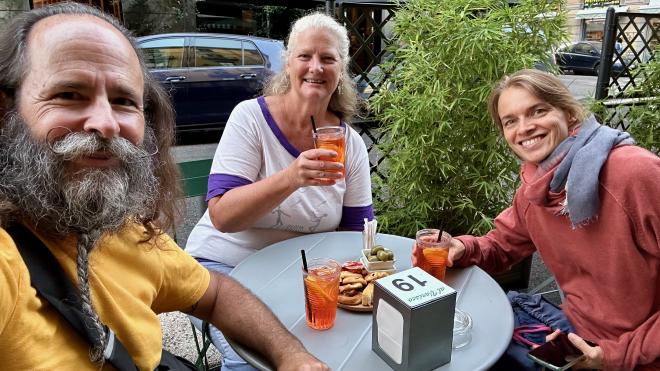
We ended our walk at Bar Tabbachi al Varisco, where we got our first taste of the Milanese tradition of aperitivo. This takes many forms, but at its simplest means that when you order a drink, you also receive some food alongside, similar to the way tapas is done in parts of Spain.
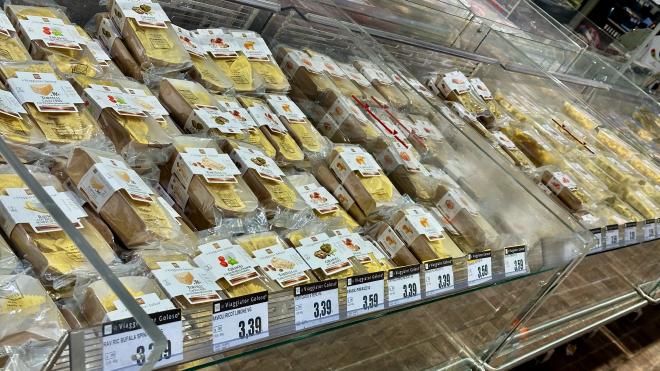
On the way back to Doreen’s we stopped at a supermarket to get some pasta for dinner. This is just a small part of the fresh pasta section – and it wasn’t a large supermarket.
The student association in Alberto’s department has an annual event called AstroTrek, where they go out as a group to hike up a nearby mountain. They also invite professors along. Or at least, they invite the cool ones, and Alberto apparently qualifies. Since we were going to be there on the day of the trek, Alberto invited us to join them and, after a bit of hesitancy on Karen’s part, we accepted. (Karen had hip replacement surgery in January of 2022, before which her mobility was significantly impaired. Since she’s still regaining strength and flexibility, particularly in her right leg, the hesitancy was justified. Spoiler: it wasn’t easy, but Karen was a total champ.)
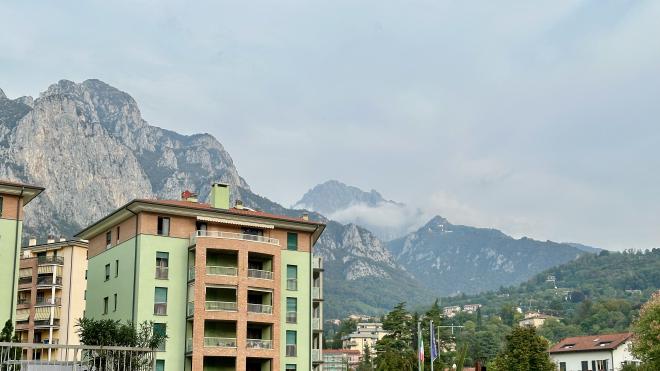
These are the mountains just north of Milan, as seen from the car on the way up. Alberto grew up in this area and has been a serious mountain hiker all his life. Doreen is a more recent convert, having grown up in Germany. On nice weekends in the summer they are often in the mountains.
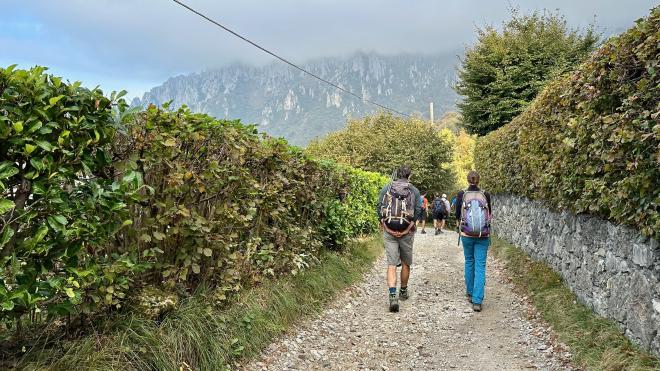
The trek was up Grignetta (also known as Grigna Meridionale), starting from Piani dei Resinelli and ending at Rifugio Rosalba. There were about fifty students participating. Alberto was the only professor to show, so the four of us were the only non-students and likely the only people over thirty on the trek. The route out of the parking lot initially went downhill, which we took as a bad sign, knowing how much elevation we needed to gain.
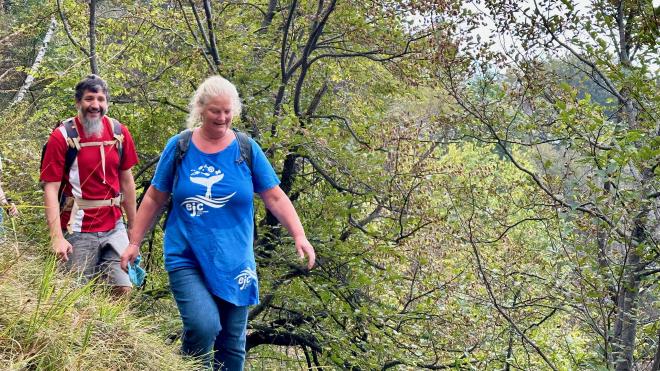
The lower part of the mountain was wooded, with fairly smooth paths.
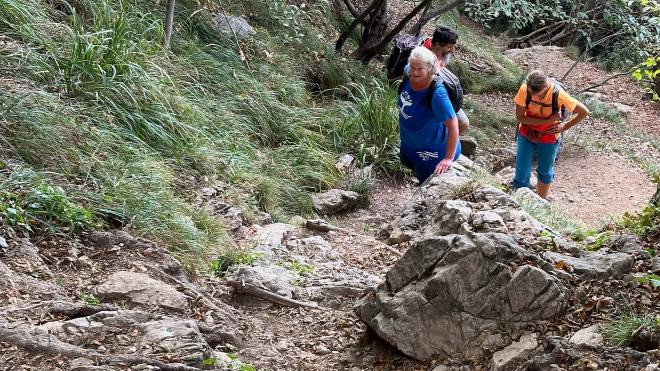
These soon gave way to more challenging climbing.
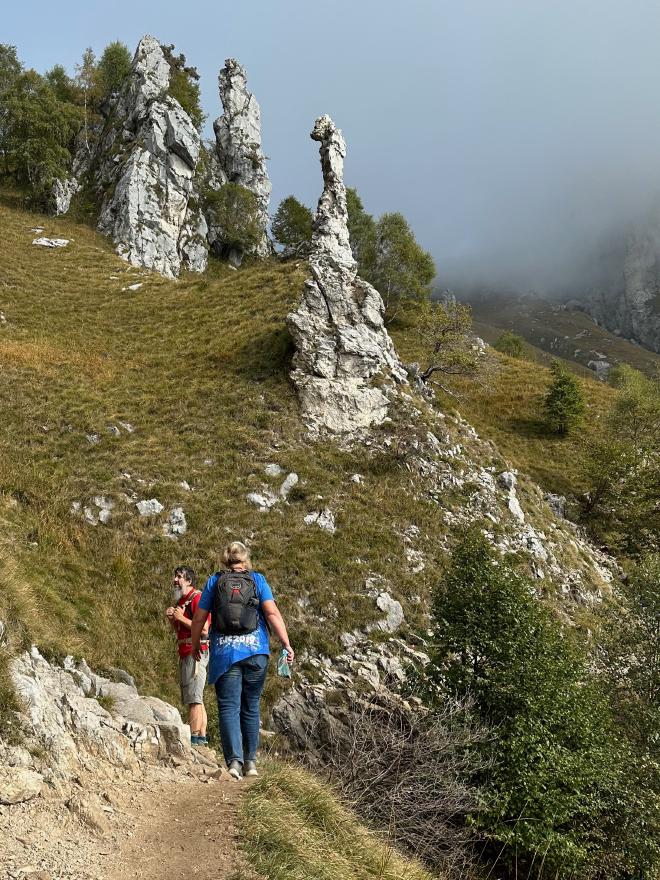
Once the woods opened up, we could see some very cool rock formations
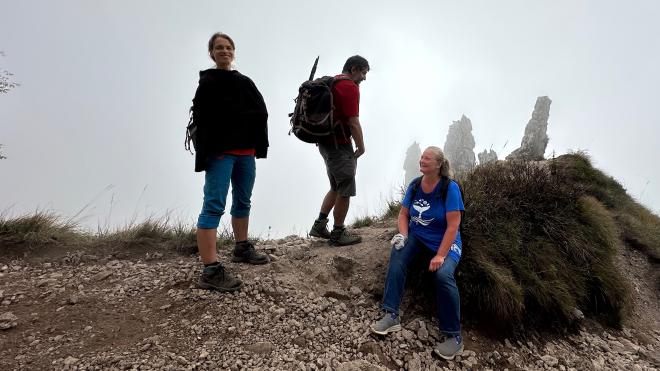
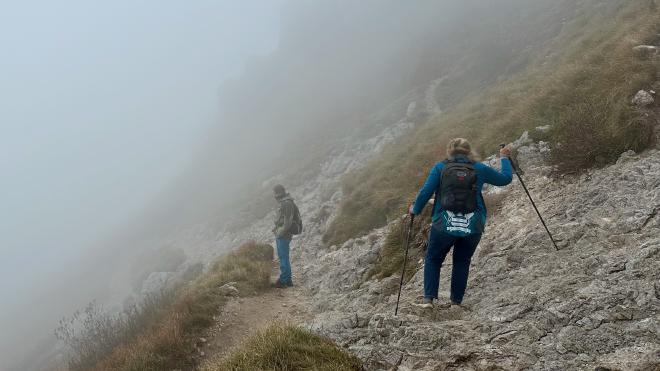
When we were a ways up the mountain we started going through bands of fog, as you can see at this rest stop. Alberto and Doreen were both clearly capable of going much faster, but were delightful company and didn’t seem to mind holding back to our speed.
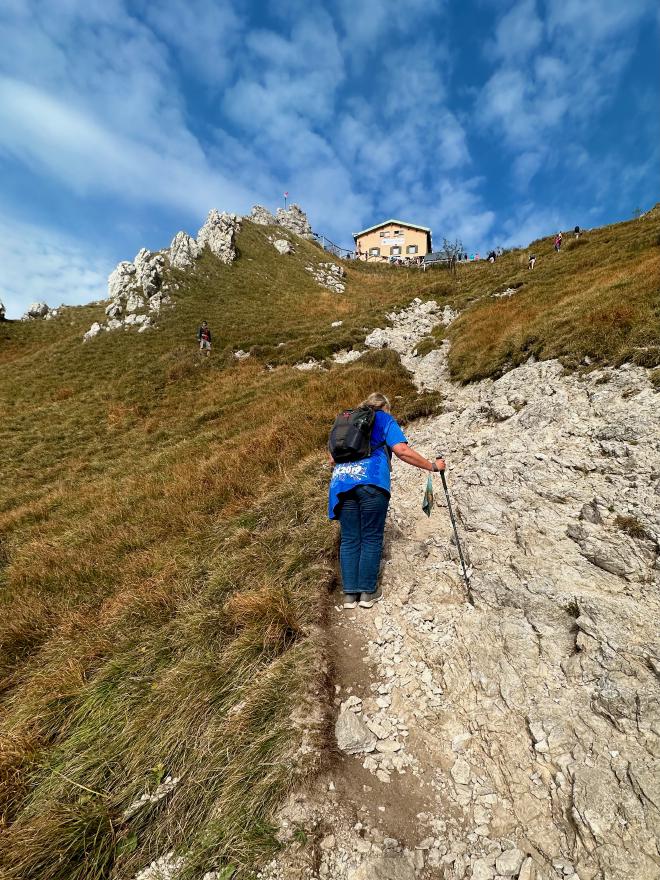
After a bit under three hours of climbing, the Rifugio came into view and there was just one last steep hill between us and a longer break.
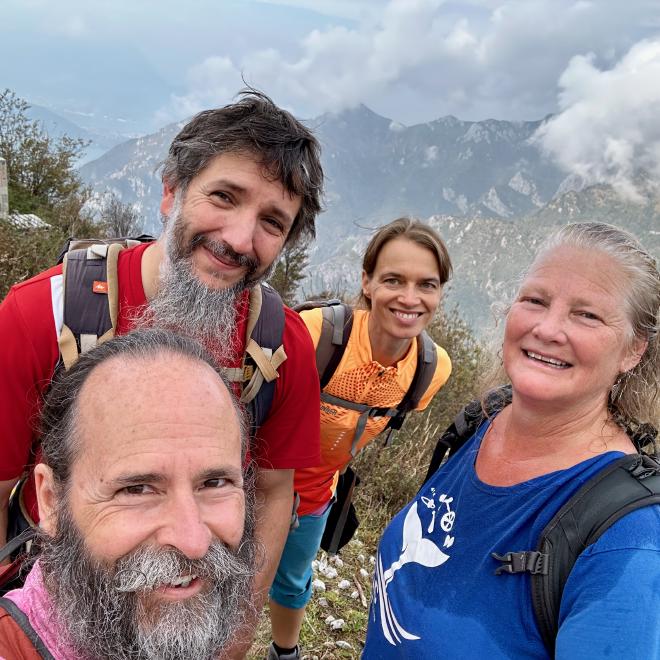
Four very sweaty hikers at the Rifugio. The route was about 3.8 kilometres, with 190 metres descent and 655 metres of climb, which is not bad for a sixty year old woman with a metal hip!
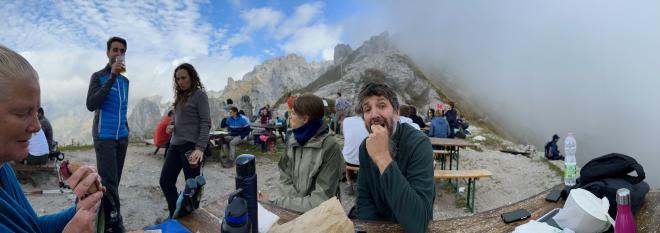
The Rifugio has picnic tables, toilets, and a small restaurant. We’d brought our own food, which was good, since the queue at the restaurant was long. See the big grey band on the right side of the photograph? That’s the fog. During our meal and afterwards this was quite dense on the side of Grignetta we’d hiked up. The far side of Grignetta was in brilliant sunshine. You can also see the start of the climb to the very top of Grignetta behind Alberto.
After our meal, we hiked back down the way we’d come with Doreen. Alberto took a different route: he first hiked up to the very top of Grignetta with some of his students, then ran (literally) down the most direct path to the car, drove it closer to our route so we wouldn’t have an uphill trudge at the end, and then hiked back up to meet us. We’re pretty sure Alberto is part mountain goat. It was initially foggy on the way down, but the sun came back out closer to the bottom.
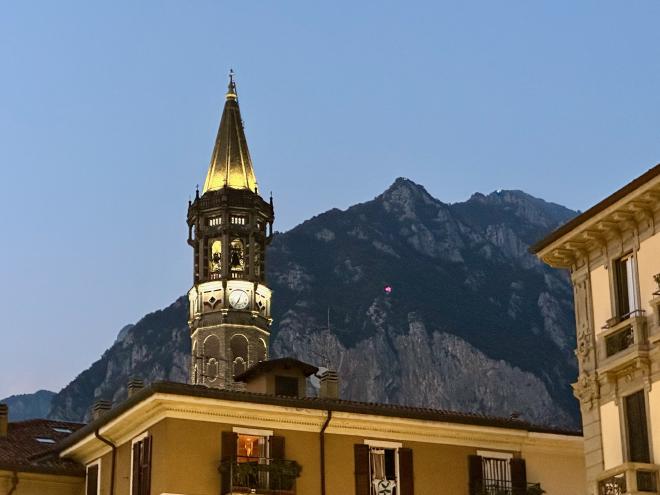
We changed into dry clothing at the car, then drove to the nearby town of Lecco, on the shores of Lake Como, where we had a nice seafood dinner at a place Alberto and Doreen suggested. After that, it was back in the car for the drive to Milan.
We were in Milan during the annual JazzMi Jazz Festival and on the Sunday afternoon of our visit there was a free solo saxophone concert. Doreen is a jazz fan and is currently learning to play saxophone, so we planned our day around the concert.
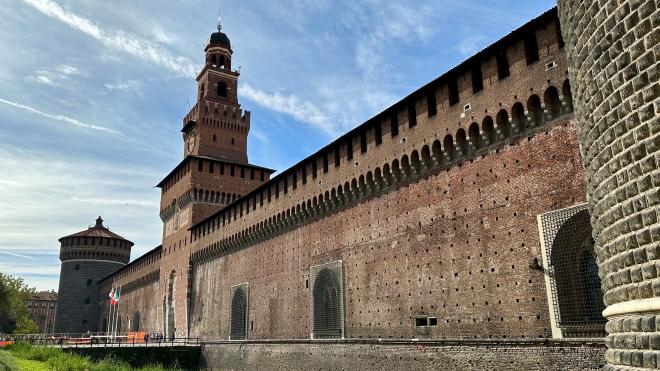
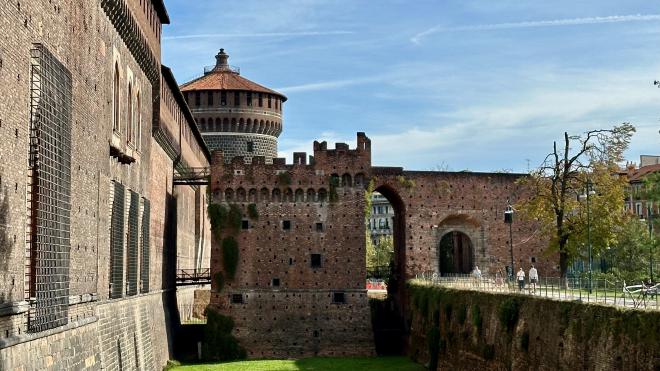
We started by taking the metro into town and then walking to the Castello Sforzesco. The Castello has a long and complex history of construction, destruction, rebuilding, expansion, and renovation, mostly in the 15th and 16th centuries.
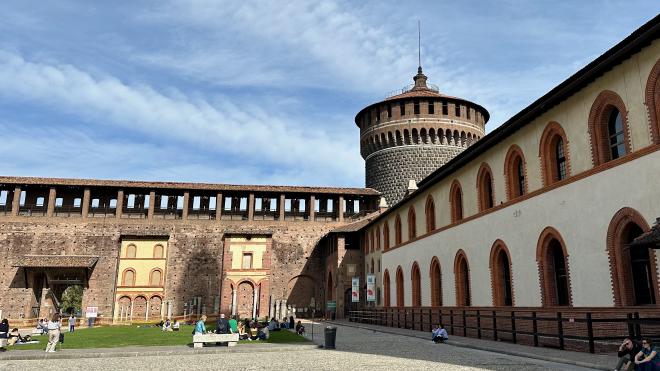
The interior courtyards are public parks and the Castello houses several museums (which we didn’t visit). Some interior rooms are decorated with frescoes by Leonardo da Vinci.
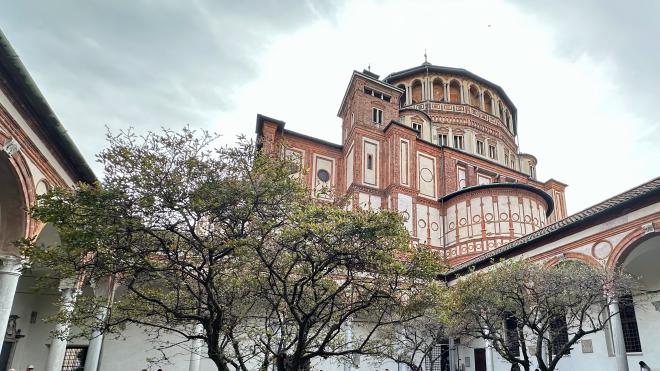
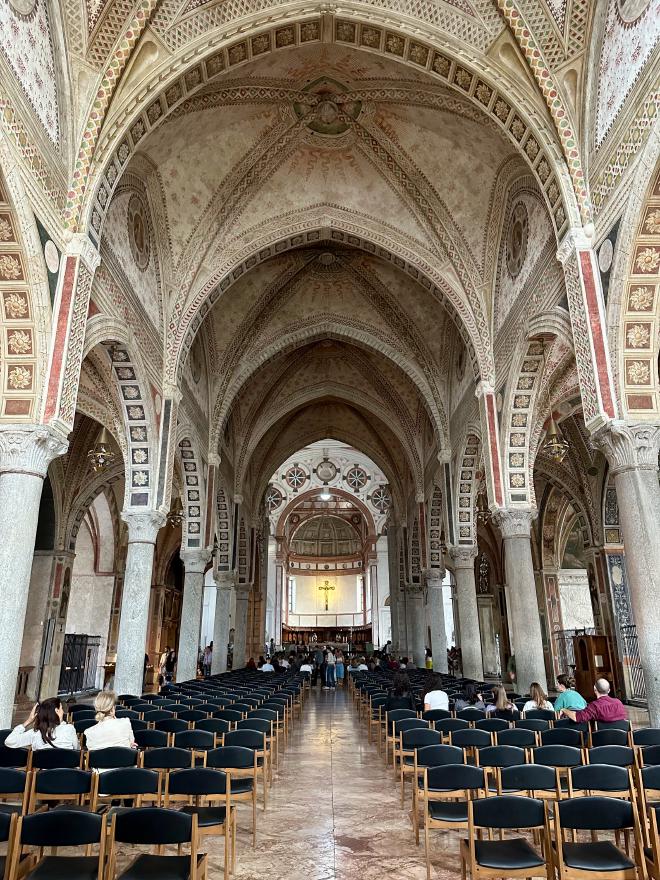
The interior has beautiful carvings and frescoes, which we toured while waiting for the concert to start. One fresco we didn’t see was da Vinci’s Last Supper, which is in the refectory of the adjoining monastery and requires a ticket. Maybe next time.
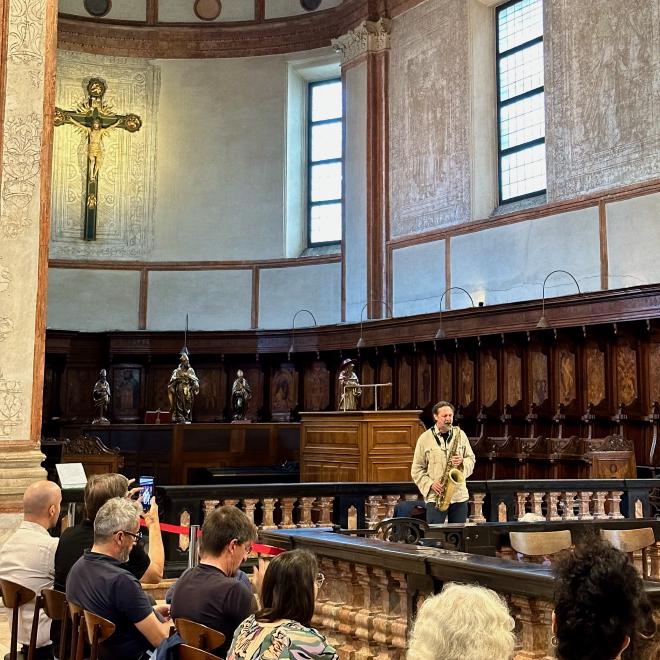
The concert was Dimitri Grechi Espinoza solo on tenor saxophone, playing unamplified from the extreme front of the church to take advantage of the magnificent acoustics. The music was very mellow, moody and ambient. Doreen managed to snag a seat right beside the Dimitri (just off the left edge of this photo) so she could watch his fingering.
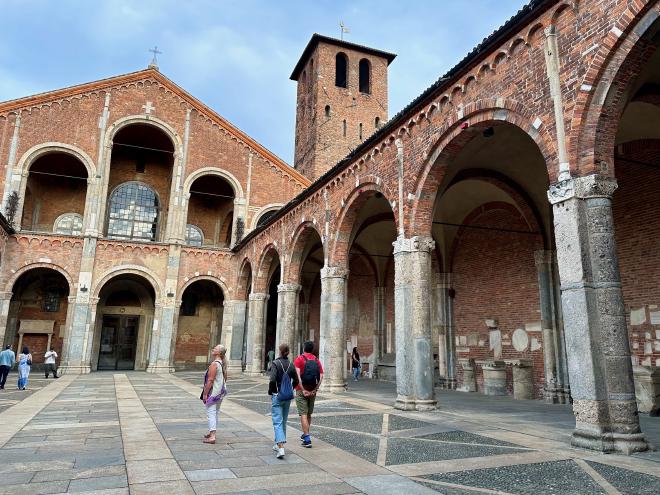
After the concert we visited the Basilica of Sant’Ambrogio, parts of which date from the original construction between 379 and 386 CE. Most of the current structure was built between 1080 and 1140.
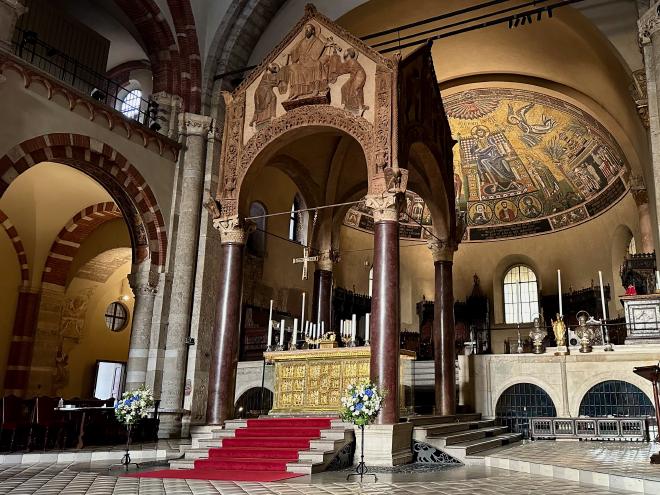
The inside features this magnificent canopied altar, with a lovely mosaic behind it.
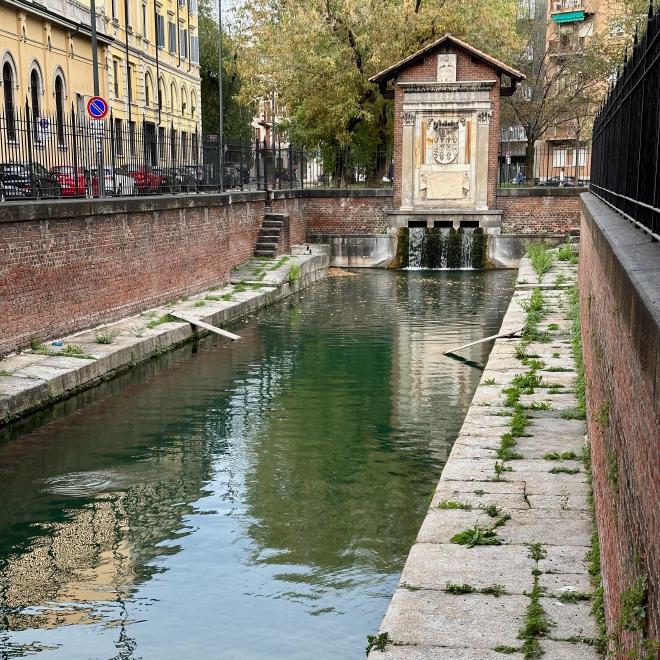
We continued our wander through the town centre. This long basin is all that remains of the Conca di Santa Maria, Europe’s first canal lock, built in 1438.
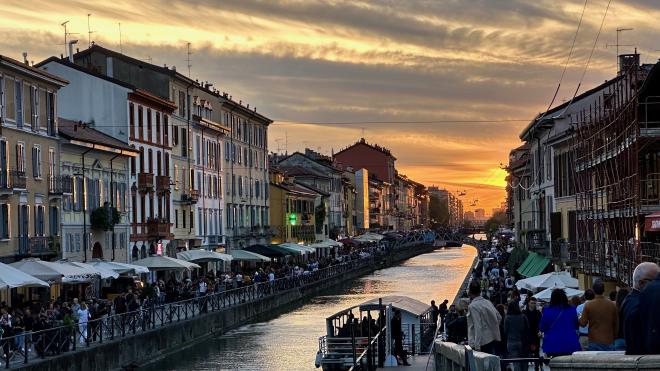
Milan does still have canals, including a couple of large ones that saw extensive use in the rebuilding of the city after World War II. This is one of them, Naviglio Grande, which is now surrounded by restaurants. We had dinner beside the canal at a bar called Spritz Navigli Milano that offers its own take on aperitivo. At Spritz Navigli the drinks are quite pricey – 15€ when we were there – but ordering a drink gives you “free” access to their extensive buffet of hot and cold foods. Of course, we all had Aperol spritz, because what else can you do in a restaurant with a name like that?
The next morning Alberto left for another European Space Agency meeting, this time in Paris. Doreen was training in the morning, but free at lunch, so we planned our day around meeting her in Milan’s Chinatown. Our main objective for the afternoon was what is arguably the biggest and best-known tourist attraction in Milan, the Duomo (Cathedral).
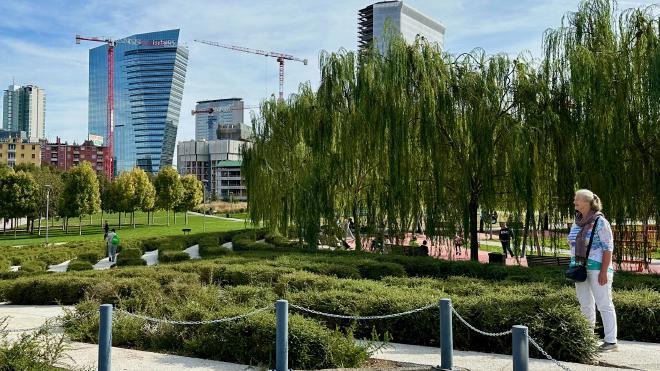
At Doreen’s suggestion we took the metro to a stop near the Biblioteca degli Alberi or Library of Trees. This is a recently-built large urban park with many different kinds of trees, wildflower areas, a children’s playground, and exercise equipment. We had a lovely time wandering around looking at the greenery.
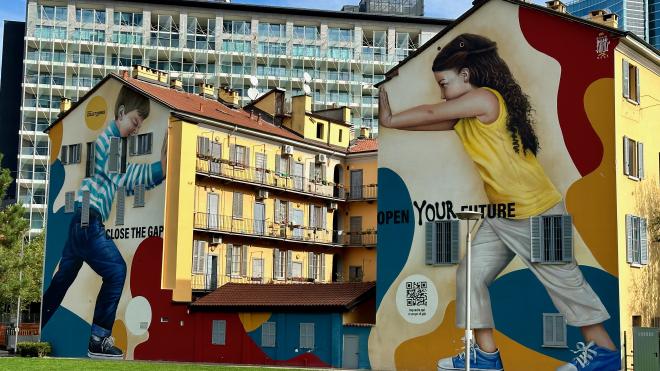
At the edge of the park was this clever mural.
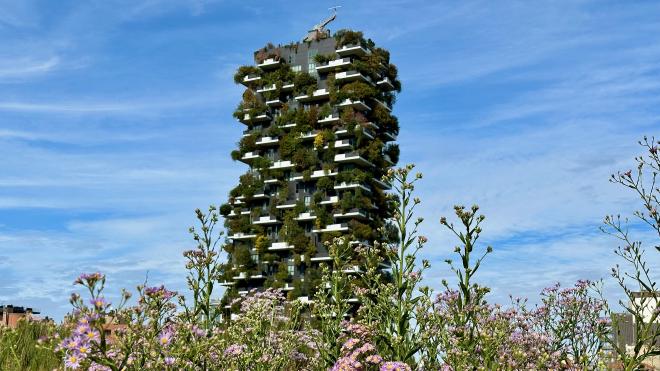
Beside the park are two buildings known as the Bosco Verticale. These have been described as “homes for trees, with people living in them” and are an award-winning, radical approach to urban re-forestation. This view is taken across one of the Biblioteca’s wildflower patches.
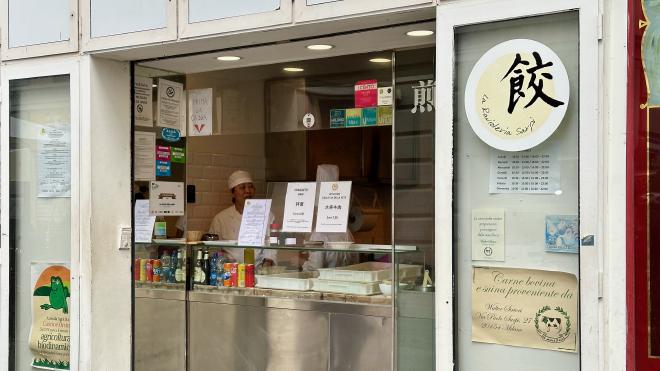
From the Biblioteca we walked to Chinatown, where we met up with Doreen and had lunch on the street, purchased at La Ravioleria Sarpi. Doreen tells us this was the first street food place to open in Chinatown. Now there are dozens of them, all selling different foods. The menu at La Ravioleria Sarpi is quite small, mostly Chinese dumplings and savoury pancakes. The lunch was inexpensive, filling and delicious.
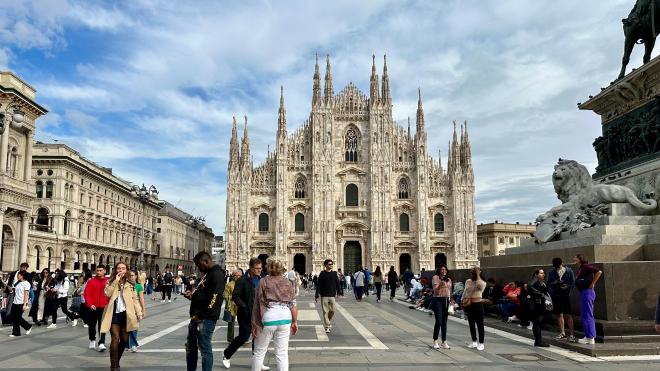
After lunch we said goodbye to Doreen and continued our walk to the Milan Cathedral, better known as the Duomo, passing once again through the Castello Sforzesco. We bought tickets to climb up to the Duomo roof and tour the interior and its museum.
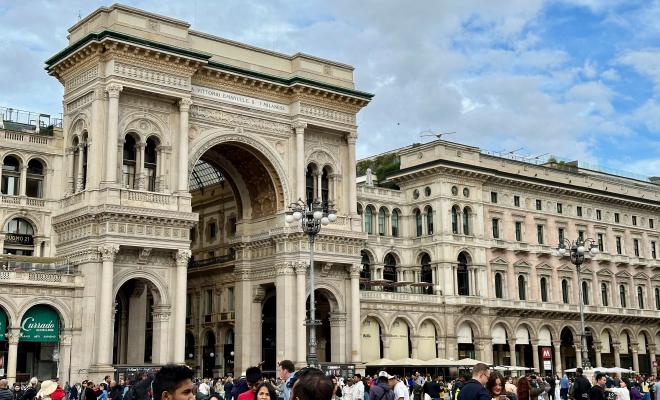
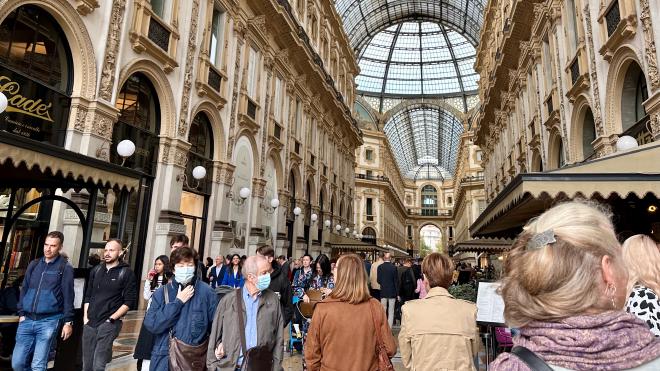
While we were waiting for our time slot for the climb, we took a walk through the Galleria Vittorio Emanuele II, just off the Duomo’s piazza. This enormous arch is one of four entrances to the cross-shaped building.
The Galleria is Italy’s oldest active shopping gallery, constructed between 1865 and 1877. It is full of very high-end shops and is likely some of the most expensive retail real-estate in Europe.
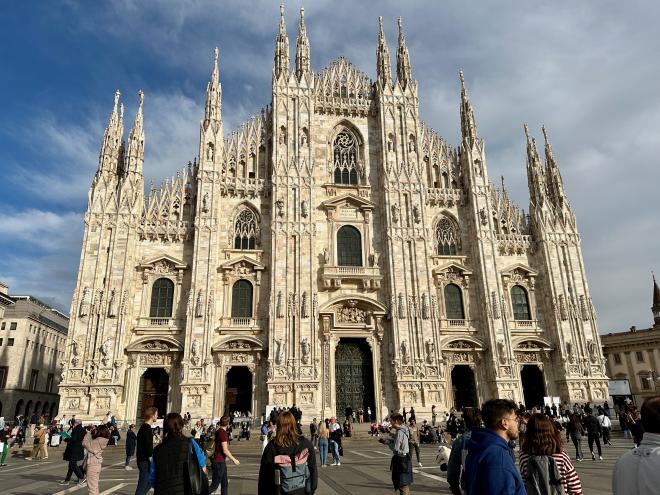
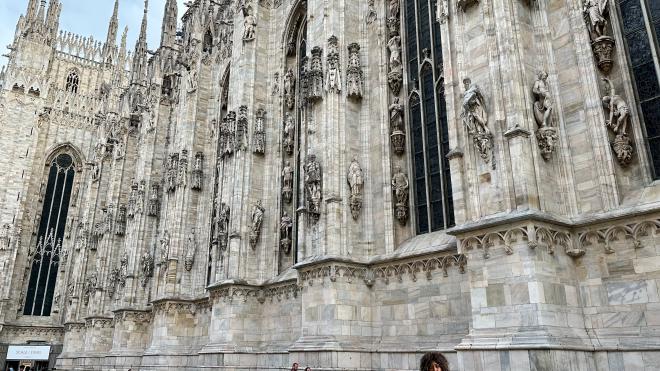
Then it was back outside to the Duomo, which is an extravagantly-decorated gothic structure, completely sheathed in Candoglia marble. Construction began in 1386 and stuttered over the centuries, with the essentials of the current structure finished in about 1811 and the Duomo finally declared complete in January of 1965.
There are hundreds of sculptures on all faces of the Duomo. This is the side where the entrance to the stairs is, just at the bottom left of the photograph.
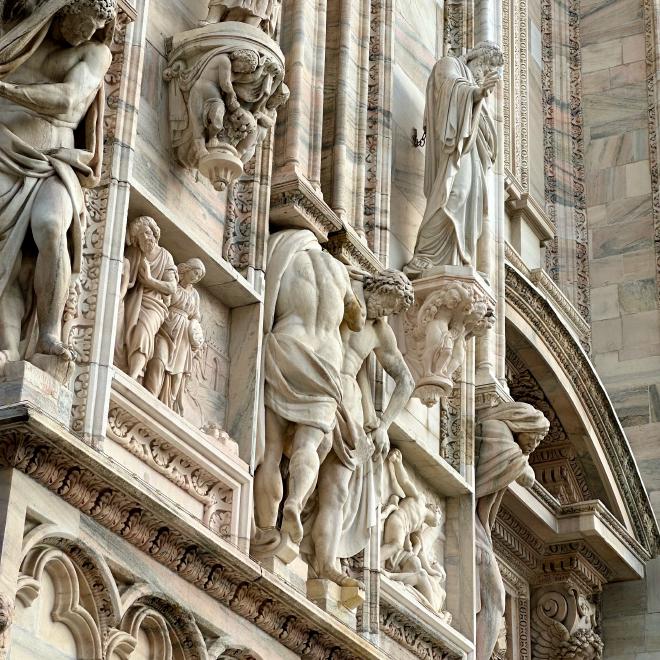
Here is a detail shot of a few of the sculptures on the front.
Eventually our time slot came around and we walked up the stairs onto the lower roof. The intricate detail on every part of the building is almost overwhelming.
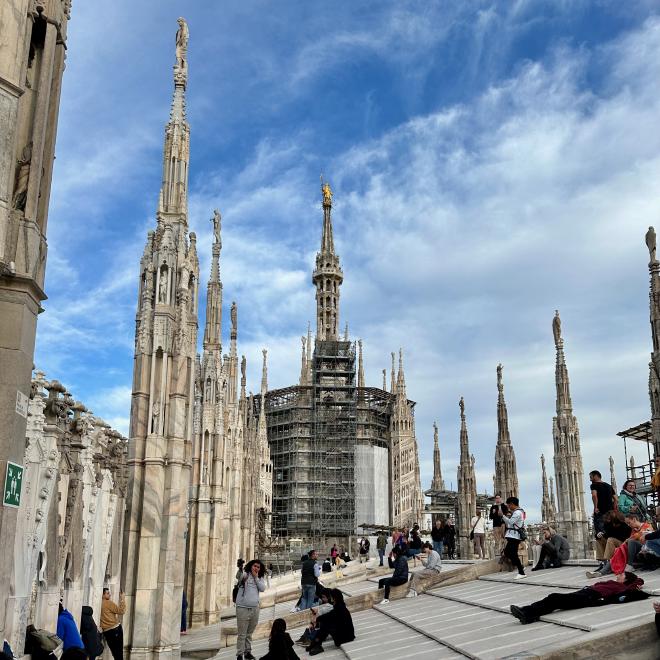
From there we went along the side of the building and climbed to the upper roof. Even the roof tiles are marble. Like most historic buildings of its size, the Duomo is under constant renovation.
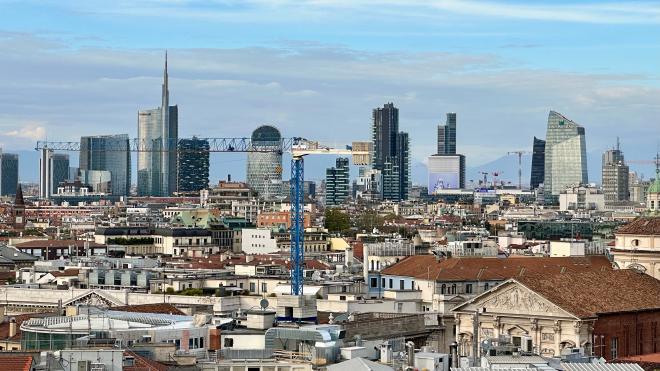
The views from the rooftop were lovely.
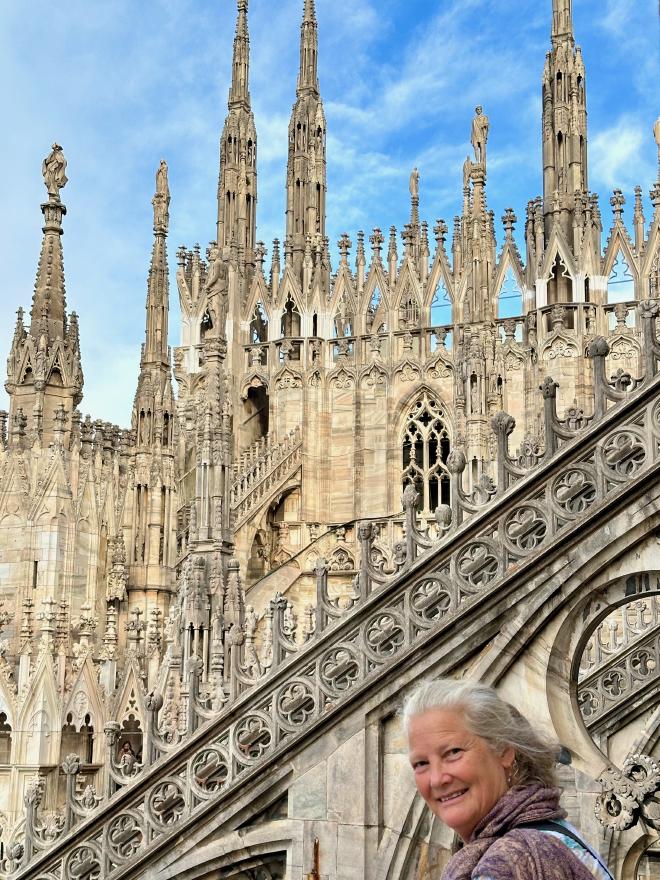
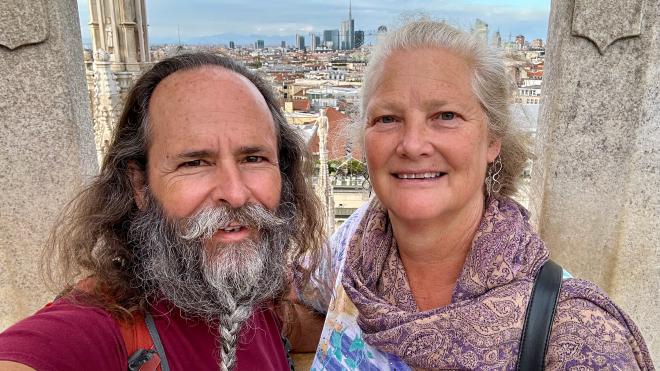
And here’s a selfie.
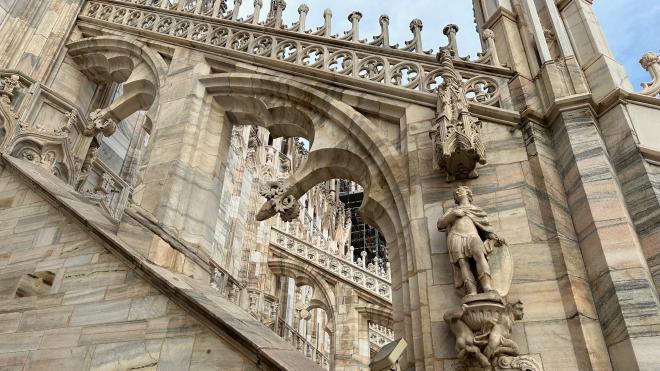
We took way too many photographs of the Duomo roof and statuary to include, but here’s another of one of the buttresses.
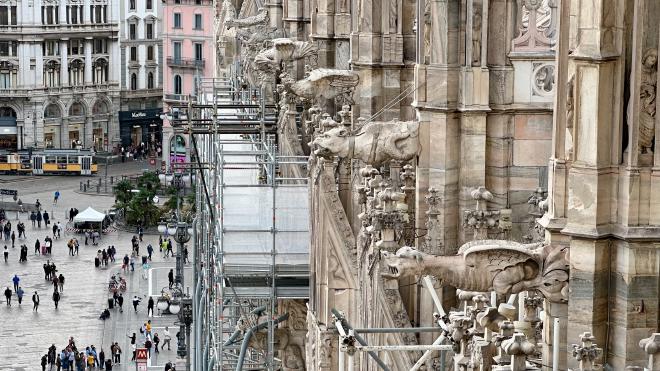
And no cathedral roof photo set would be complete without some gargoyles.
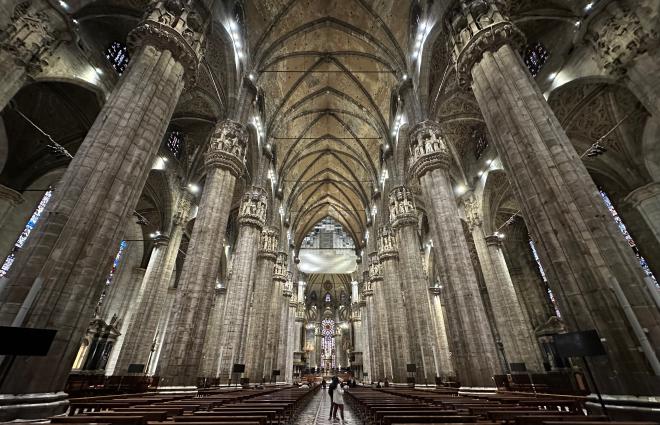
Eventually we descended directly into the interior of the Duomo which is vast, beautiful and complicated, but somehow also an anti-climax after having been on the roof.
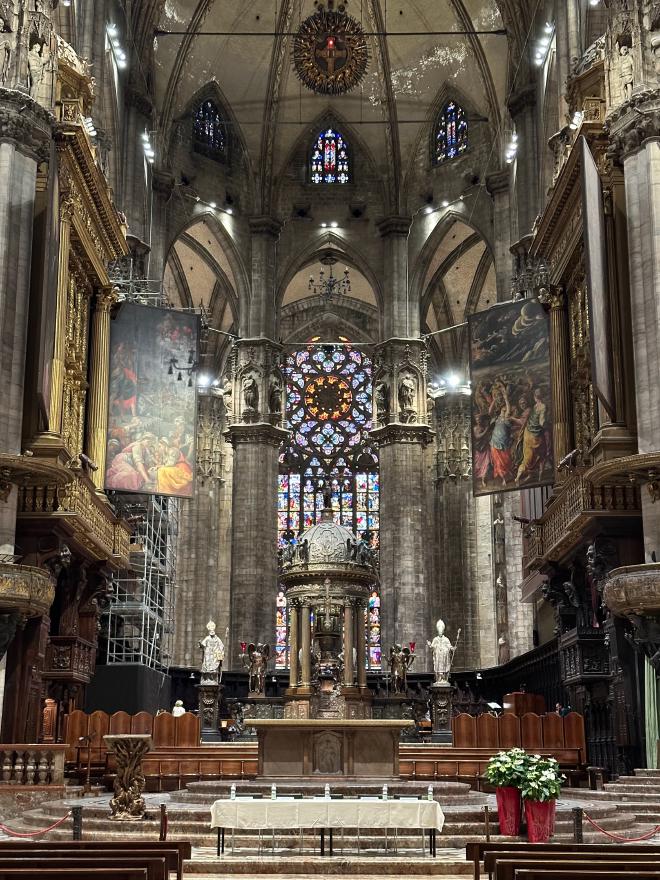
Its altar is quite beautiful though.
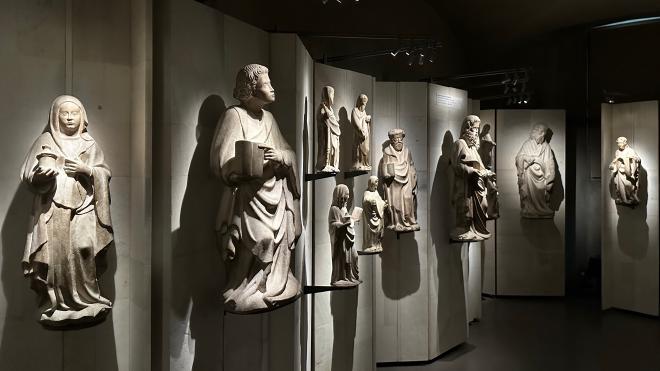
From the Duomo we went to the museum, which houses hundreds more pieces of statuary that have been removed from the Duomo and replaced over time. It also includes exhibits about the Duomo’s construction.
From there it was back to Doreen’s place for a quiet evening.
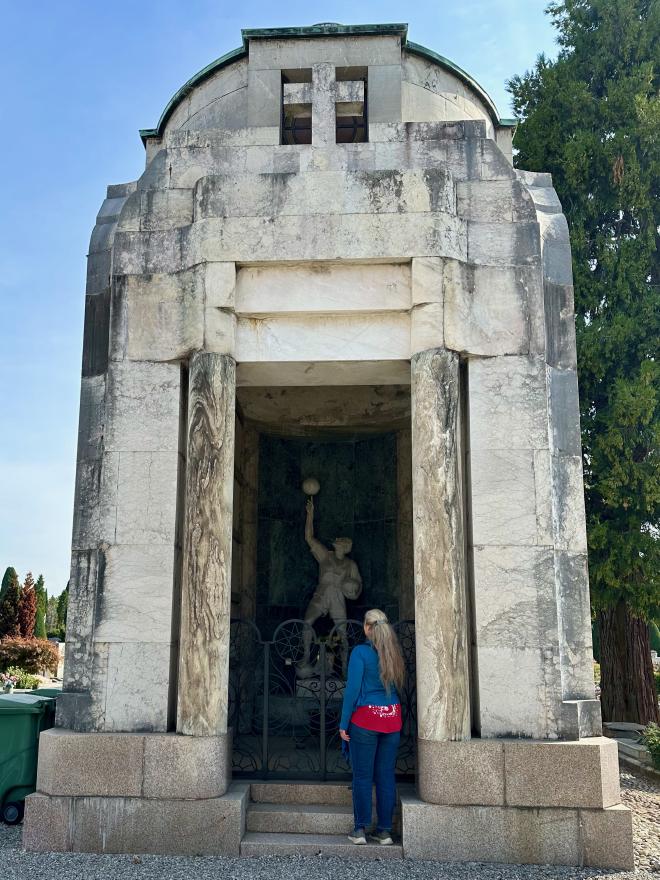
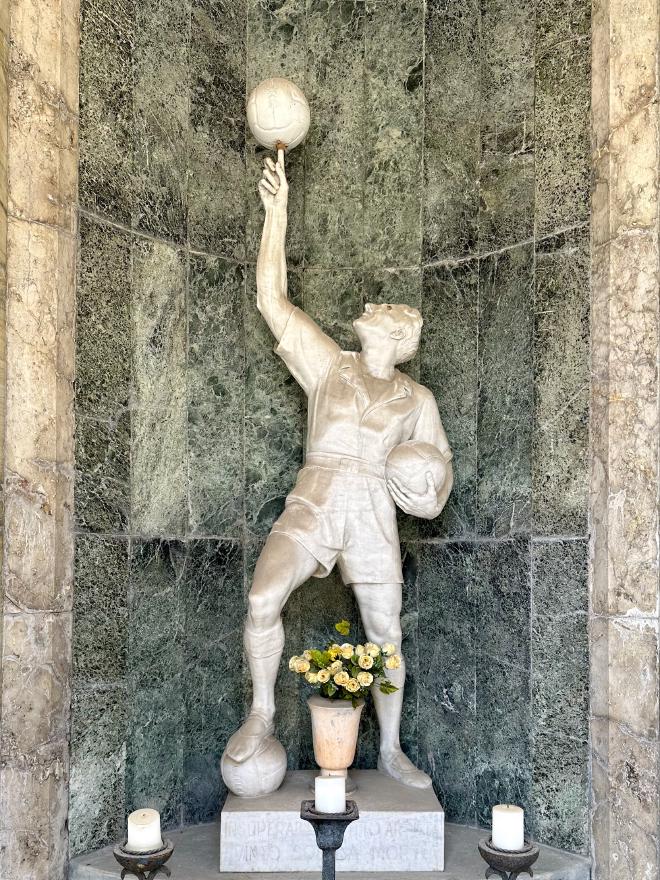
On the Tuesday we decided to take a day trip to the nearby town of Bergamo. This was partly because we’d heard it was a lovely place to visit, but mostly to pay a visit to the tomb of Enrico Rastelli.
Jugglers will know who Rastelli was, but for everyone else: Rastelli has been described as “the father of modern juggling” and “the greatest juggler who ever lived”, and the video by the latter name provides a good understanding of why. There are lots of other great videos of him on YouTube, and a wonderful collection of photos on the International Jugglers’ Association web site.
The train to Bergamo leaves from a station quite close to Doreen and Alberto’s, so we walked there. While we were waiting for our train, we got to watch all the students from Alberto’s university arriving on commuter trains for classes.
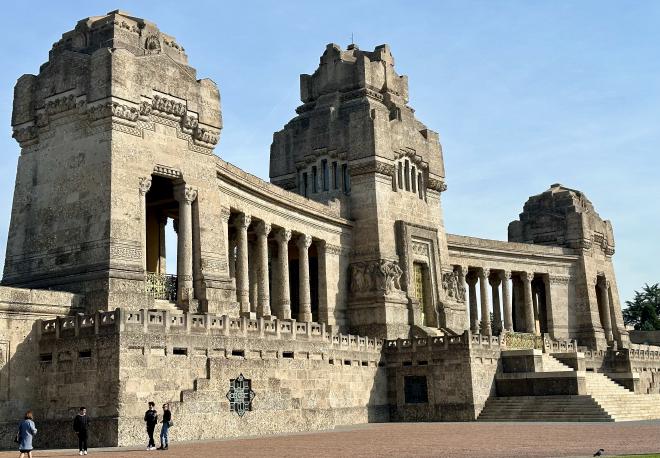
On arriving in Bergamo we bought public transit day passes and took a tram to the neighbourhood of the cemetery. Rastelli is buried in the Monumental Cemetery of Bergamo, which is fronted by this massive structure.
The official at the gate didn’t speak any English, but he knew what we were looking for as soon as Greg mentioned Rastelli’s name. Fortunately we were able to decode enough of his Italian to find the tomb without too much trouble. For those who will come after us: from the entrance, walk straight ahead up the obvious street leading away from the gate; the tomb is at the fifth intersection on the right hand side.
Rastelli was born in 1896 in Russia to a circus family from Bergamo, which is where he lived . He had a brilliant but all too short career, dying on 13 December 1931 after suffering an infection believed to have been caused by a cut from a juggling mouth stick. At the time of his death he was truly a world famous entertainer, on a scale no juggler since has equalled. Thousands attended his funeral.
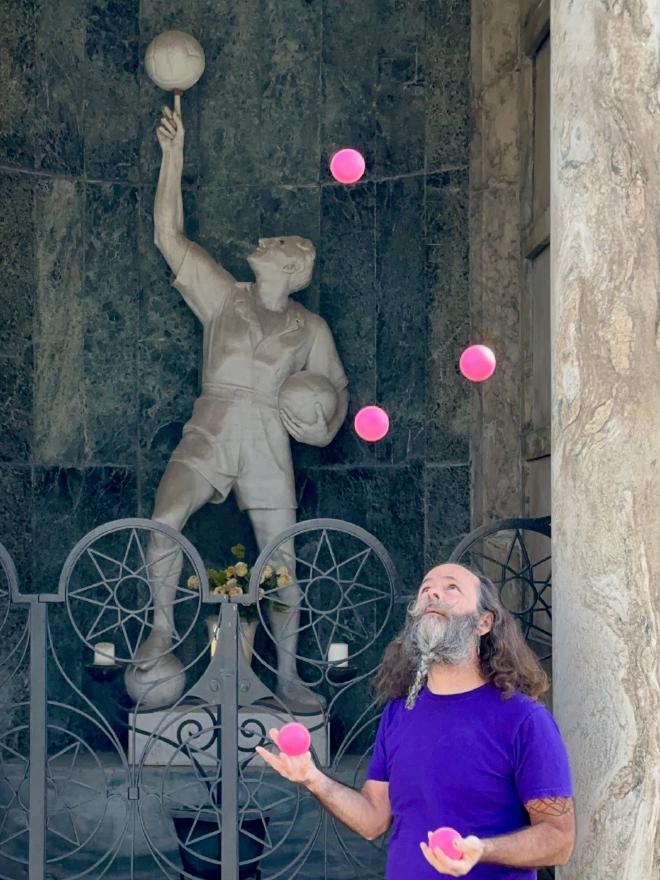
Like many other jugglers who have come to render their respects to the master, Greg paid homage by juggling in front of the tomb. We think Rastelli would have approved.
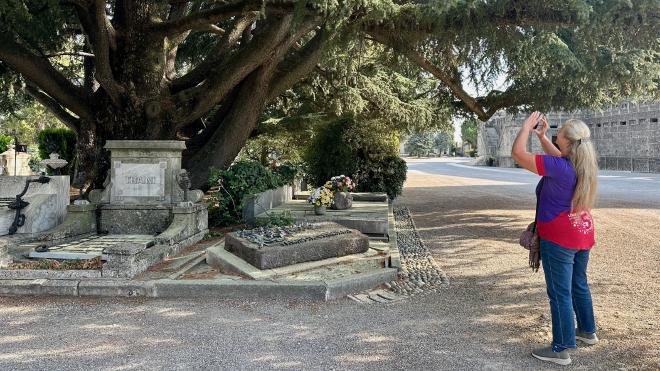
After visiting Rastelli’s tomb we took a walk around the cemetery, which is quite large and includes the tombs of many other notable Bergamo residents. Here’s a photo of Karen taking a photo of a tree amongst the tombstones.
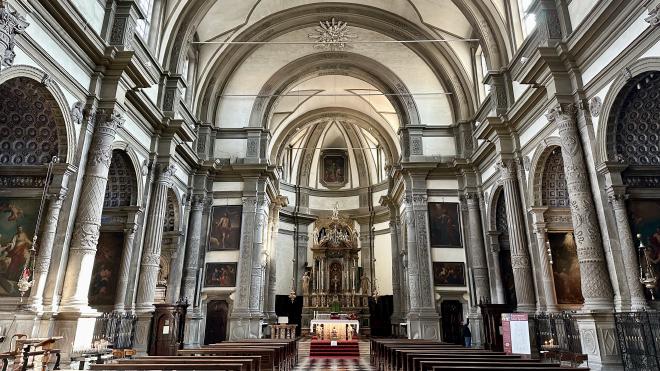
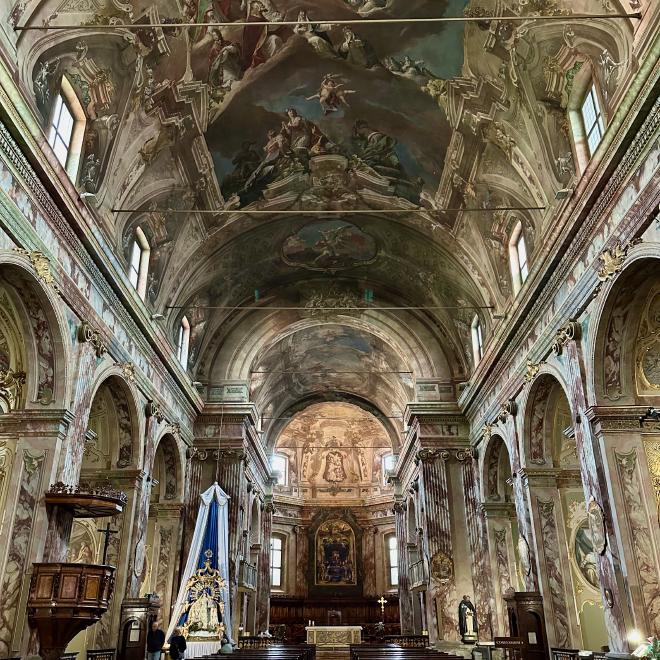
From the cemetery we first wandered through lower Bergamo, poking our heads into any church we walked past.
Every one proved spectacular.
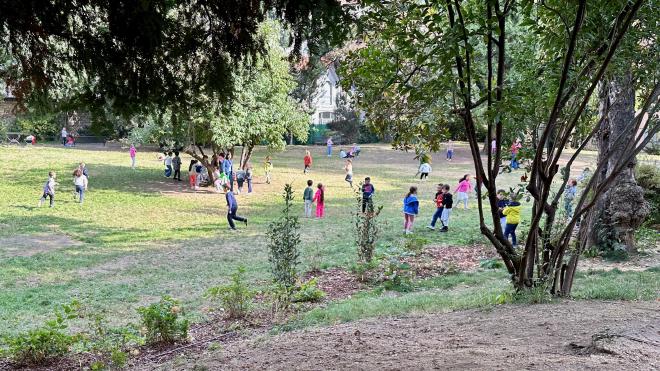
The Bergamo guide we’d consulted said that this park, tucked behind one of the main shopping streets, was “hidden” and “romantic”. Which likely would have been true had it not been filled with elementary school kids on their lunch break.
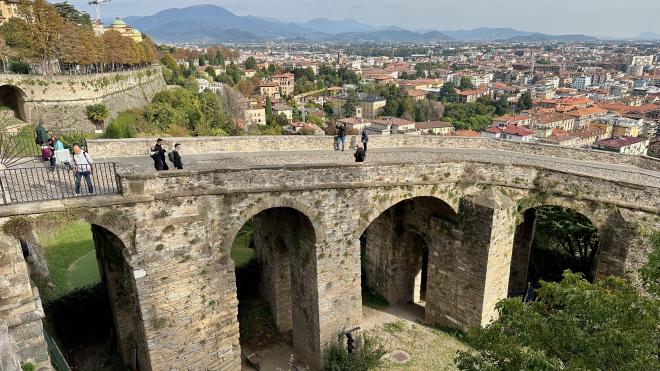
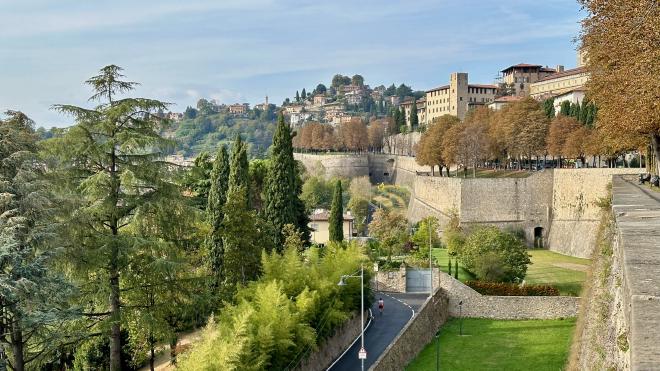
From lower Bergamo we took the funicular up to Città Alta, the upper town. (The funicular is part of Bergamo’s urban transit system, and was included in our day tickets.) This is the walled upper city, with defences mostly constructed when Bergamo was part of the Venetian Republic between the 15th and 17th centuries.
The walls surround the entire hill and are a massive engineering work.
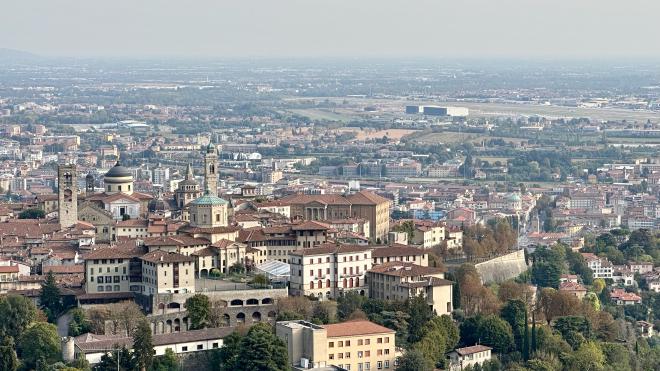
There’s a third level of Bergamo, above Città Alta, which is dominated by Bergamo Castle, also known as Rocca di Bergamo. We took another funicular to the very top, which had truly spectacular views. In this picture, Città Alta is in the foreground on the lower left and centre, with lower Bergamo spread out beyond it.
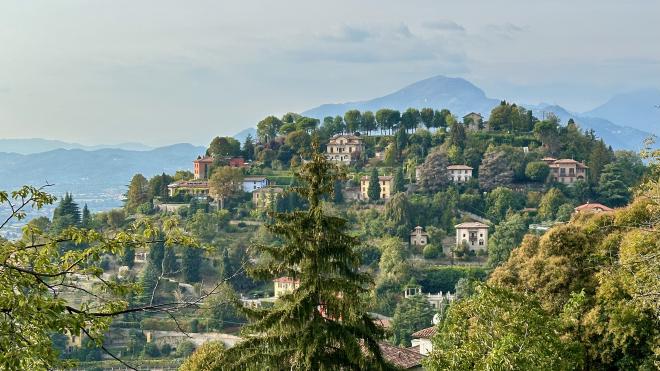
This is the view westwards from the top of Rocca di Bergamo. We’re sure those homes on the next hill would be very reasonably priced.
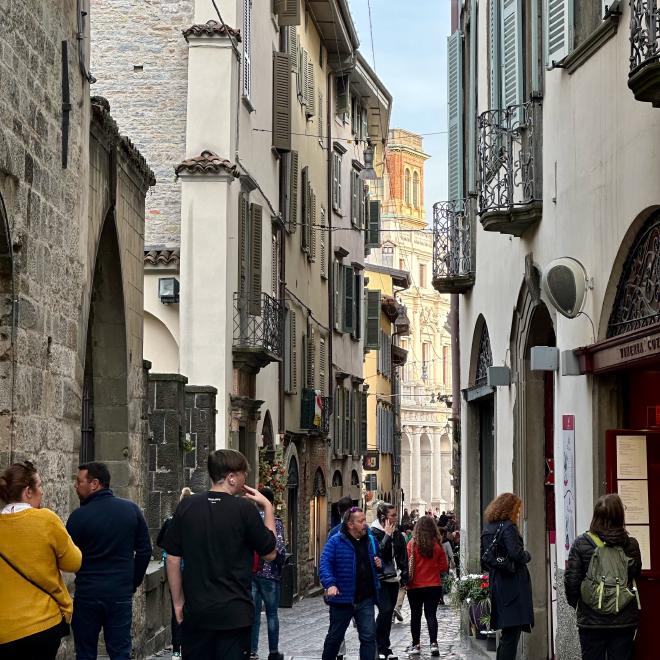
We took the funicular back down from the castle and walked through Città Alta, which is a classic medieval Italian town.
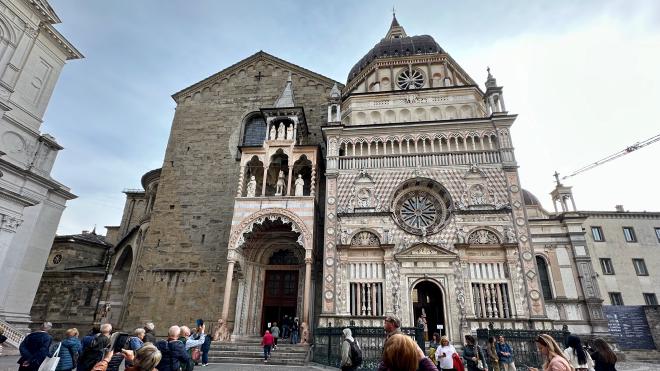
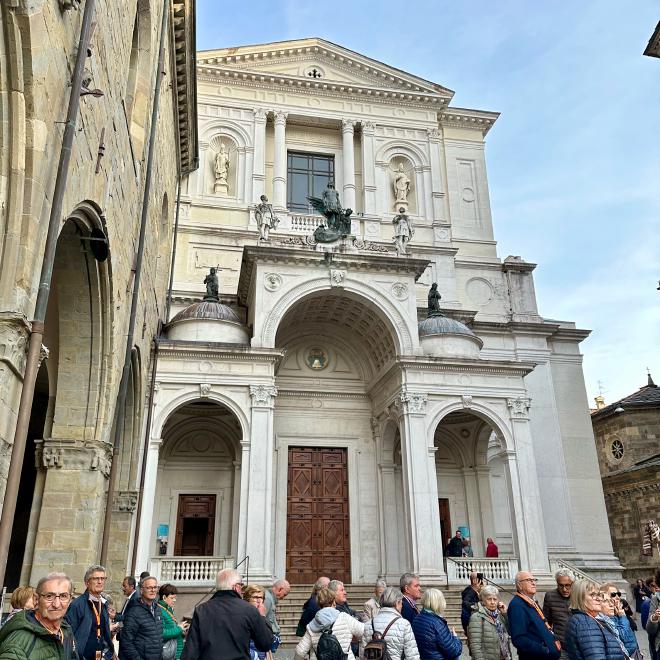
Just off the Piazza Vecchia (Old Square) in Città Alta are three churches: the Cattedrale di Sant’Alessandro Martire (partly visible far left, and see the next photograph), the Basilica di Santa Maria Maggiore (the rather plain building with the ornate entrance, left of centre), and Cappella Colleoni (the very ornate building adjoining the Basilica).
We visited the Cappella Colleoni, which is a privately-owned chapel built by Bartolomeo Colleoni, Captain-General of the Republic of Venice, in the 1470s as his personal tomb. Unfortunately, the Cappella has a strict no-photography policy, so we can’t show you the beautiful interior. The Basilica charges an admission fee that we didn’t feel like paying, so no interior photos of that either.
We did visit the Cattedrale di Sant’Alessandro Martire. This is also known as the Bergamo Duomo, and was originally constructed in the 9th century, considerably refurbished in the 17th, and renovated again in the 19th, including construction of its current façade.
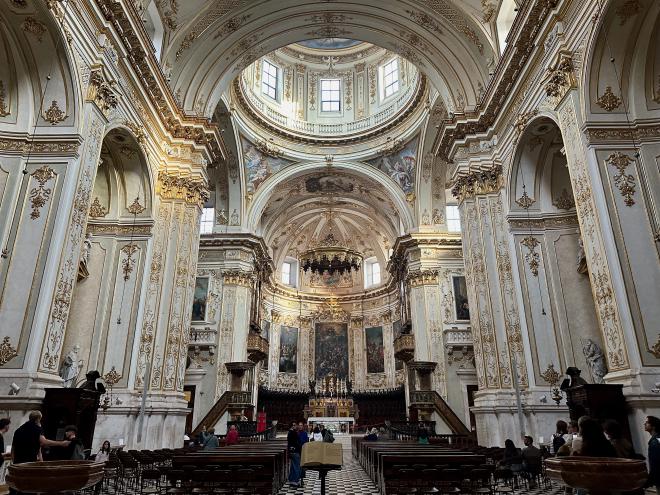
The interior of the Duomo is known for its extensive gilding and beautiful paintings.
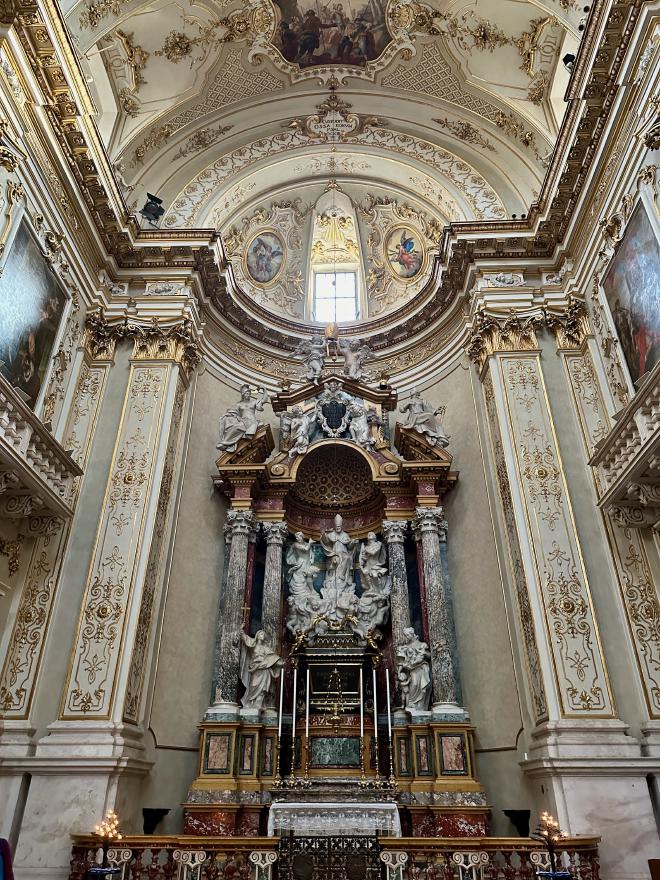
This side chapel was particularly beautiful.
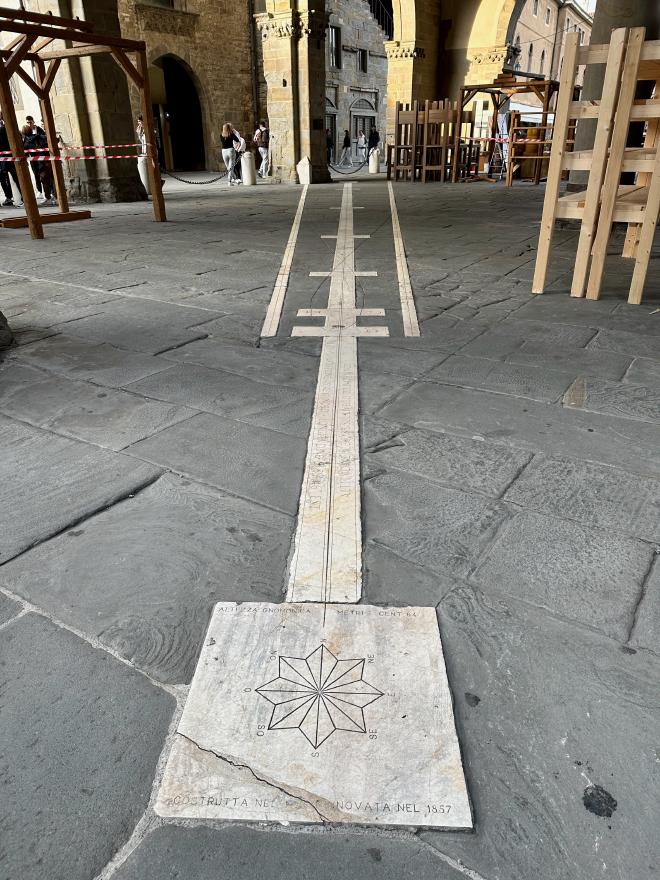
Just beside the Duomo is the Bergamo Analemna, an important astronomical instrument. There’s a detailed explanation of the analemna on page 11 of this issue of the Journal of the Coventry and Warwickshire Astronomical Society.
We had a very nice dinner at the restaurant of Circolino Città Alta, then hopped a bus back to the train station and returned to Doreen’s for the evening.
The Wednesday was cold and wet, with a forecast high of just 12ºC, and we had evening plans, so we decided to take the day for rest and maintenance.
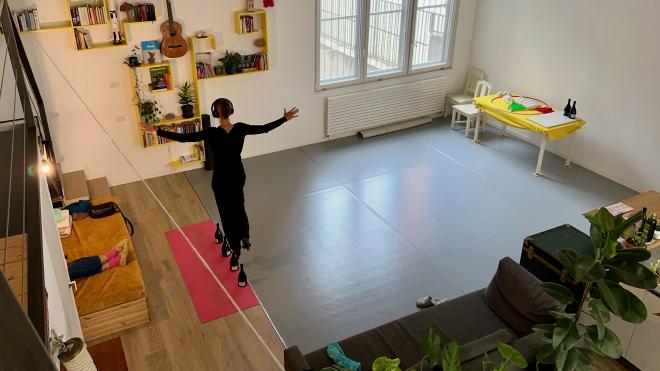
Doreen practiced playing saxophone and spent some time training her various acts, one of which involves walking across wine bottles in high-heeled shoes. This is the view from the loft, where our bedroom was, to the combined kitchen, living room, and circus training space that makes up most of Alberto and Doreen’s main floor. Karen is tucked under the stairway at left. Yes, that’s an embedded rubber floor, no, there are no downstairs neighbours, and yes, the ceiling is every bit as high as it looks: the perfect jugglers’ home!
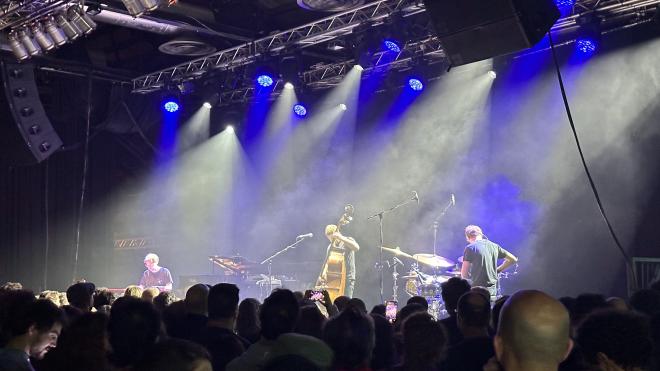
Our plan for the evening was to attend another Jazz Festival concert with Doreen and one of her friends at Alcatraz Milano, a large music club in the city. The three of us went for pizza at a restaurant near Alcatraz, met Doreen’s friend at the club, then escaped the rain and cold in the warm building. The artist was GoGo Penguin, an instrumental trio from Manchester. We don’t have the vocabulary to describe what they played, but Wikipedia says their music “… features break-beats, minimalist piano melodies, powerful basslines, drums inspired from electronica and anthemic riffs”, which sounds about right to us. Was this a concert we would likely have gone to on our own? No. Are we glad that Doreen suggested it, and did we have a great time? Absolutely yes!
We can’t thank Doreen and Alberto enough for the wonderful time we had in Milan, including pushing Karen outside her comfort zone physically, with the mountain hike, and both of us to see something new artistically, with the jazz concerts! Plus they’re both just lovely people.
But, as much as we were enjoying Milan, the next morning it was back on the bus to the train station and onwards, to Florence.