The next cities we planned to visit were in Italy, and the best way to get from Greece to Italy was again by ferry. The nearest ferry port to Athens with ships heading that direction is Patras, about a three and a half hour drive to the east. From Patras you can get ferries to several Italian destinations, but for us the most efficient and cost effective port was Bari, on Italy’s south-east coast. Since we were going to arrive in Bari in the early morning anyway, we decided to spend a couple of days there before heading north.
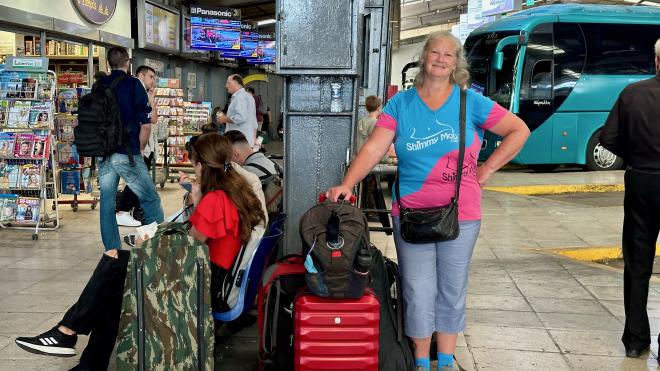
We took a local bus from our apartment to the KTEL intercity bus station, which is essentially a large metal shed with about forty bays, a few stores and fast-food restaurants, and very little seating. Fortunately we don’t mind standing, especially before boarding transport where we’ll be on our butts for several hours. Our bus was an express, which took us directly to downtown Patras.
On arrival in Patras we had lunch in a restaurant near the intercity bus station, then caught a local bus south towards the ferry terminal. We still had about a kilometre from the closest bus stop to the ferry terminal, but it was a nice day and the walk was pleasant enough. The Patras terminal was actually well-organized with a comfortable waiting area (we’d seen some negative reviews) and they provided buses from the terminal building right to the ship.
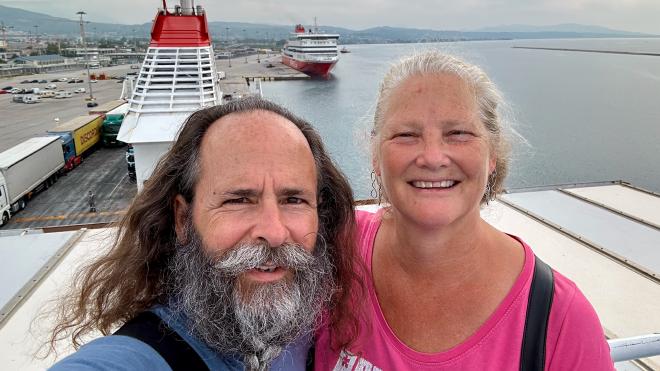
We were on the Superfast II. The trucks you can see just to the left of Greg’s head are on the ferry, which had a very large vehicle area almost entirely full of transports. The ship behind us is another ferry in the Superfast line, very similar to the one we were on.
After an uneventful and quite comfortable night’s journey we arrived at the port of Bari about 9 the next morning, then walked to our AirBnB where we dropped the bags off with our host.
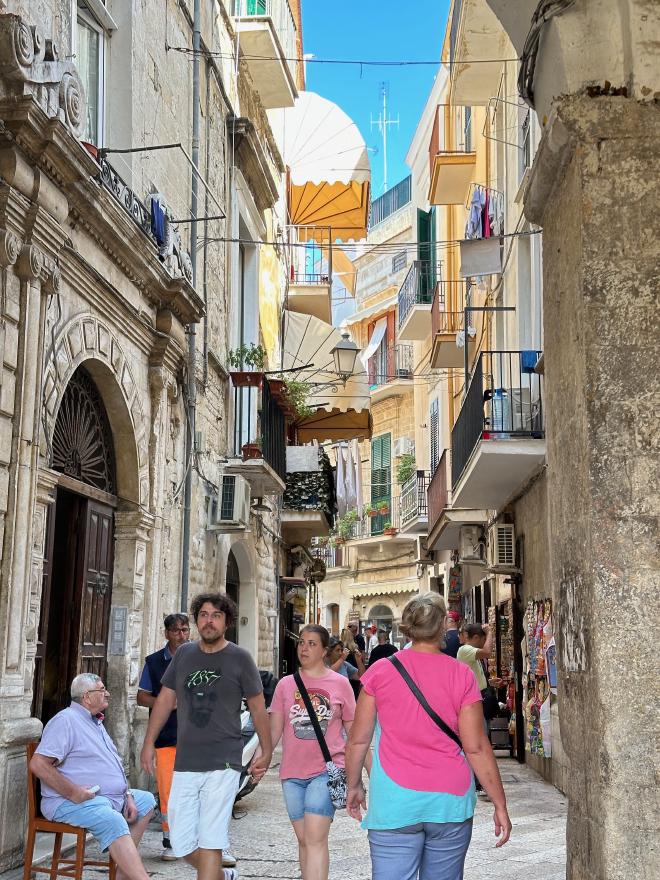
From there we headed out to explore the Old Town, while we waited for our room to be ready. Old Bari is a medieval city, with the usual maze of narrow twisty streets.
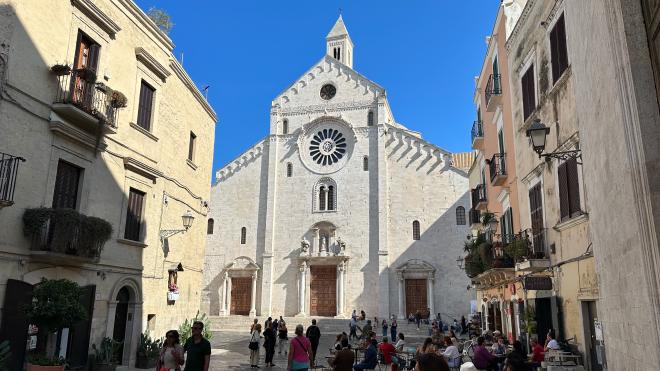
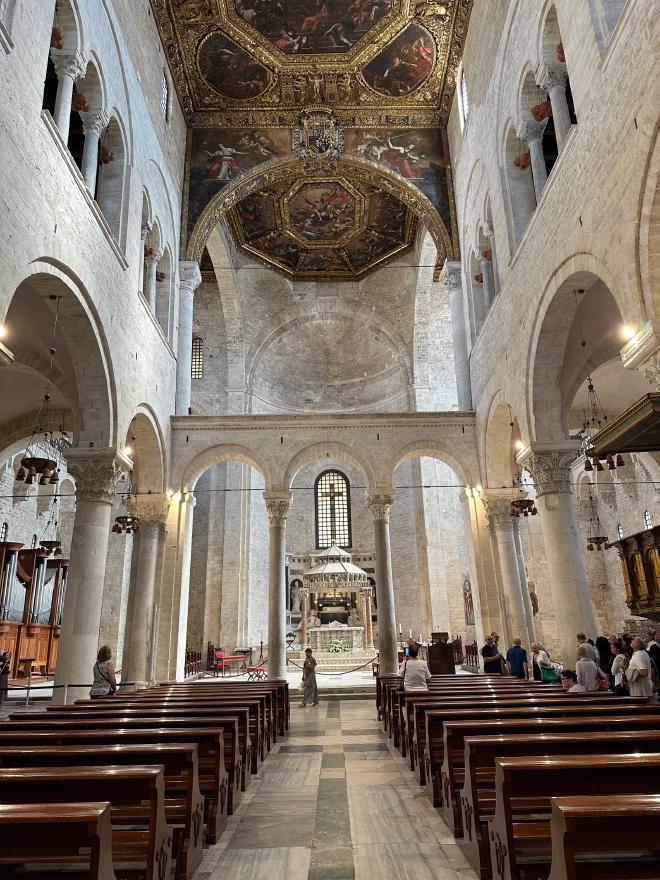
The Basilica San Nicola, built between 1087 and 1197, is one of the major landmarks in Old Bari. For a church, it has a remarkably fortress-like exterior.
The interior of the Basilica was once furnished completely in the baroque style, but a restoration early last century removed all of the baroque additions other than the ceiling.
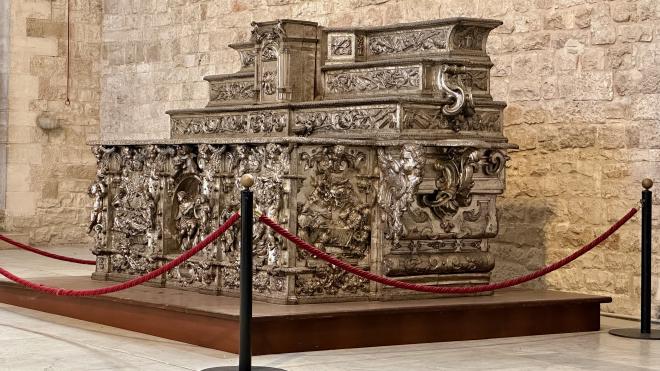
It also features this silver altar.
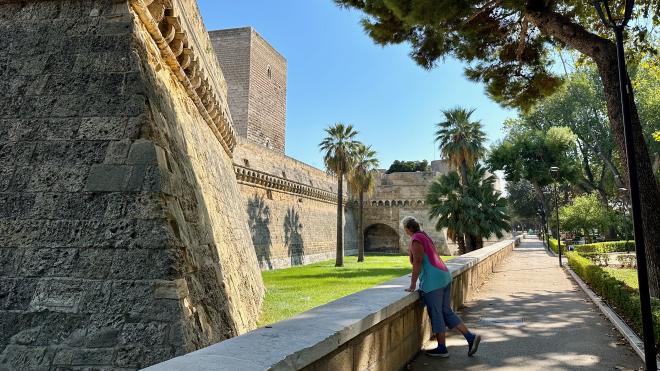
Castelo Normanno-Svevo Di Bari, or Bari Castle, is an enormous fortress dating from 1233, on the site of a previous castle built in 1132. It is possible to visit the Castle, which includes a museum. During our stay there was extensive construction in the Castle and much of the interior was closed, but they were still charging the full admission fee, so we gave it a miss.
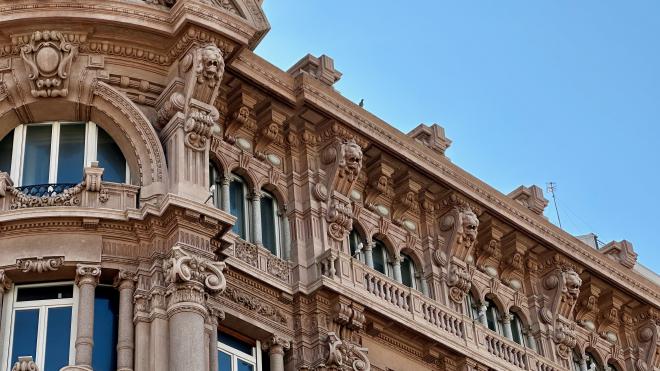
The post-medieval area of Bari also includes some beautiful buildings, like this one just off Piazza San Ferdinando.
We rested part of that afternoon in our AirBnB room, then went for a long walk along Bari’s waterfront before dinner.
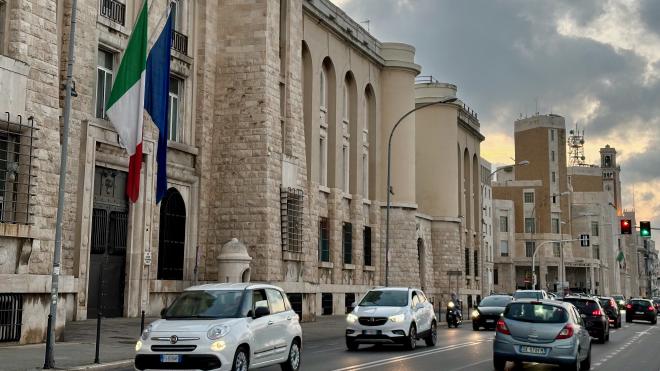
Much of Bari’s east-facing waterfront is lined with blocky, institutional government buildings.
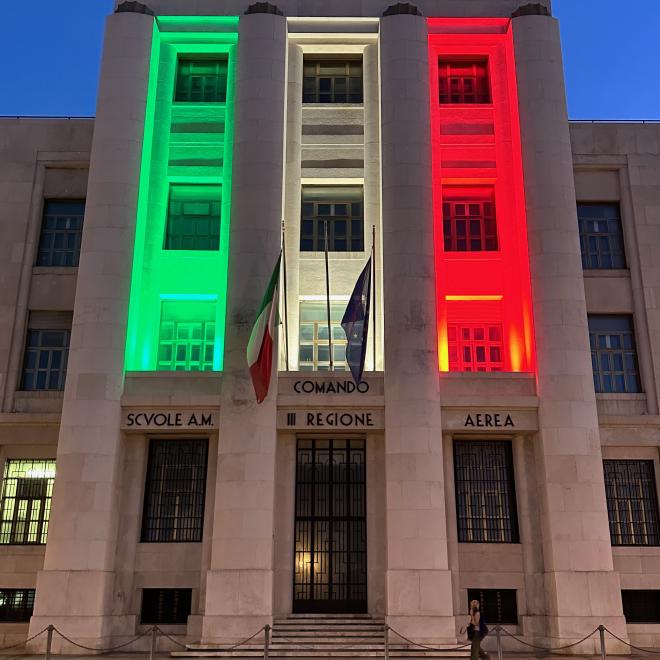
This school, belonging to the Italian Air Force, was nicely lit up in patriotic colours.
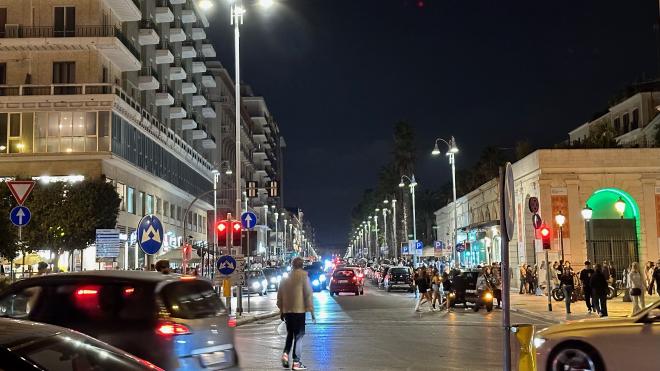
We sat for a while on the steps of Teatro Margherita and people-watched, while waiting for the restaurants to open. Old Bari is on the right, the newer part on the left.
Our AirBnB host, Nicola, suggested that we spend our second day a Polignano a Mare, just a thirty minute train ride down the coast, because “there really isn’t that much to see in Bari.” This proved an excellent recommendation.
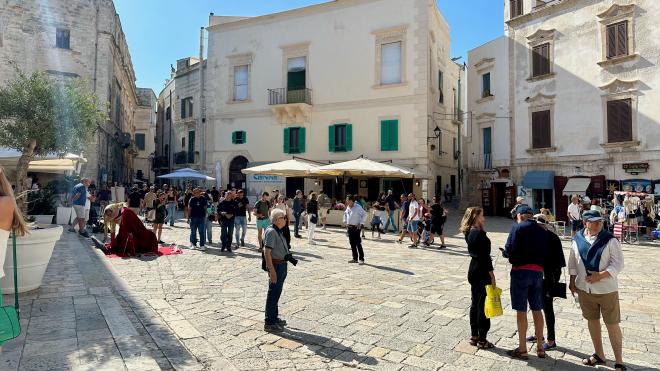
Polignano a Mare is a harbour town, dating from at least the four century BCE, with a medieval core. It’s a popular destination for holidays and day trips, and since we were there on a beautiful Sunday it was absolutely packed. This is the main square in the old part of the town.
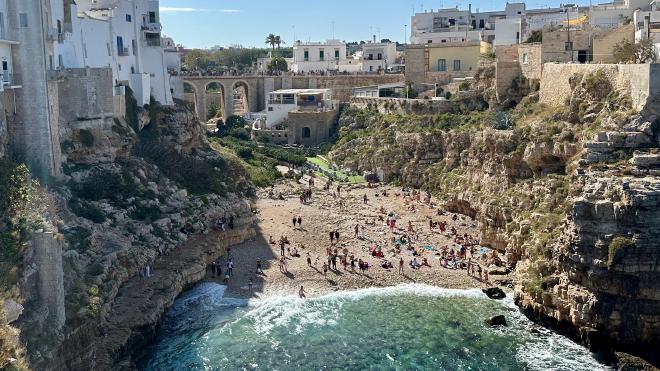
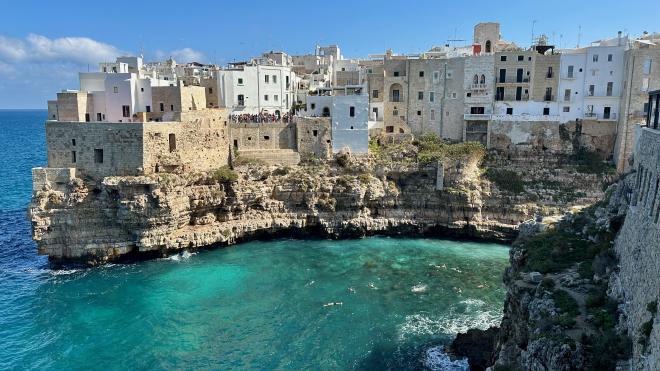
The town features a small, rocky beach in a narrow bay with cliffs on both sides.
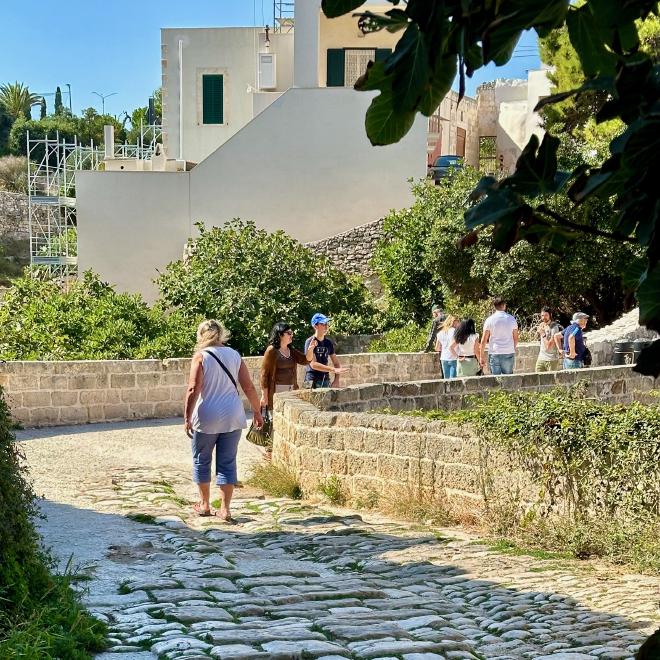
The route down to the beach is along a Roman road, which still includes the original cobbles.
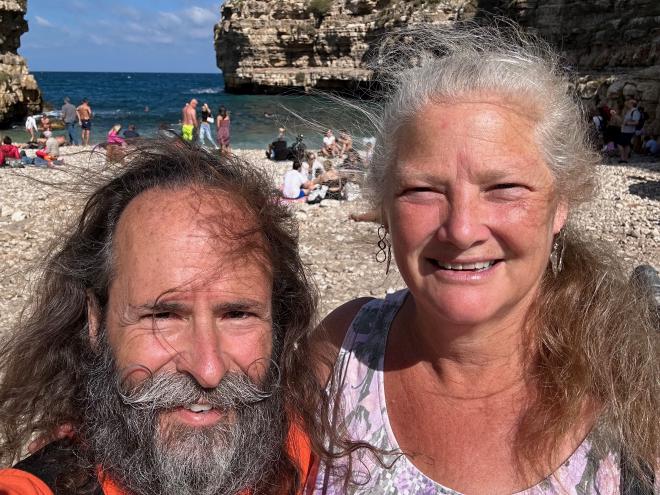
It was a windy day, but that didn’t seem to bother the people on the beach.
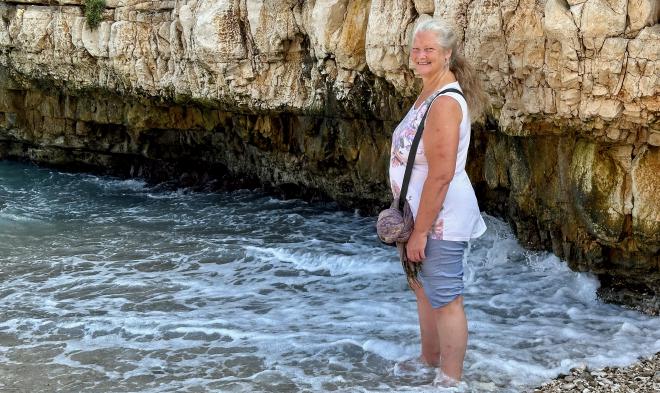
Of course, Karen decided she needed to dip her toes in the Italian side of the Adriatic.
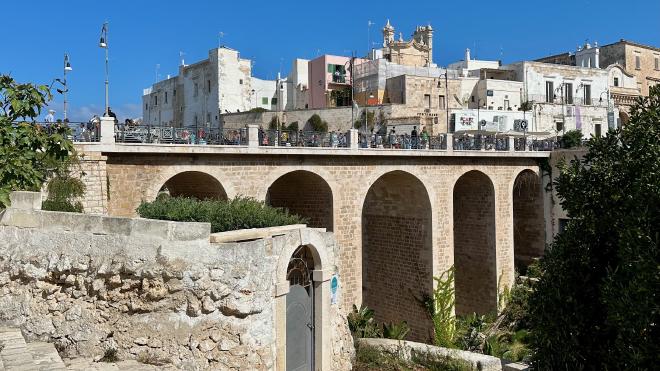
At the top of the bay is this imposingly-high Roman viaduct, recently restored.
Here’s one final view of the bay, from the far side. The first picture showing the beach, above, was taken from where you can see the crowd of people on the walls, just to the left of centre.
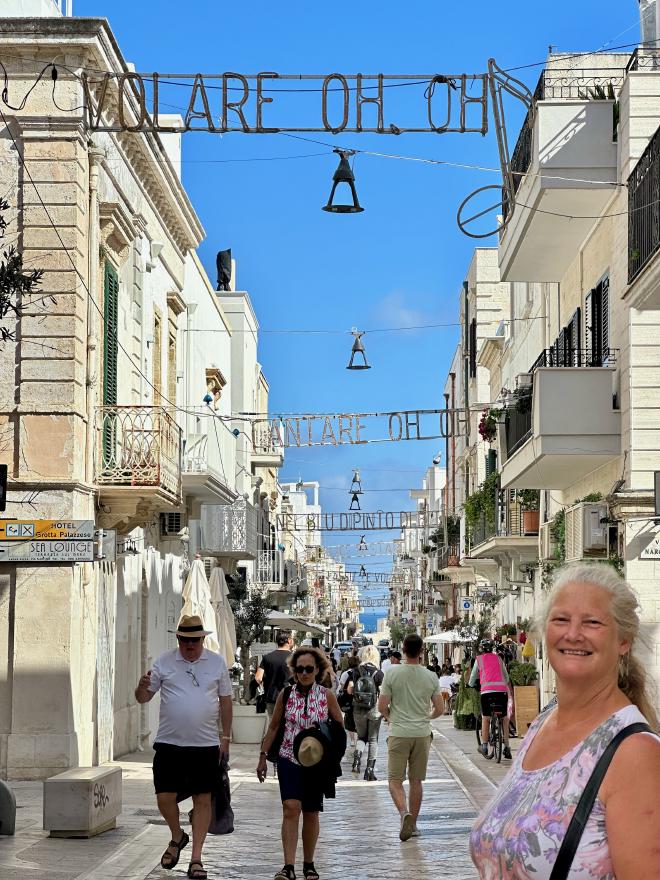
One of Polignano a Mare’s claims to fame is as birthplace of Domenico Modungo, writer and singer of the international mega-hit Nel blu, dipinto di blu, better known as “the Volare song”. There’s a statue of Domenico near the beach, but we heroically resisted the urge to get a selfie with that. As you see here, the full lyrics of Volare are written in lighted letters all the way down a street leading from the old centre to the seawall. We had Volare stuck in our heads for literally hours after our visit; if you do now, please don’t blame us.
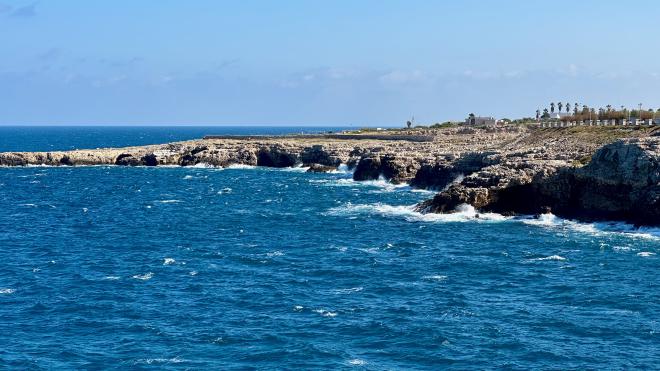
After a nice lunch of seafood sandwiches at Pescaria, recommended to us by our host Nicola, we took a long stroll down the seawall south of town. Then it was back to the train station and back to Bari.
The next morning we hopped on a very comfortable high-speed train for the six hour journey from Bari to Bologna.