Vienna to Budapest was an easy two and a half hour train ride, but it was obvious we were in another country from the moment we arrived. The Hungarian language is not part of the Indo-European language group, which includes every major language in Europe other than Hungarian, Finnish and Estonian. So, unlike German or even Czech, where we could make confident guesses about at least some words, nothing in Hungarian looked familiar.
This is because the Hungarians, or Magyars, are relative latecomers to the region, having conquered the Carpathain basin (which makes up most of modern-day Hungary) between about 862 and 895 CE. It’s not completely clear where they originated from, but there’s solid evidence they came from the east, possibly as far east as Eastern Siberia.
Hungary dates itself as a country from 1000 CE. Budapest was created as a city in 1873 as the merger of Pest (the commercial town, on the eastern bank of the Danube), Buda (the royal seat, on the west), and Óbuda (old Buda), just to the north of Buda.
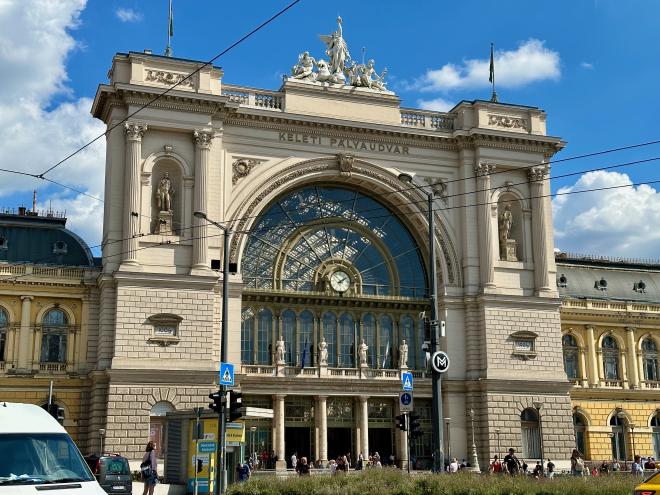
When we got out of the station and looked back, this is what we saw. A bit more impressive than your average Canadian train station! However, by the time we were a few blocks away we were into streets full of grubby, poorly maintained buildings, and wondering what we’d got ourselves into. Our AirBnB’s complex occupied a block in between the grubby bit and a much nicer street. It appears we’d unknowingly chosen to walk along two of the worst streets in the downtown core on our way there.
After arriving at our apartment we decided to head out for a walk along the Danube and then dinner.
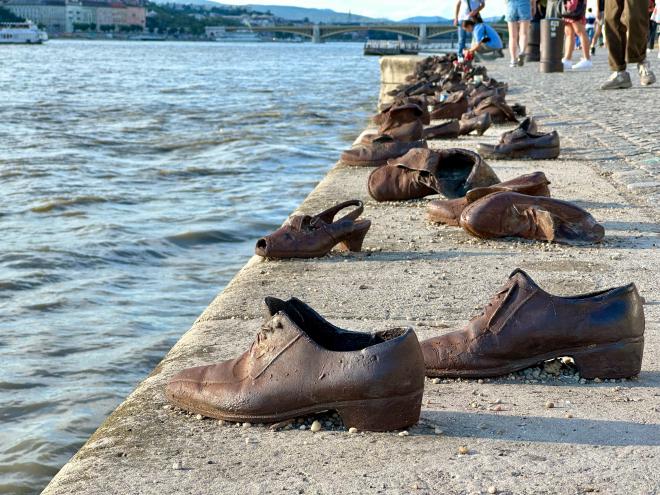
On the edge of the Danube is the Cipők a Duna-parton, the Shoes on the Danube Bank memorial. This honours the Jews massacred by fascists of the Hungarian Arrow Cross Party in 1944–45. Victims were ordered to take their shoes off, because those were valuable and could be sold. Then they were lined up on the bank and shot, and their bodies carried away by the river.
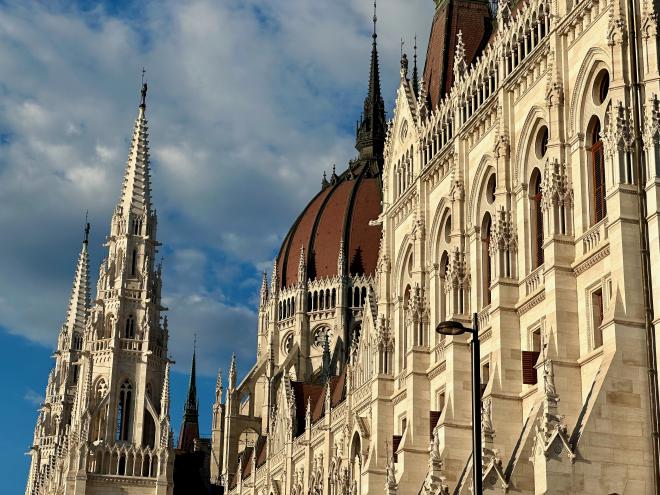
There are many beautiful buildings along the Pest side of the Danube. The most impressive is definitely the Országház, the Hungarian Parliament. A Gothic revival building, constructed between 1885 and 1904, it remains to this day the largest building in Hungary and the third-largest parliament in the world, after Romania and India. It’s large enough that it was essentially impossible for me to get a good picture from the near bank, so here’s some architectural detail. The Gothic revival style was chosen specifically to echo the British Parliament as Westminster, in order to emphasize Hungary’s orientation towards the west. (Don’t worry, there’s a picture of the whole building later in this entry.)
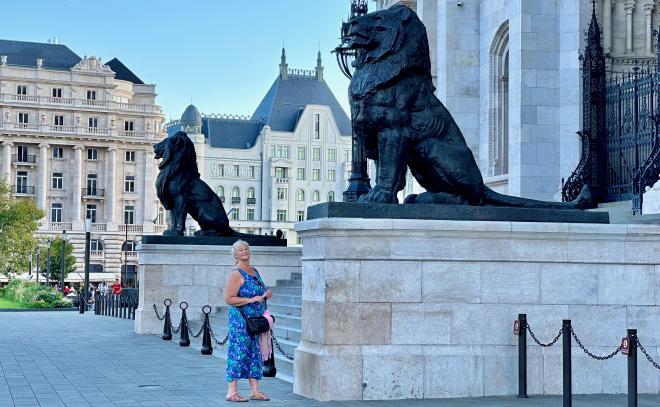
On the east side of the Parliament are these impressive lions.
After walking around the Parliament we decided to find dinner. Unfortunately for us it was Saturday evening and the restaurants were hopping. The first place we tried had nothing available for at least three hours, but directed us to a sister restaurant a few blocks away “which would certainly have places”. Of course, they didn’t, but they directed us to yet a third place, just around the corner. And we squeaked in, getting the last unclaimed table for two at Retek mini, the “little radish”, which turned out to be delightful.
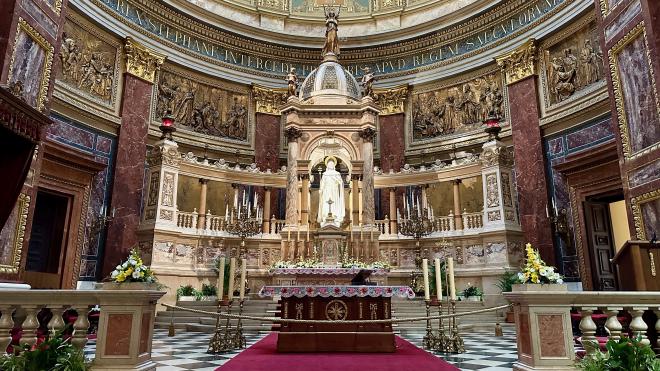
On Sunday we got off to a slow start, and decided to visit one obvious tourist destination, Szent István-bazilika (Saint Stephen’s Basilica), and one less obvious one, the Róth Miksa Emlékház és Gyűjtemény (Miska Róth Museum).
Built between 1851 and 1905, the church is Hellenist and Classical on the outside, mainly baroque on the inside.
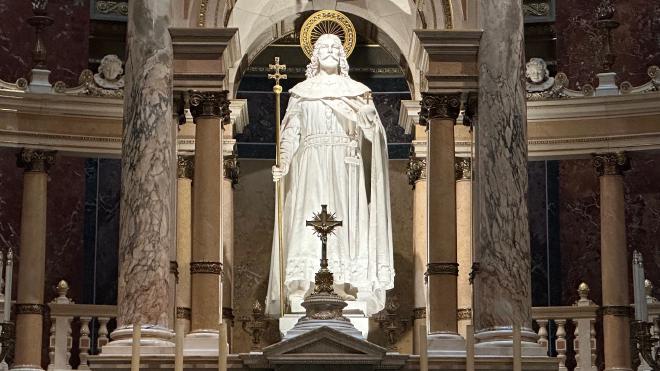
The church honours Stephen I of Hungary, the country’s first King, canonized as a Saint many years after his death.
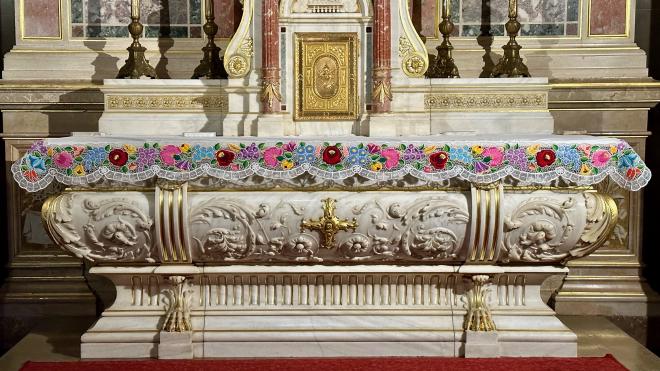
Several of the chapel altars feature beautifully embroidered altar cloths.
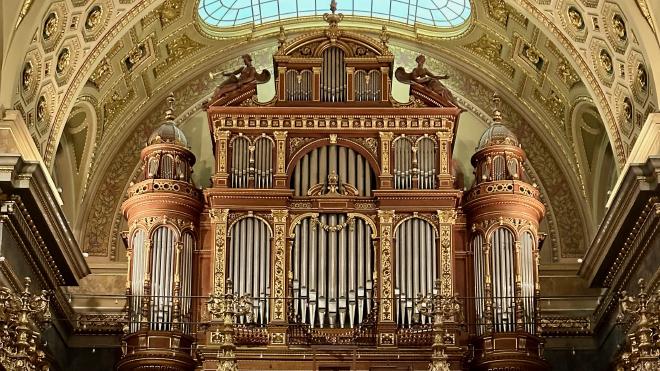
The church’s organ is a particularly nice example of the baroque style.
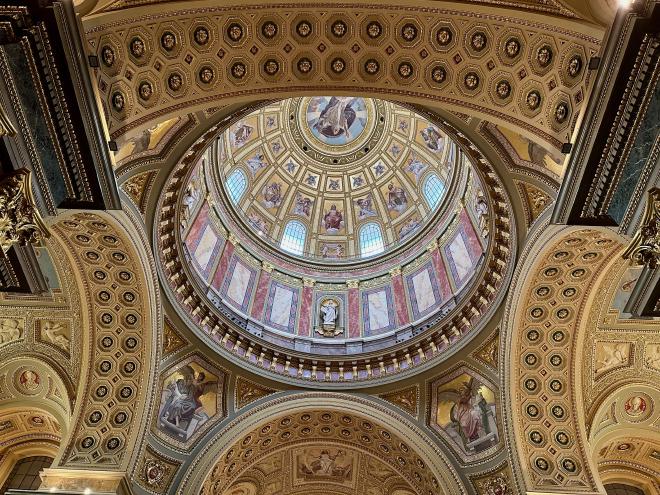
The ceiling is extremely ornate…
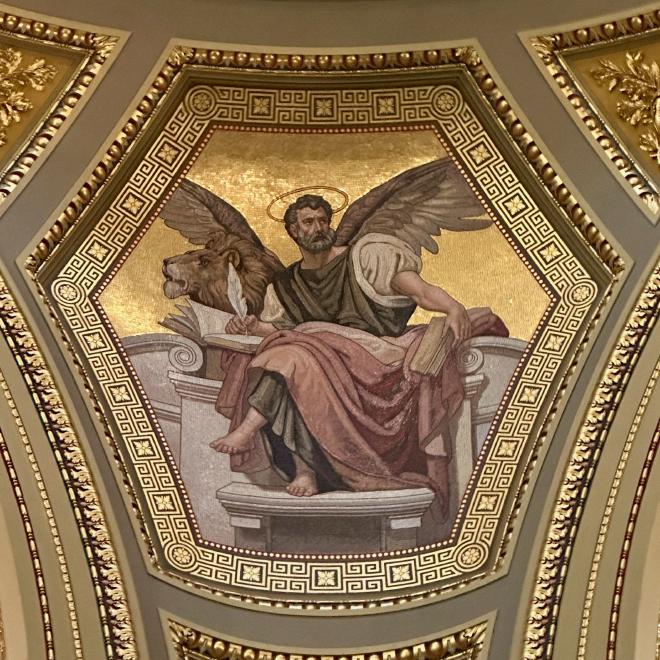
… and features many beautifully-crafted mosaics, with detail so fine they appear to be paintings at first look.
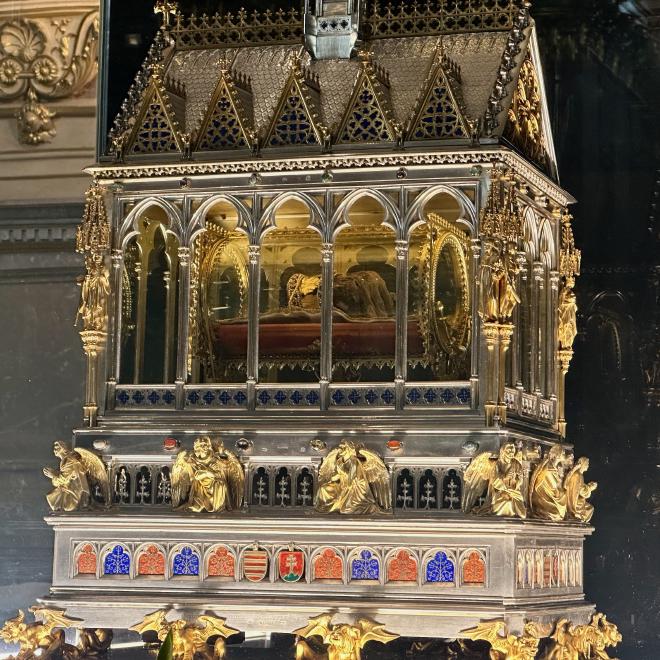
The church displays St. Stephen’s right hand, or Holy Dexter. Aside from being a slightly gruesome relic, the hand has quite an interesting history. From the signs in the church, in fourteen different languages: “It had an adventurous fate: It had been kept in Bihar (Transylvania), Ragusa (Dalmatia, now Dubrovnik), then Vienna, from where it was brought to Buda in 1771. In 1944 it was carried away to the west, it was returned to Hungary on 19th August 1945.”
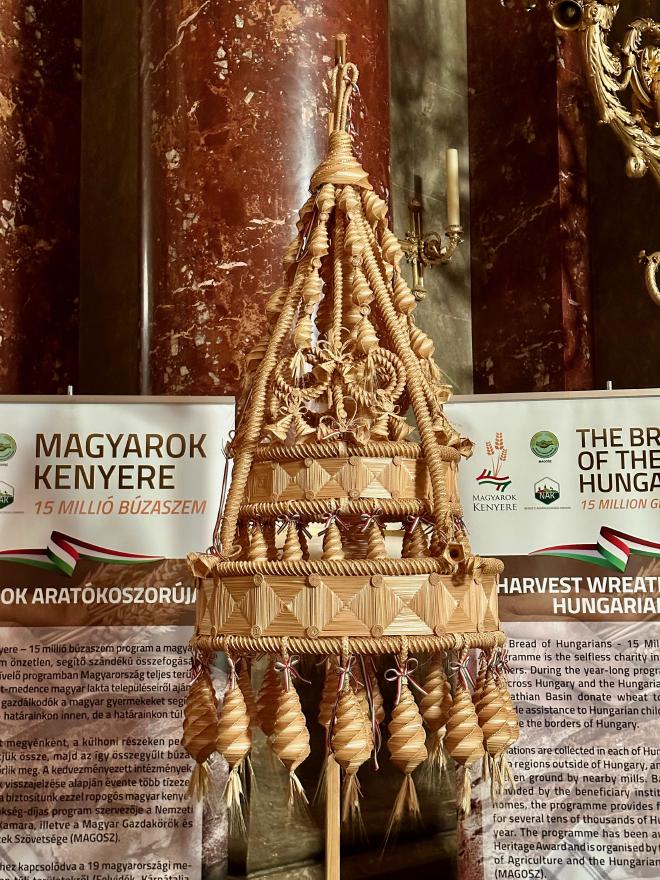
This traditional Carpathian Basin harvest wreath, displayed in the church, celebrates “The Bread of Hungarians – 15 Million Seeds of Grain programme”. Under the programme, Hungarian farmers donate wheat that provides bread for tens of thousands of Hungarian children each year. The wreath is made from grain spikes from all parts of Hungary as well as Hungarian regions outside the country’s borders.
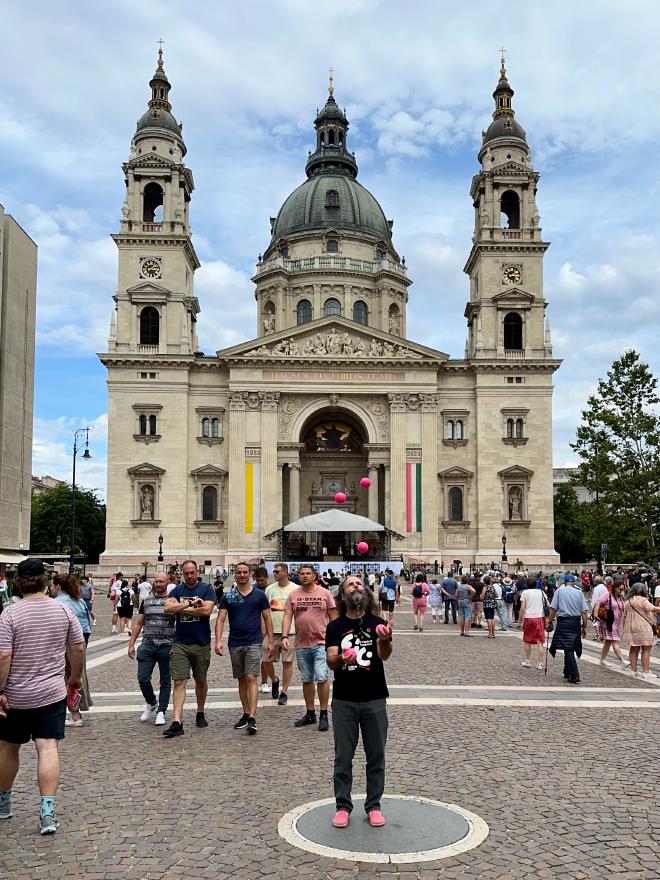
St. Stephen’s Basilica exterior, with some guy juggling.
From the Basilica we walked to the Róth Miska museum.
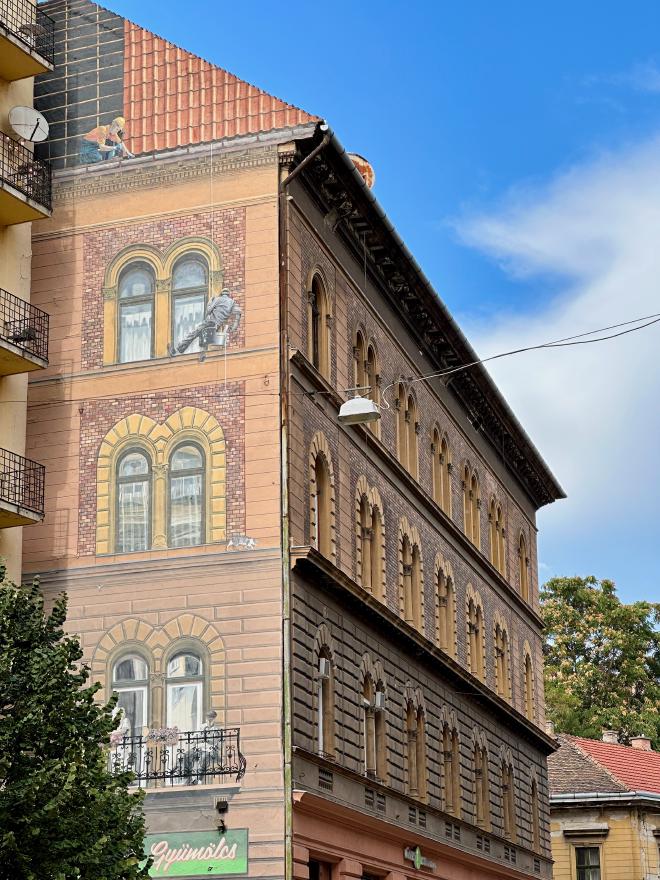
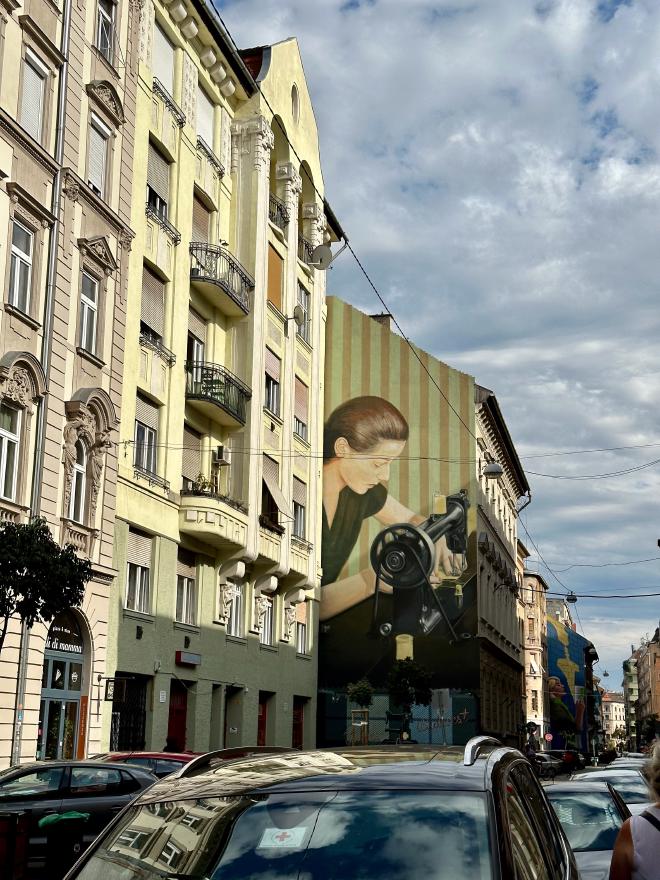
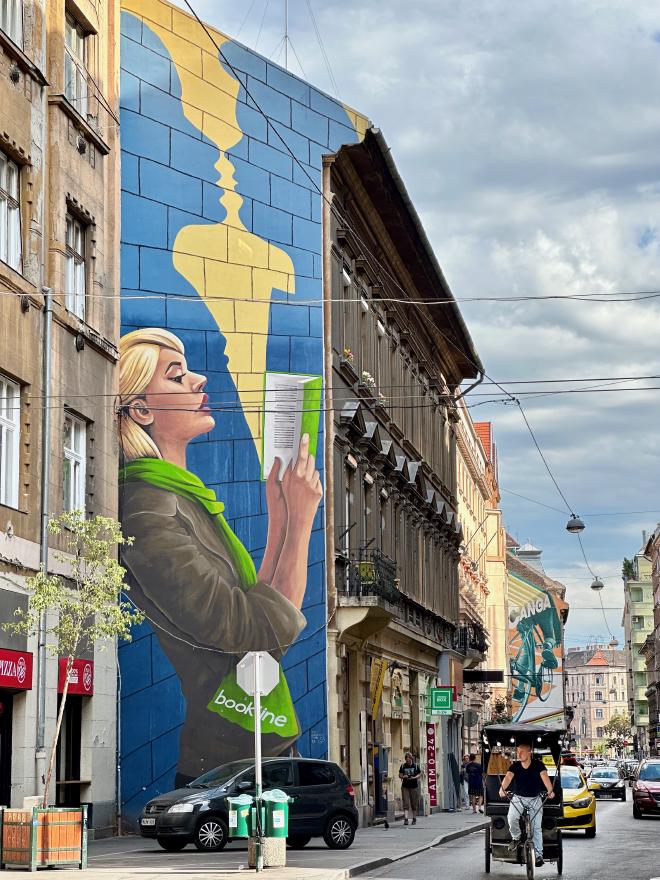
Along the way we spotted some beautiful murals on Dob Utca.
A mural celebrating the area’s tailors.
And another, sponsored by bookline, celebrating books and reading.
The Miska Róth Museum is dedicated to the life and work of Miska Róth (Róth Miska in Hungarian). From the museum: “Miksa Róth (1865-1944) the star of the domestic glass painting and mosaic arts, the key figure of the secession, innovator, reformer, student, master, father, freemason. The eponymous of our Museum, was a colorful and inspiring person, who became famous not only locally but also abroad in many countries as a pioneer in the applied arts in the 19th–20th century. Several public and private buildings in Hungary and also abroad are being decorated by his glass and mosaic arts. Miksa Roth and his family have moved here in 1911, to 26. Nefelejcs street, where the Museum today operates.”
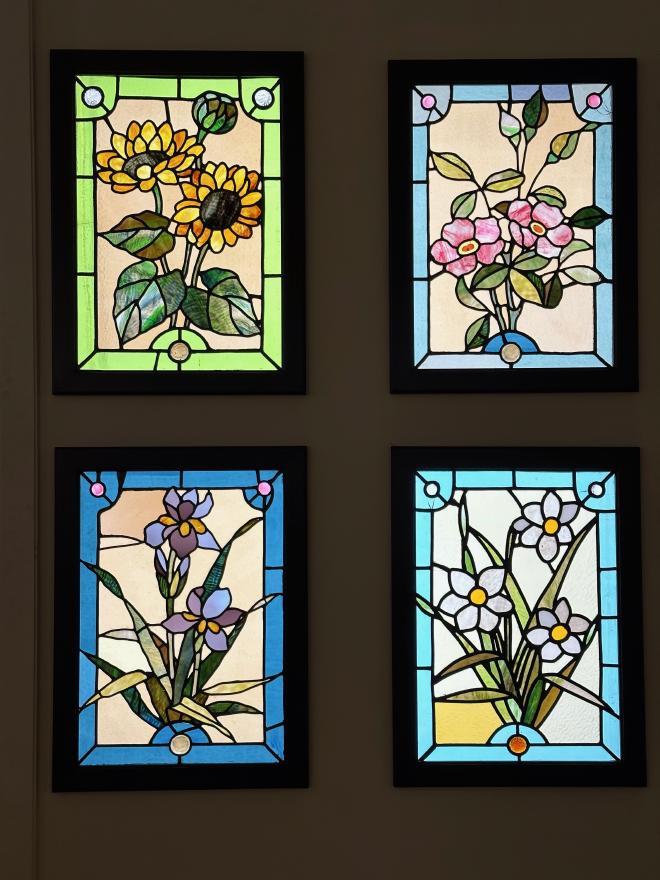
The interior of the museum displays some of his stained glass and mosaic work; some original and some copies. These are originals, created as test pieces for a larger work.
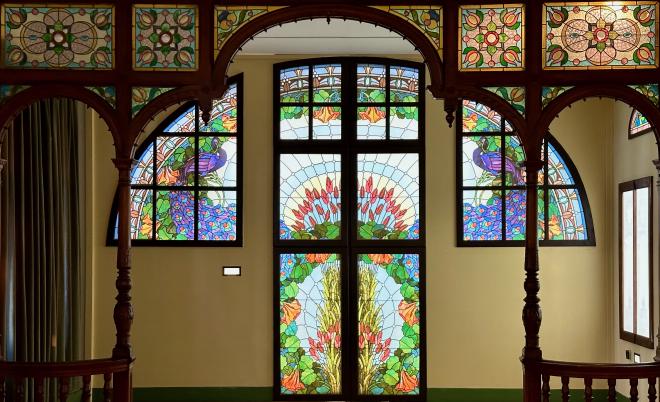
The panels above the door are originals; the windows on the wall are copies.
The museum is quite small, with only a few examples of Róth’s work, plus a re-creation of his family’s rooms in part of the upstairs, but we quite enjoyed it.
Monday started with a walk to some sites on both the Pest and Buda sides of the river, and ended with a short cruise on the Danube.
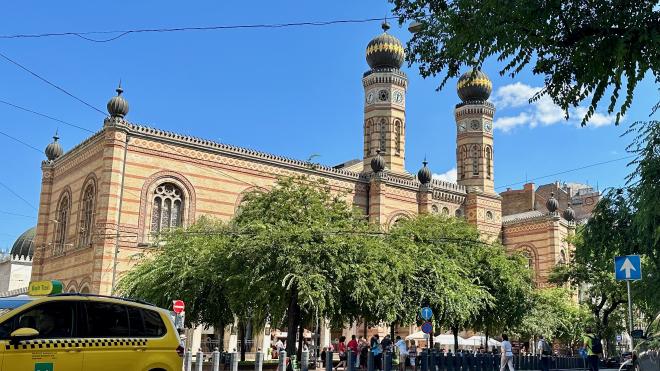
Just south of our AirBnB was the Dohány Street Synagogue, a beautiful building in the Moorish Revival style. We looked into visiting, but tickets were limited and quite expensive.
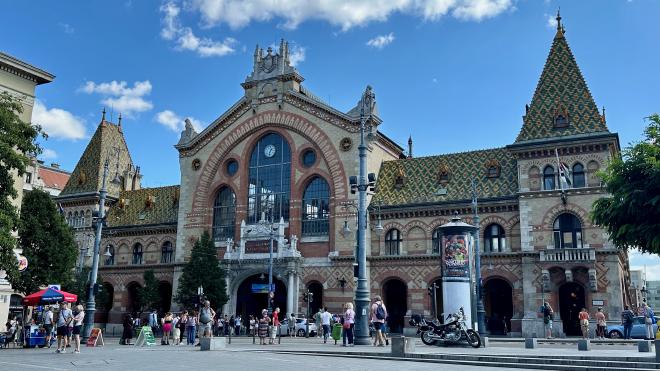
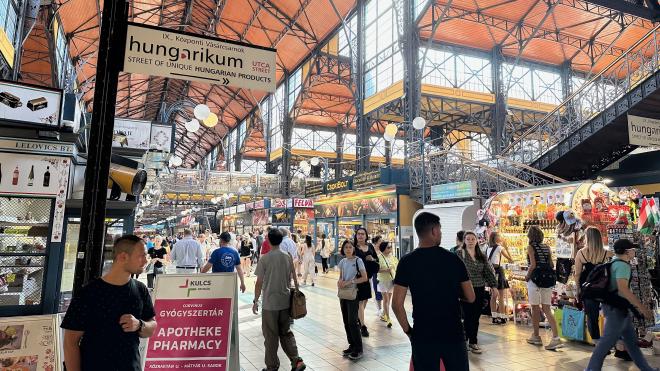
Our next stop was the Great Market Hall, the oldest of several markets built in the late 1800’s to address food shortages in Budapest.
The Market retains its original function to this day and consists mostly of a wide variety of food shops.
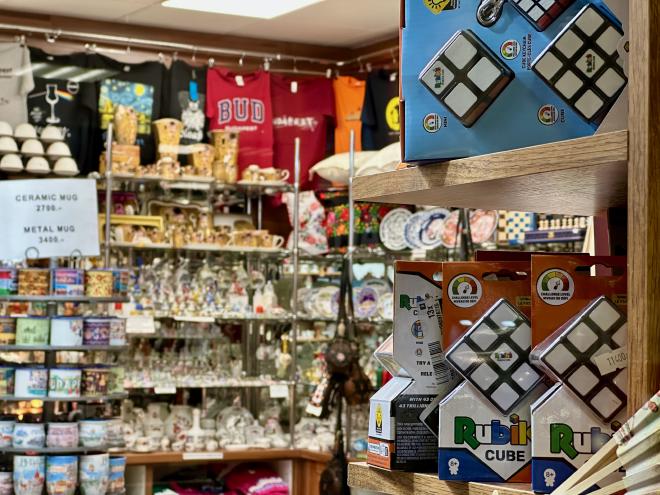
There is also a souvenir shop on the lower level. Like several of the souvenir shops we saw, this featured Rubik’s Cubes, presumably since their inventor, Ernő Rubik, is a renowned Hungarian.
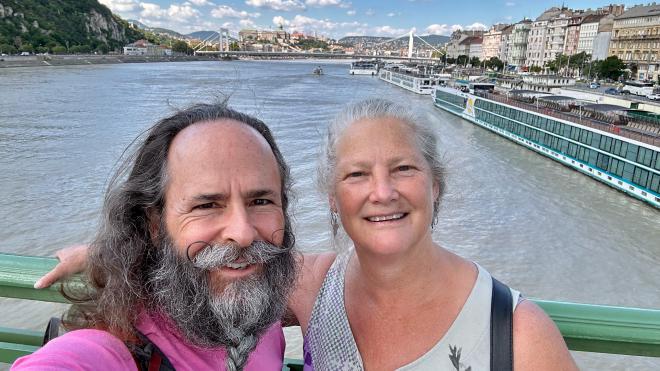
From the Market we walked across the Danube from Pest to Buda. Here’s a mid-bridge selfie. The boats on the right hand side are river cruise boats.
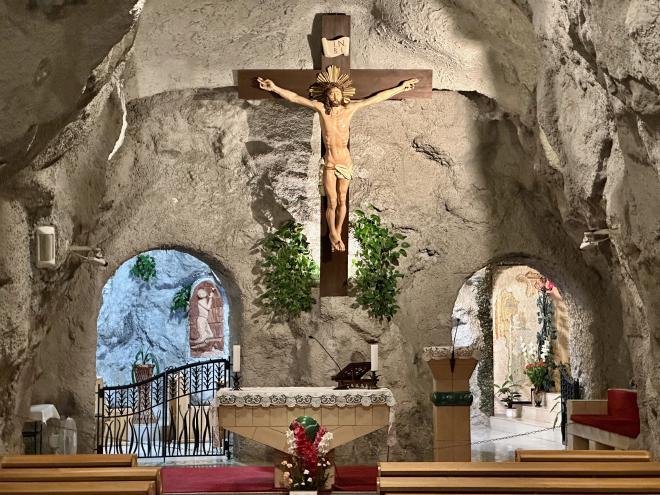
Another statue of Stephen I, this one a more modern take. This is just outside Budapest’s Cave Church…
… and this is inside. The church is not a natural cave, but rather the result of an excavation that was originally intended to drain a much smaller cave mouth that had been used as an outdoor church. When the excavation failed to connect with the river, the church leaders saw this as a sign that they should expand the church into the resulting cave.
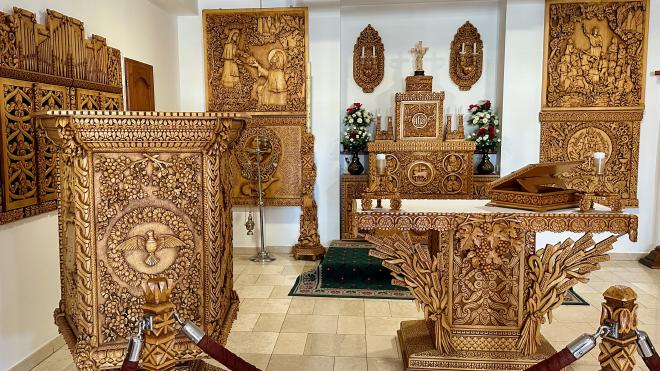
These lovely carvings were a gift to the Cave Church, and are found in one of the inner rooms.
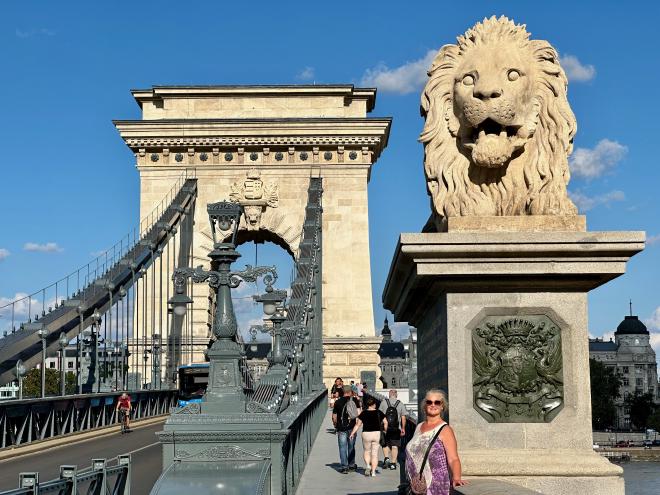
On the way back to Pest, we crossed the famous Chain Bridge, guarded by these imposing loins.
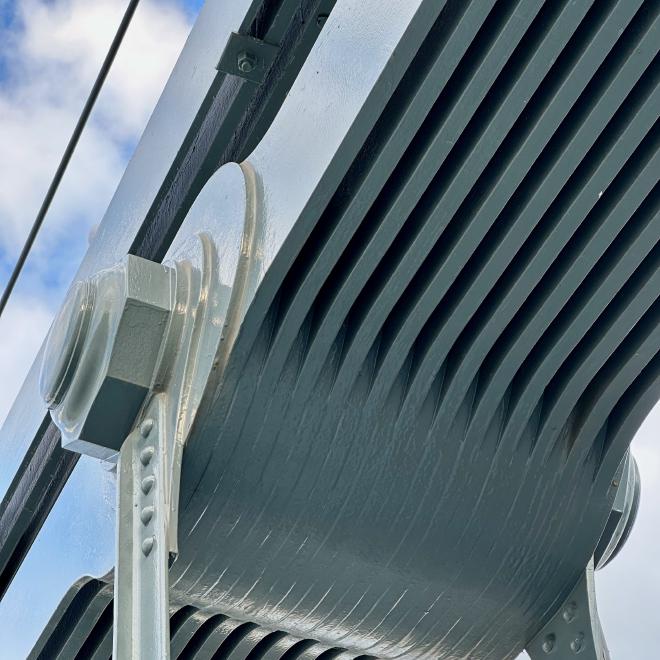
This is why it’s named the Chain Bridge: the suspension elements are literally chains, similar to bicycle chains but much larger.
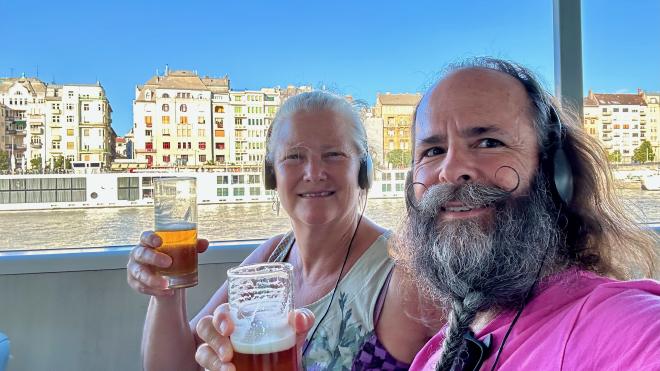
After our day’s walking we decided to treat ourselves to a short Danube boat tour. It included one free drink of choice (we had lager) and one lemonade. The headsets are for the multilingual tour commentary.
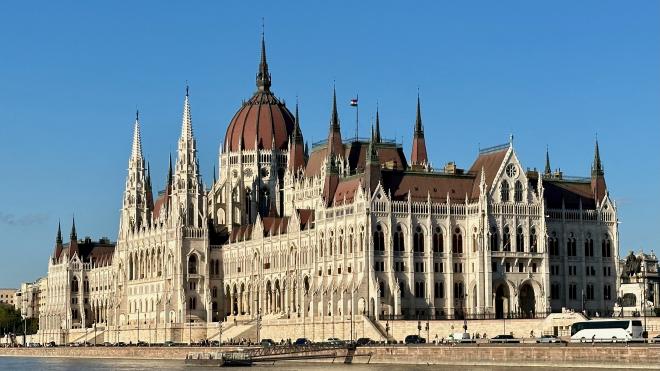
Earlier I’d promised a better picture of the Budapest Parliament: here it is, taken from our boat tour.
We decided to spend our last day on the Buda side of the river, visiting the Palace and its surroundings.
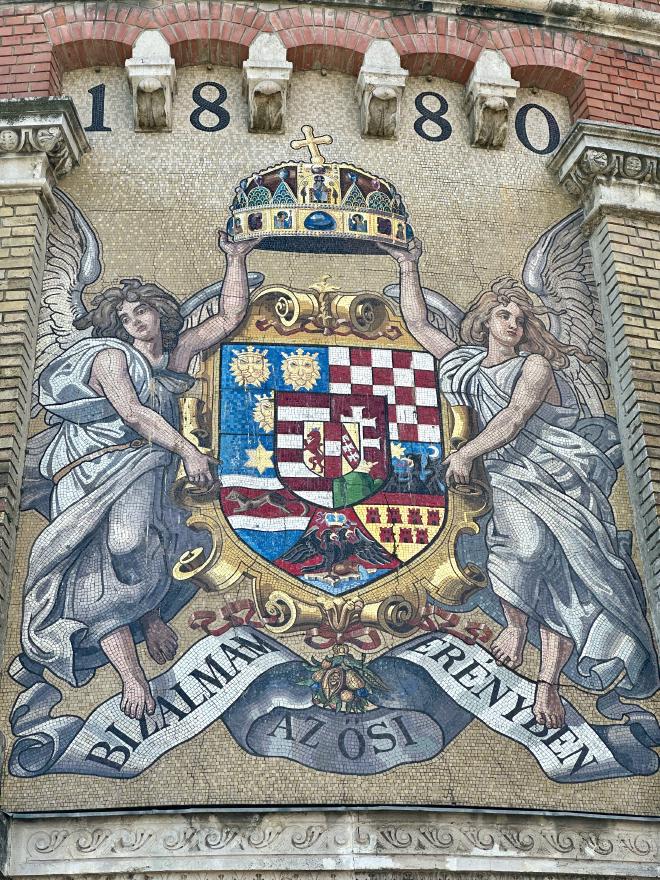
This lovely mosaic was on the Buda side of the Chain Bridge, near the base of the Palace hill.
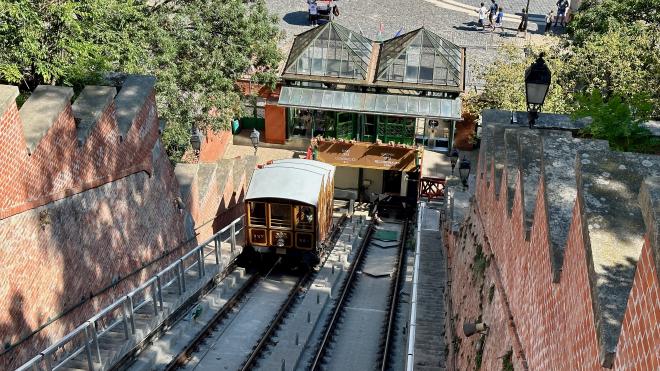
There’s a funicular railway you can take up the hill to the Palace. However, at 8€ each for a very short ride, we decided to give it a miss and just walk up.
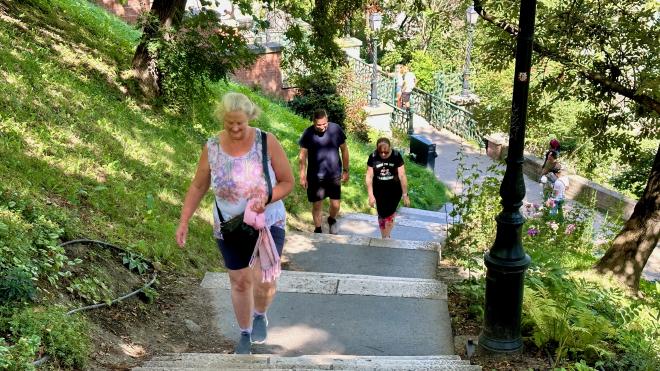
And it was quite a walk…
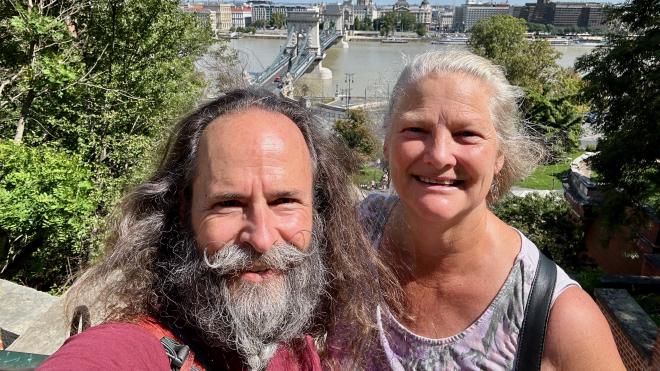
… but the view was definitely worth it.
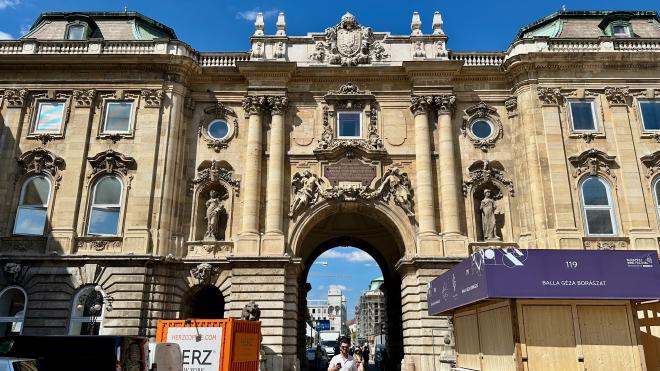
This is a small part of the Palace exterior. They were setting up for a wine festival during our visit.
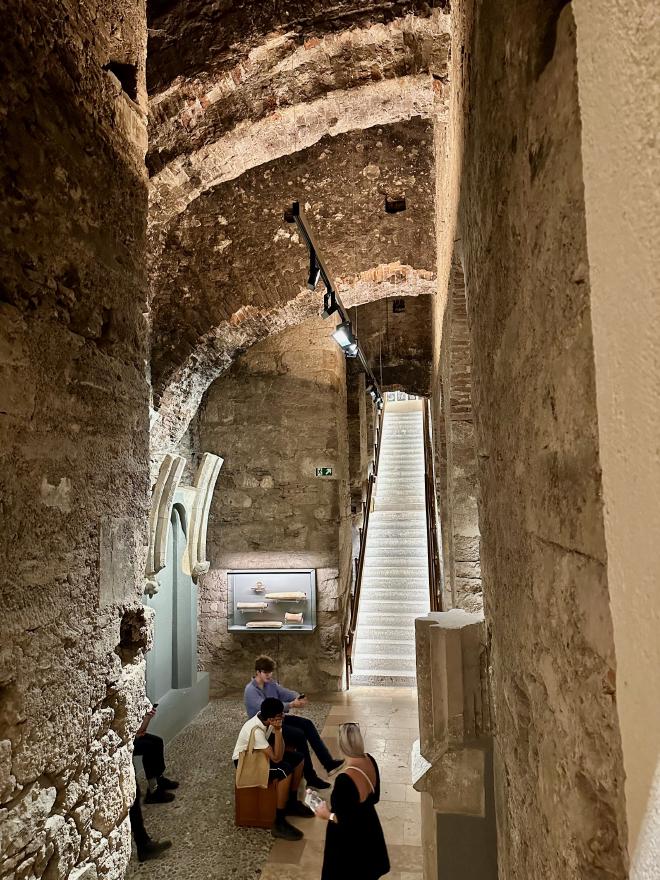
The Palace has interesting exhibits about the history of Hungary as well as of the Palace itself, the two being deeply intertwined. This is part of an exhibit about the castle cisterns.
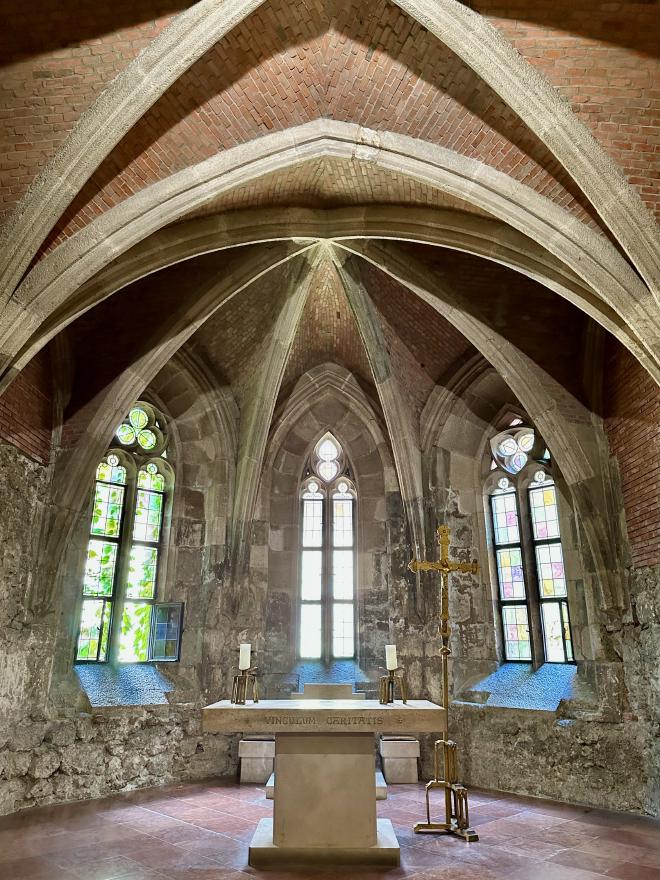
The Palace includes a small chapel, intended for the private use of the royal family.
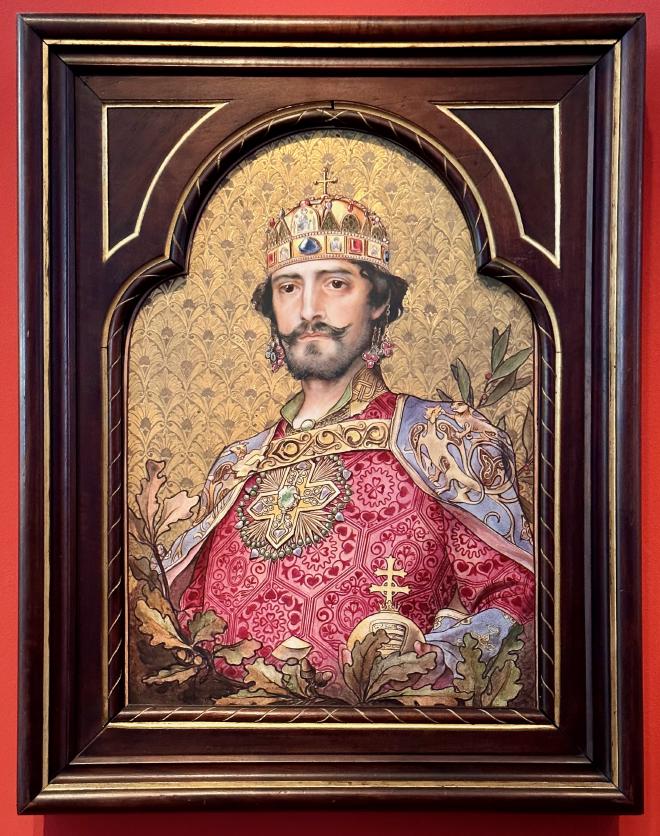
A portrait of (you guessed it) Stephen I.
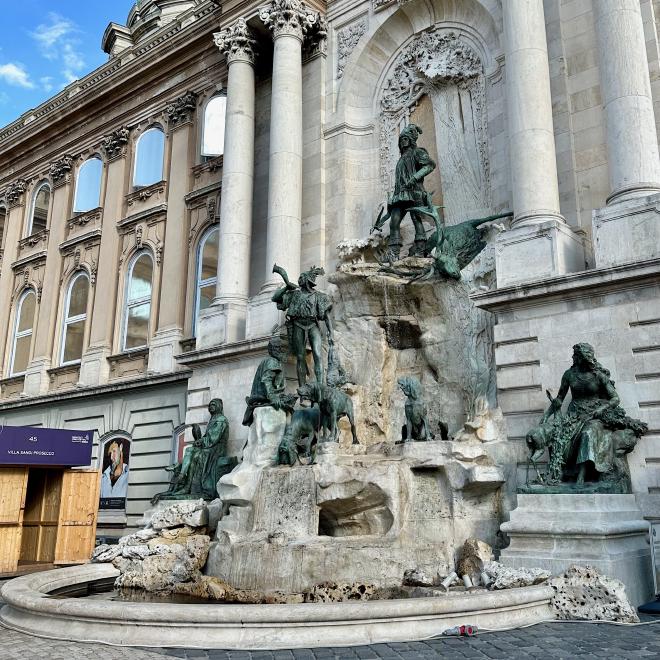
The Palace courtyard includes this rather magnificent fountain, depicting hunting scenes.
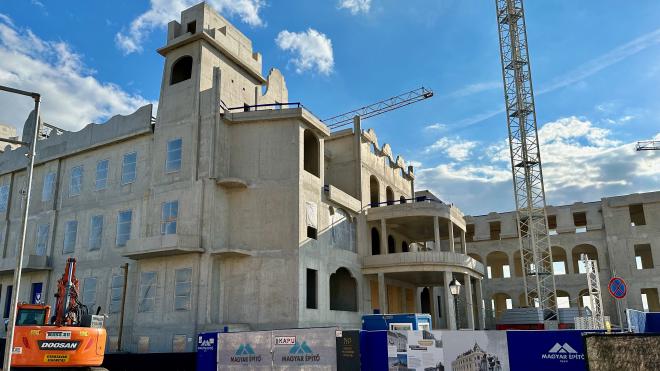
Interestingly, despite being a thousand years old,the Palace is still under construction, with both restorations and entirely new buildings going up.
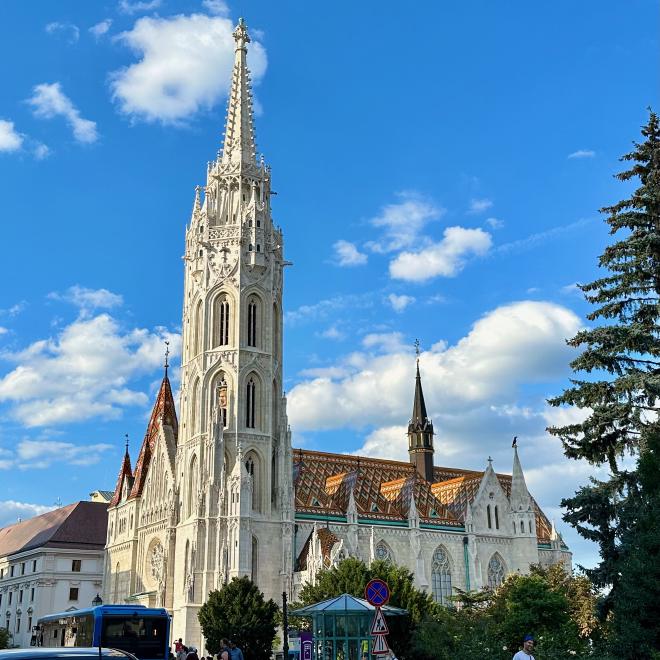
Just north of the Palace is Matthias Church, a lovely Gothic revival structure whose roof tiles came from the same Hungarian factory as those of St. Stephen’s in Vienna.
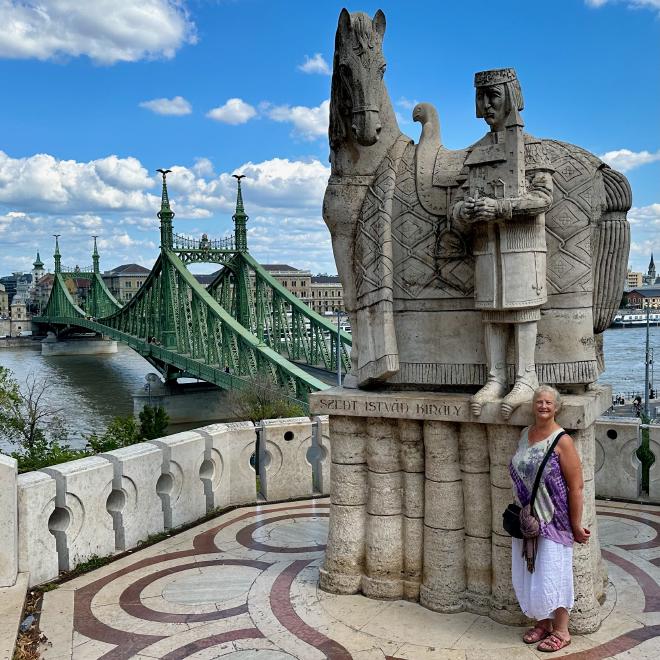
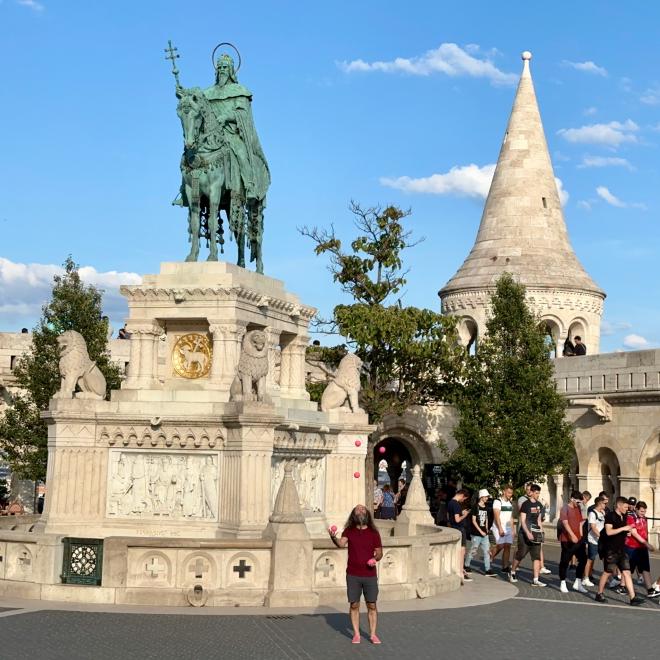
Near Matthias Church is the Fishermen’s Bastion, an imposing rampart overlooking the Danube, constructed by and dedicated to Budapest’s fishermen. Greg’s colleague Steve Lukits is originally from Budapest and asked us to send him a picture of Greg juggling on the Bastion. Here it is, with Greg beside a statue of (you guessed it, again) Stephen I.
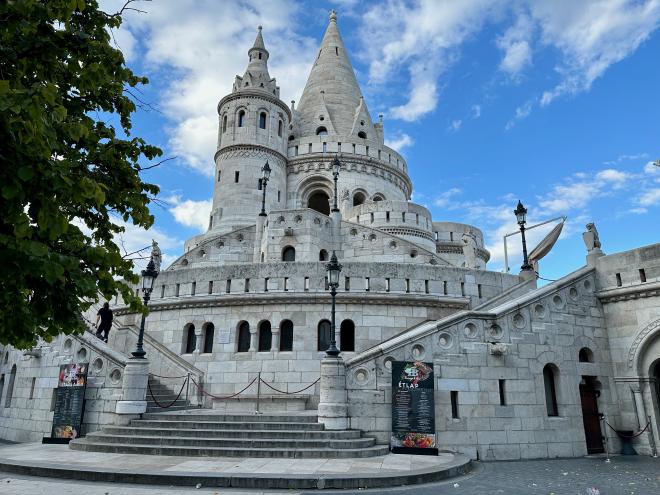
This is another part of the Bastion, currently being used as a restaurant.
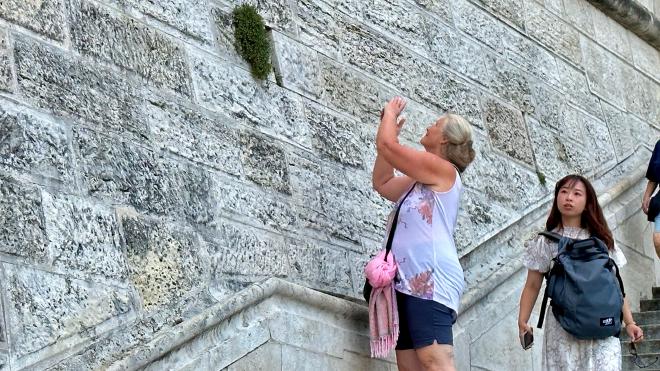
Here’s another in our series of pictures of Karen taking pictures of plants, on our way down to the river from Fishermen’s Bastion.
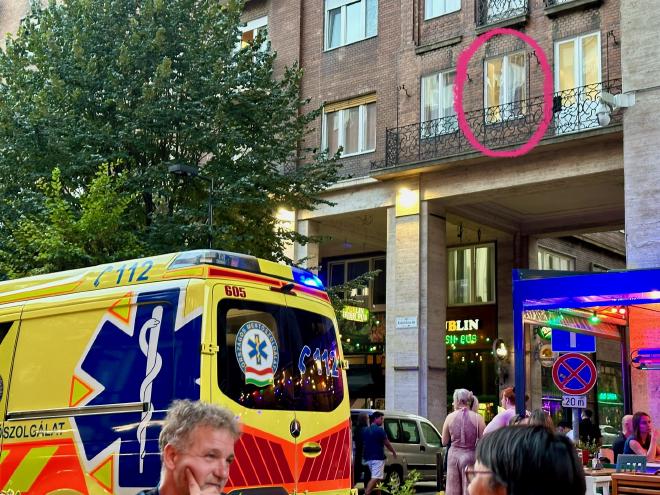
We had our last dinner in Budapest at a small restaurant around the corner from our apartment. Just after we sat down, we heard a sudden smash from above us, which turned out to be the window indicated here getting partly knocked out. We’re not sure what the story was, but the incident resulted in visits from one ambulance crew and at least four police officers while we were eating.
One of the other things we’d hoped to do in Budapest was visit the Capital Circus. Unfortunately we waited too long to get tickets for the weekend shows and they were closed on the Monday. I guess that’s a reason to go back.
And from Budapest, it was off to Cluj-Napoca, Romania.