Our train ride from Prague to Vienna was quick and uneventful, and two trams took us from Vienna Central station to our friend Helene’s apartment.
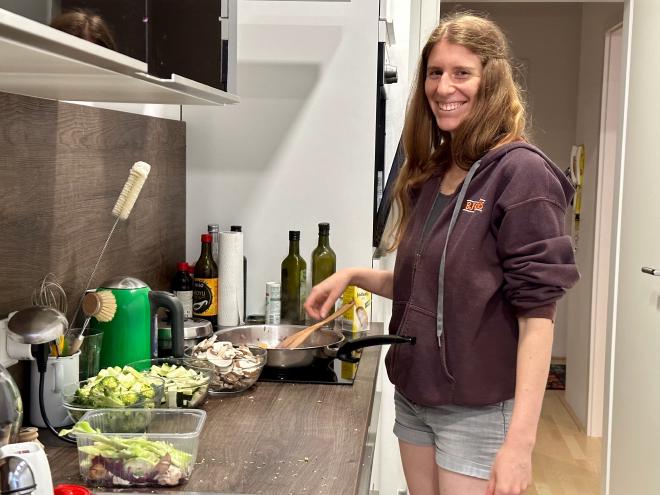
You’ve met Helene before in this diary, both at CoastlessCon and at the European Juggling Convention. Aside from being a juggler, Helene works as a wood turner and has recently gone back to school to study forestry management. Here she is cooking us dinner on the evening of our arrival. After dinner Matty (also at both those juggling conventions) joined us at Helene’s and we spent a pleasant evening chatting and playing Tichu.
We decided to spend the next day walking the town centre while Helene was at work turning intricate wooden tops for the company she contracts to. We took the tram back towards Vienna’s main ring road, where many of its monumental buildings are located.
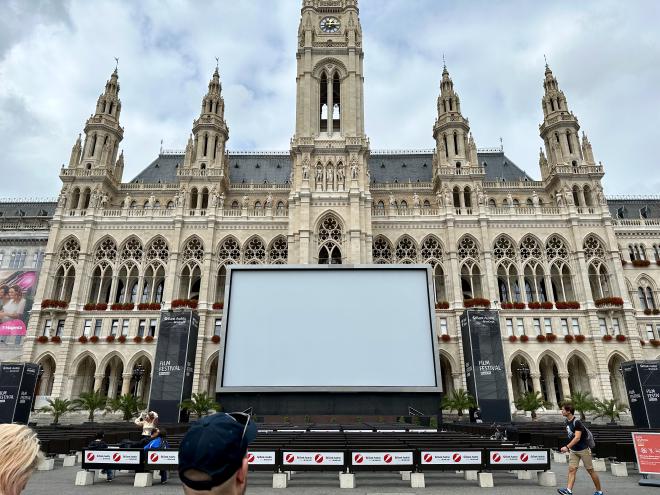
This is the Vienna Rathaus or Town Hall, a striking Gothic revival structure that bears a more than passing resemblance to Canada’s Parliament. It was playing host to a film festival that shows free films in the evenings, mostly music and opera performances.
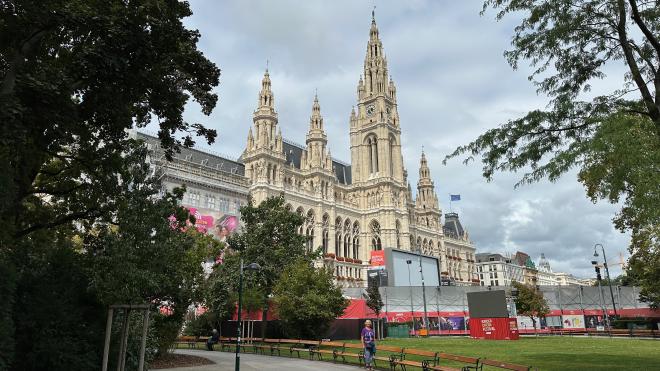
Another view of the Rathaus, with Karen for scale.
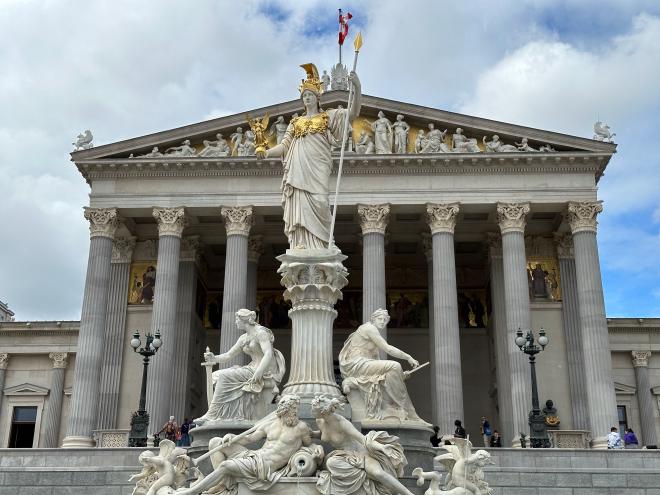
Just down from the Rathaus is the Austrian Parliament, a massive neo-classical structure with all the Romanesque trimmings.
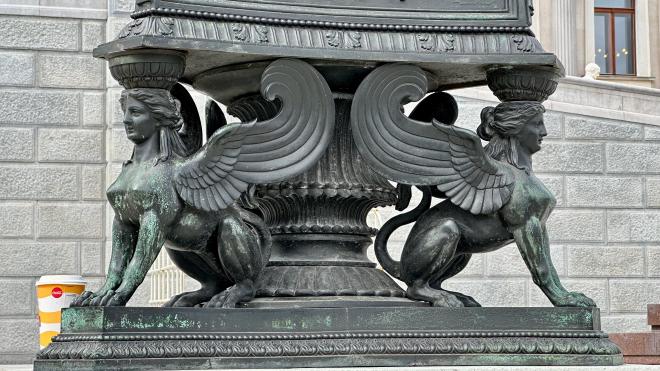
We particularly liked the Sphinxes supporting some of the lamp posts…
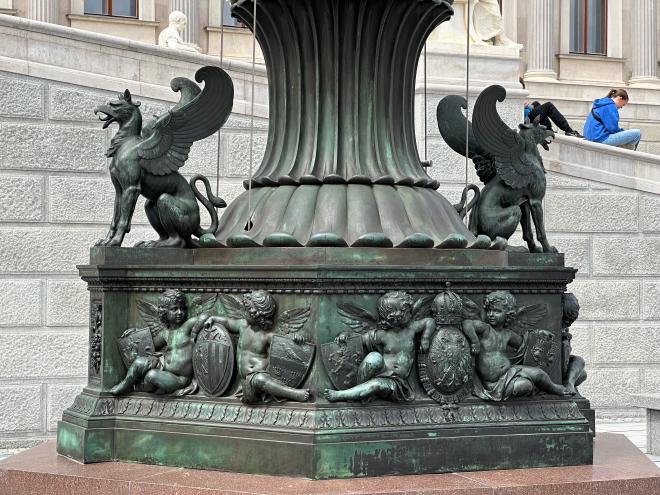
… and the griffins on some of the others.
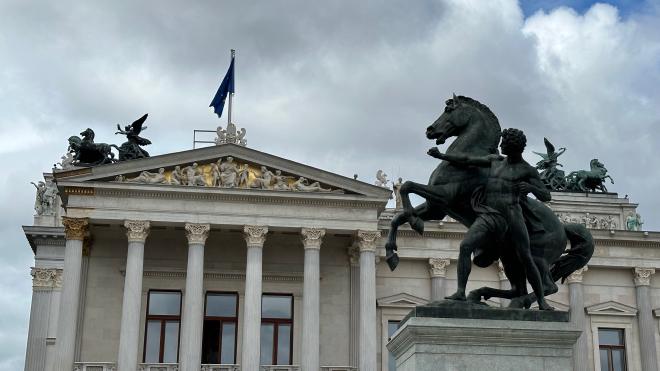
The Viennese must also be quite fond of dudes punching horses, since there are four identical copies of this statue across the front of the Parliament.
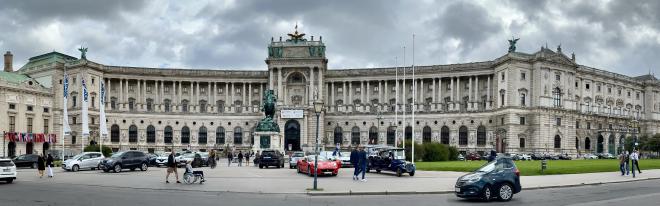
Across the street from the Parliament is the Hofburg Palace, now mainly government offices. No, that car on the right doesn’t really look like that; that’s an artifact of the panoramic photo.
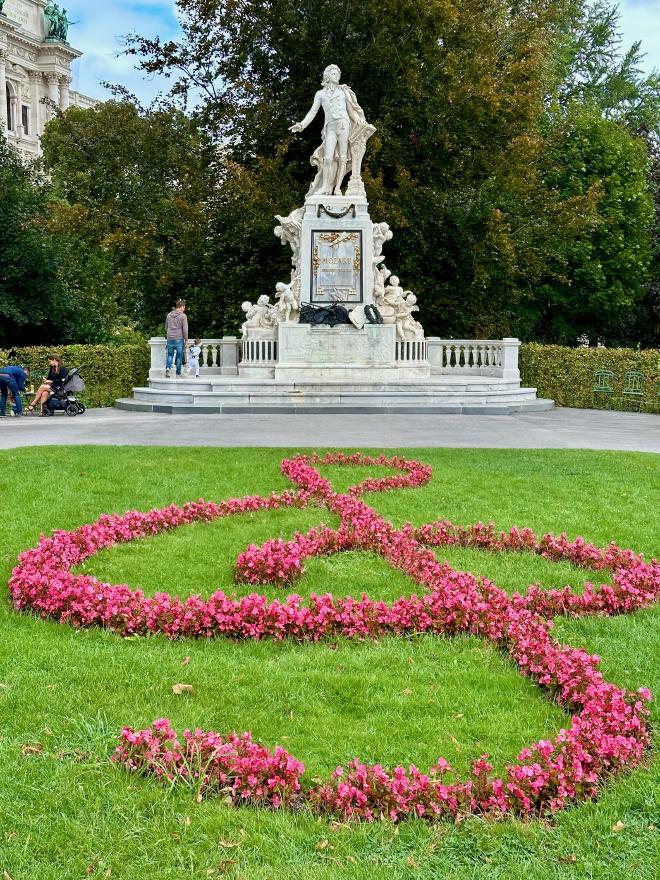
Just down the way, a monument to one of Vienna’s most famous artists, Wolfgang Amadeus Mozart.
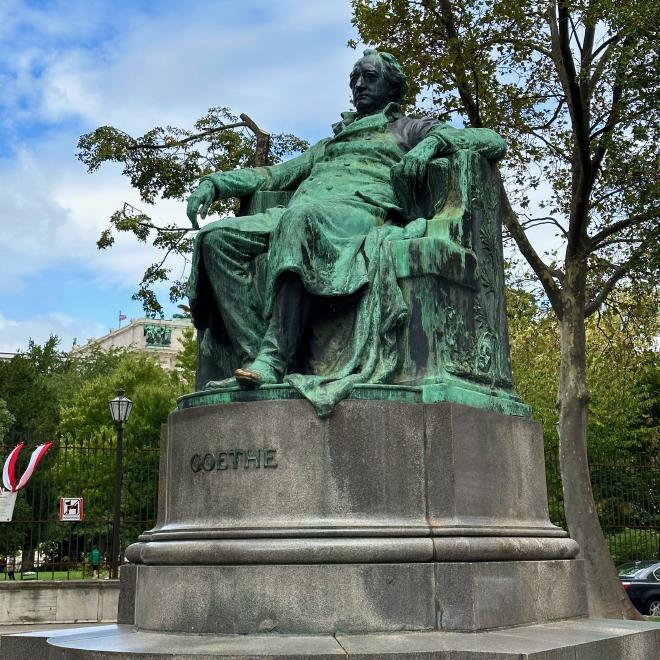
And nearby, a monument to another famous Viennese Wolfgang: Johann Wolfgang von Goethe. You can decide for yourself whether composers or poets seem to have more fun.
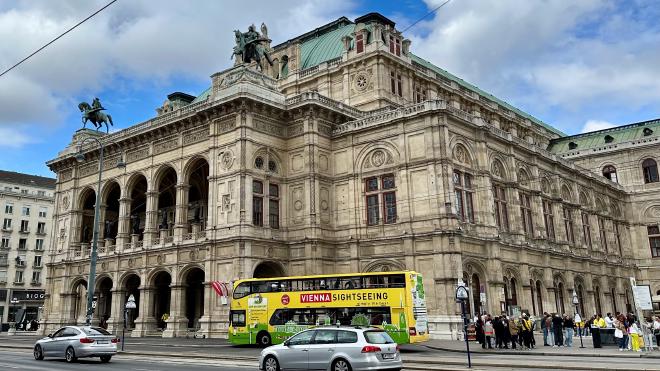
Speaking of Mozart, this is the Vienna Opera House, where many of his works were first performed.
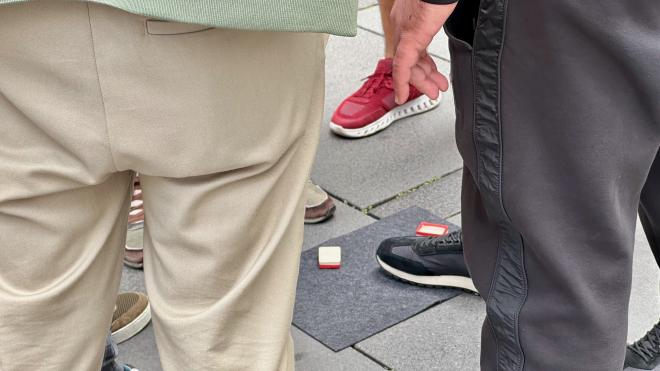
From the ring road we walked in to the centre of the old city. Along the way we found something we’d heard about, but never actually seen in the wild: the shell game con. Apologies for the terrible picture, but the scammers (Greg counted at least five people involved in this one) were doing their best to block photos and one of them actually started yelling “no video, no video” at Greg. Here’s a video that explains how the con works and another explaining the sleight of hand under the con.
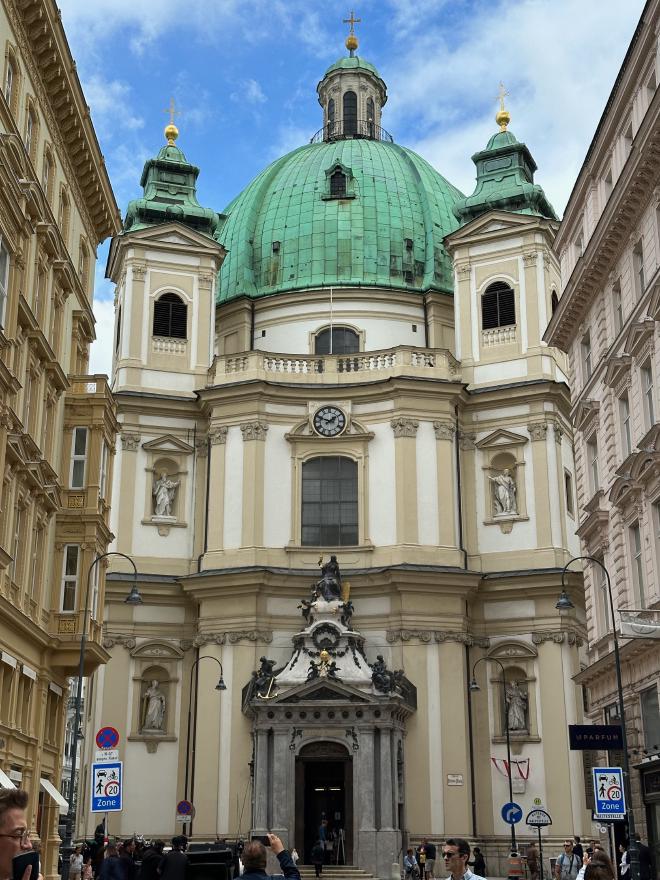
This is Peterskirche, a baroque Catholic church built between 1701 and 1733 on the site of a previous medieval church.
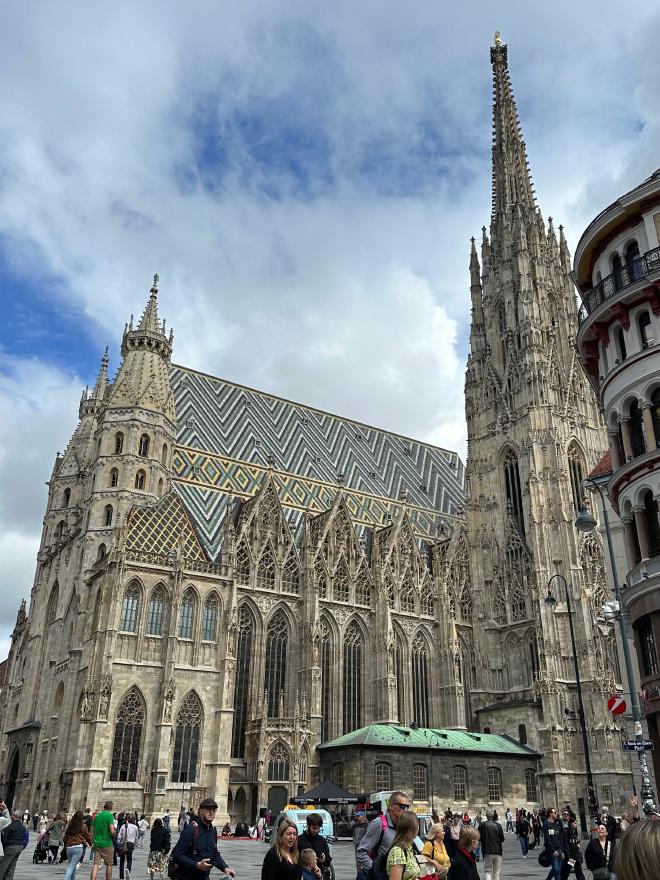
And this is St. Stephen’s Cathedral, built between 1137 and 1578. There’s a story that Ludwig von Beethoven realized that he was totally deaf when he saw birds fleeing the St. Stephen’s tower but couldn’t hear the bells that had scared them off. Among other things, the cathedral is noted for its beautiful tile roof.
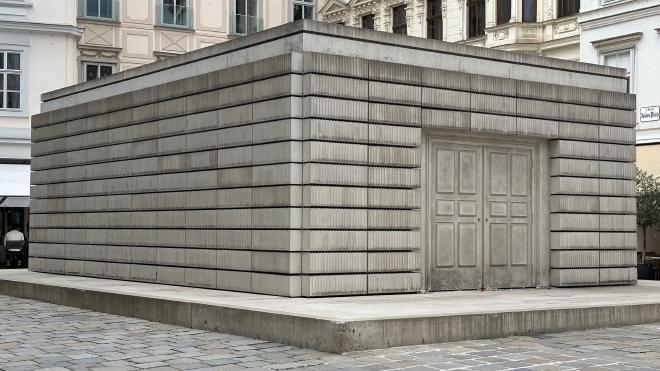
Nearby in the centre of town is the Memorial to the Austrian Jewish Victims of the Shoah, a deliberately stark, brutalist monument.
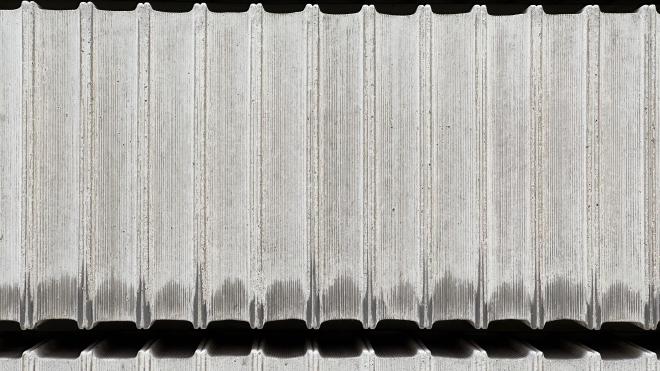
The walls of the monument are concrete “books”, shelved backwards, representing the stories that were lost in the Holocaust.
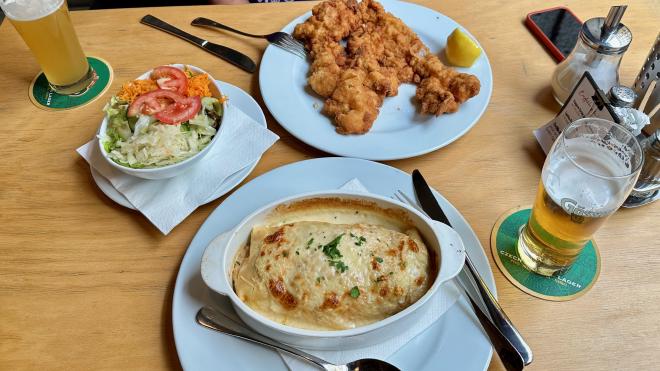
By the time we’d made it to the north end of the centre we were starving, so we stopped for a late lunch at Cafe Aera. Seeing as we were in Vienna, we had to try the classic Wiener schnitzel, along with a savoury crepe.
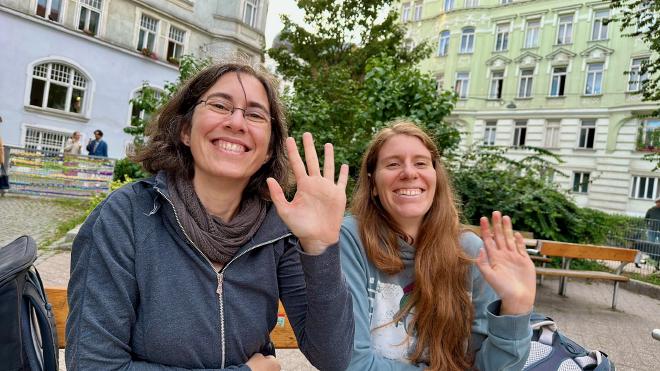
After our late lunch we walked out of the centre and met up with Helene and Lisa at a gelato shop that Lisa likes. This photo was actually taken to send as a message to another friend, but it came out too cute not to use. From there, we headed back with Helene to her place for some down time and a light dinner. (If you’re getting the feeling we’re constantly eating, you might not be far wrong.)
The next morning we decided to head to the Belvedere Palace, specifically the Upper Belvedere which is possibly Vienna’s most important art museum.
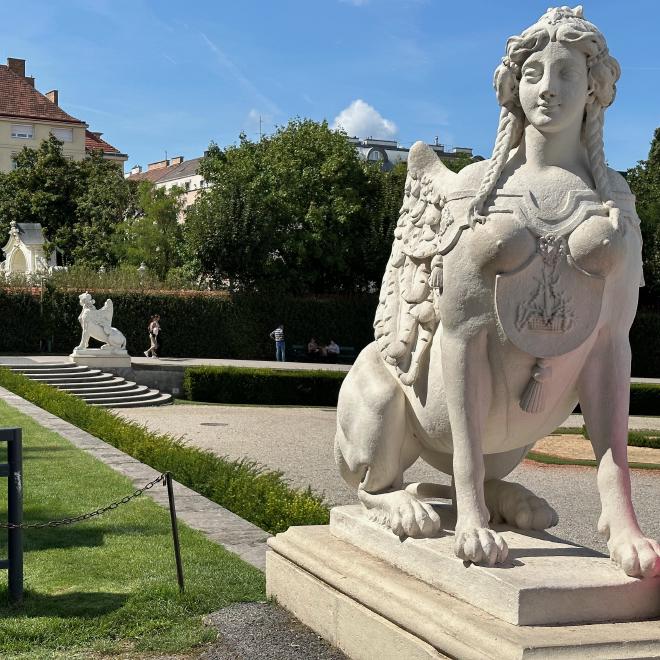
We waited for our entrance slot beside this charming Sphinx. Karen noticed that her braids are done in reverse.
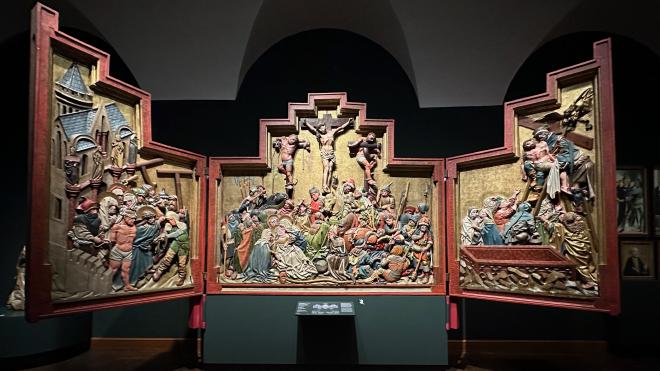
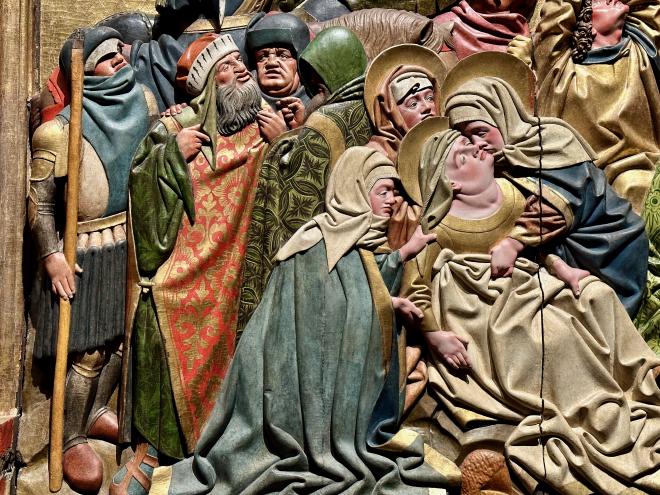
The oldest part of the Belvedere’s collection is primarily religious art, including this folding, three-panelled altar piece (the “Znaim Altarpiece”) carved in about 1440.
The detail and the facial expressions on the carving are quite striking.
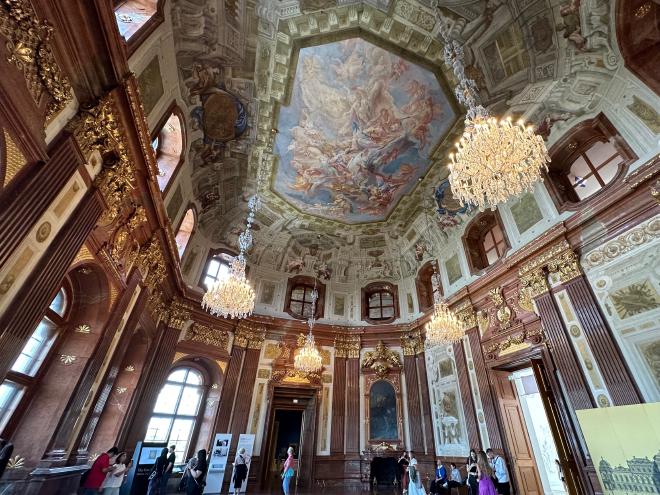
This is the Marble Hall, one of the more conspicuously Baroque rooms in the palace.
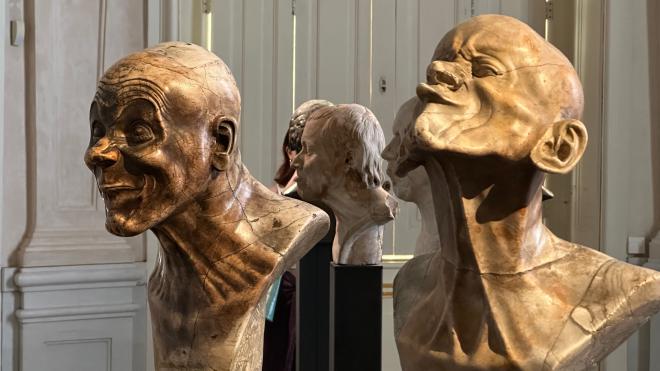
These are just a few of sixty “character heads” carved by Franz Xaver Messerschmidt between 1771 and 1783. From the museum’s description: “The artist’s motivation behind creating depictions so utterly unusual for this period has never been entirely clarified. But one thing is certain: Messerschmidt’s work is unique in the Late Baroque period.”
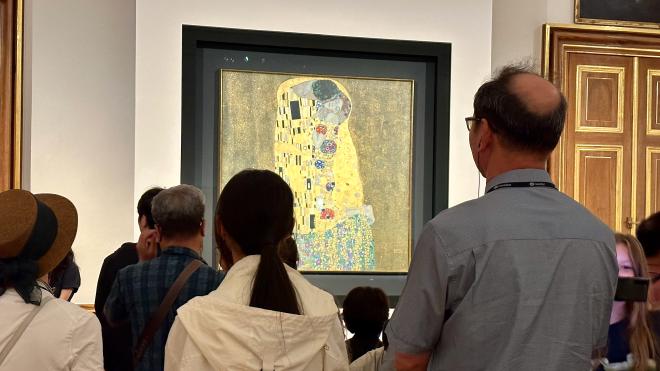
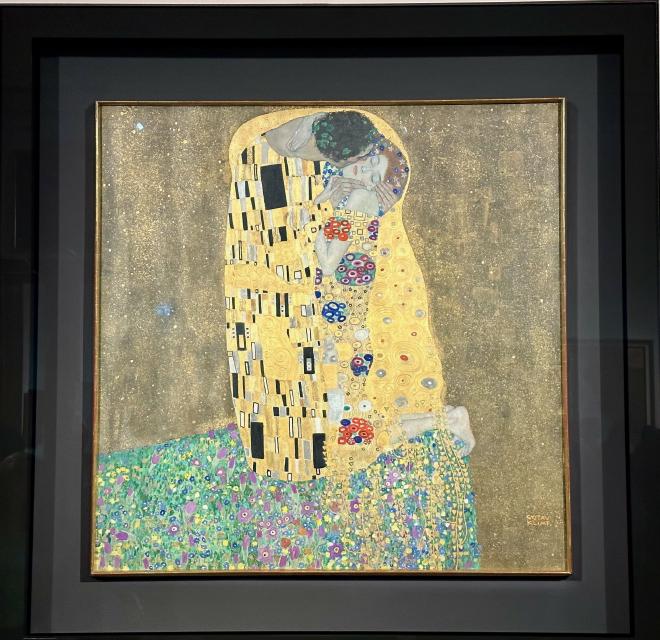
The crown jewel of the Belvedere’s collection is Gustav Klimt’s painting The Kiss. There is always a crowd surrounding it.
And here’s the best shot I was able to take of it, around the crowd. There are much better photographs available elsewhere.
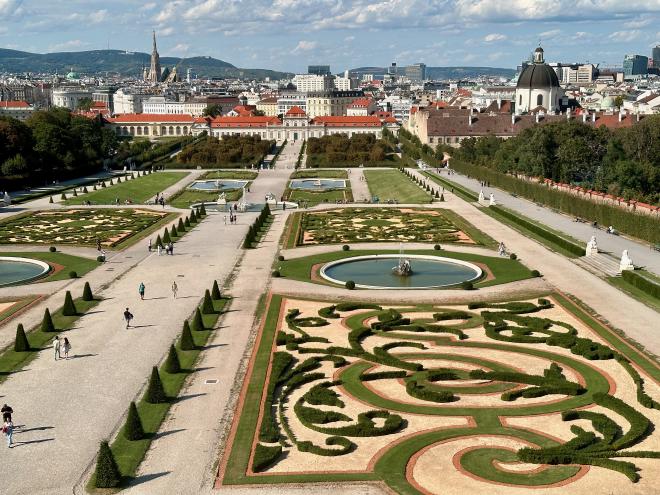
These are the Belvedere gardens with the Lower Belvedere at their foot.
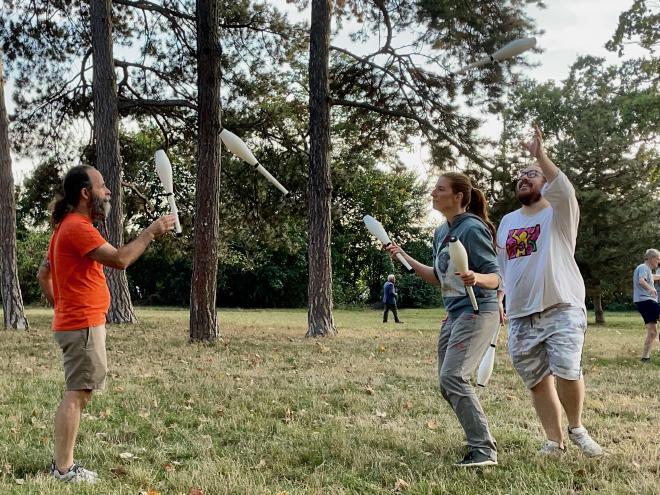
From the Belvedere we walked to a park where we met up with Helene and Matty for some juggling. Here are Helene, Matty and Greg working on 756-about, which Matty had somehow never done before.
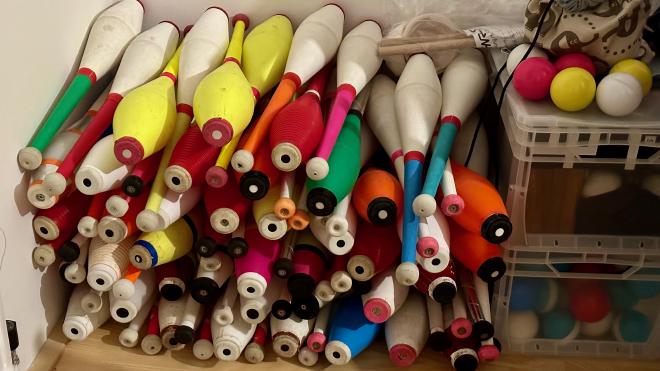
And while on the subject of Matty and juggling: this is most (but not all) of Matty’s juggling club collection, which he stores in Helene’s apartment since she has more space than he does. And Greg used to think he had too many clubs! (Karen still does.)
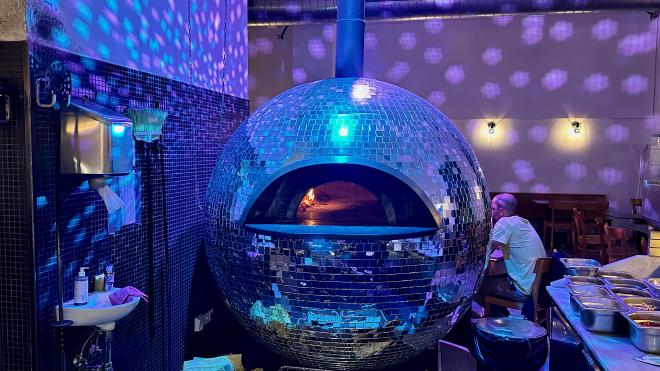
From juggling the four of us went to the Pizzeria Disco Volante for dinner, which Lisa had recommended. Yes, we all know that “disco volante” means “flying saucer”, but never let the truth get in the way of decorating your spherical, wood-fired pizza oven like a massive disco ball. And installing coloured spotlights.
Lisa works as an acquisition librarian for the Vienna Public Library, and has arranged to have a four day work week rather than five. Since Friday was her day off, she offered to spend it with us. Of course, we gratefully accepted!
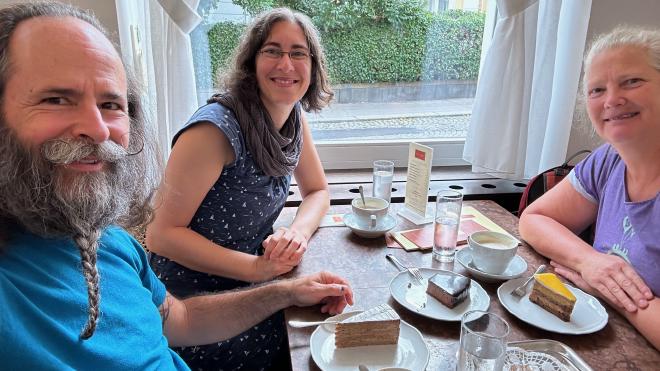
We met at a mutually-convenient metro stop and proceeded to the Oberlaa Kurkonditorei bakery and restaurant near Schönbrunn Palace for breakfast. They do offer healthy options, but we collectively decided it was a cake and coffee breakfast day. No regrets!
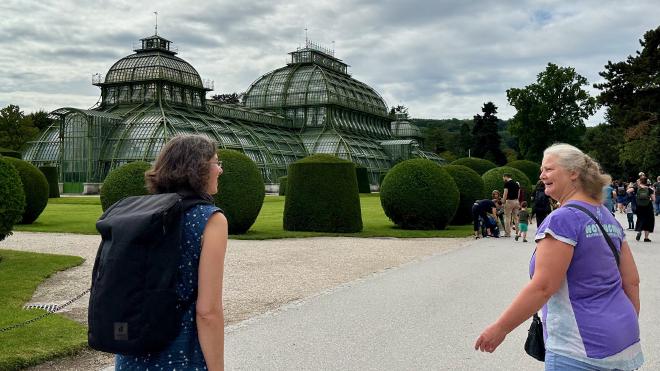
From there it was a short walk to the Schönbrunn Palace. This includes a museum dedicated to the Empress Sisi, the Baroque Palace itself, and a large art museum. We skipped all of those and visited the gardens instead. Our first stop was the Palmenhaus, a large greenhouse built in 1881–82, partially destroyed by bombing in 1945, and rebuilt 1948–53.
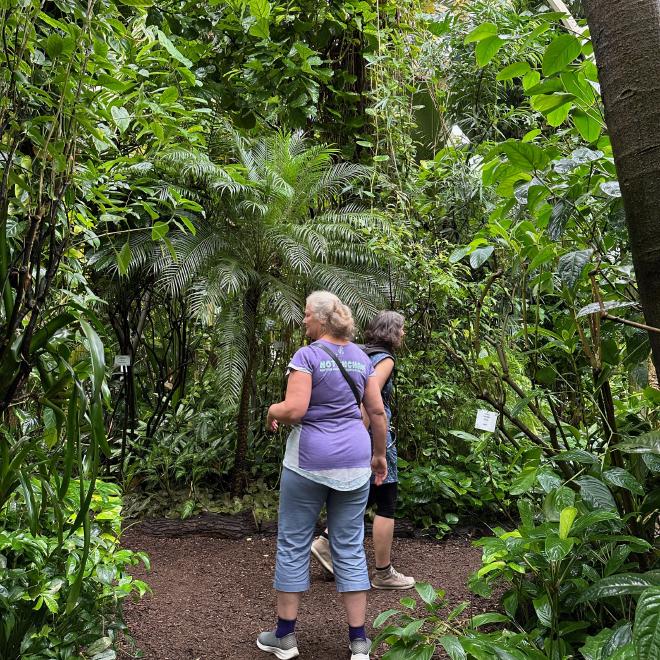
Our intrepid explorers prepare to enter the dense jungles of the Palmenhaus.
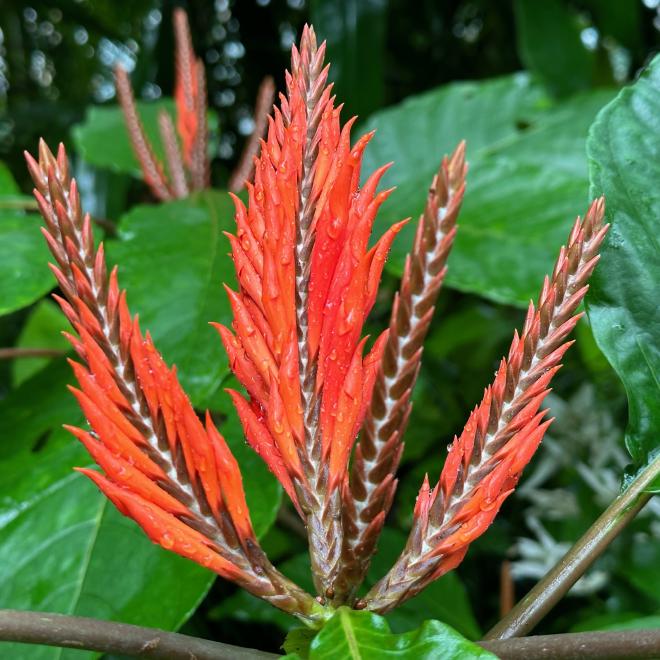
Of course, we took way too many pictures of plants in the greenhouse, but here’s a particularly nice one.
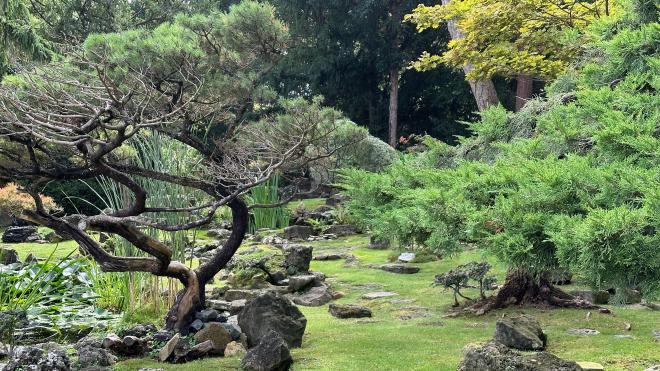
The grounds also feature a very nice Japanese garden. This was built in 1913, allowed to become overgrown with ivy, and only recognized for what it was by a Japanese visitor in 1996. Since then it has been rehabilitated based on historical sources.
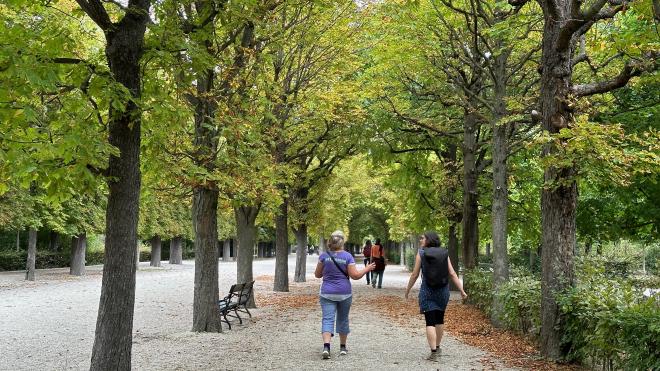
The grounds are quite extensive and feature many shaded walking paths.
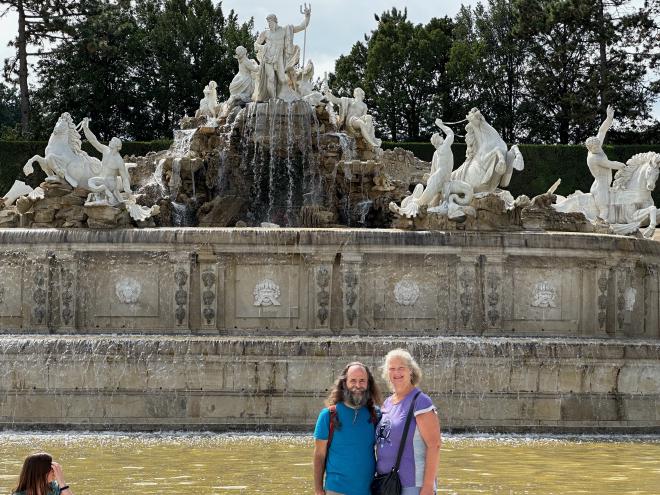
The Neptune Fountain at the foot of the Gloriette hill is enormous and quite impressive.
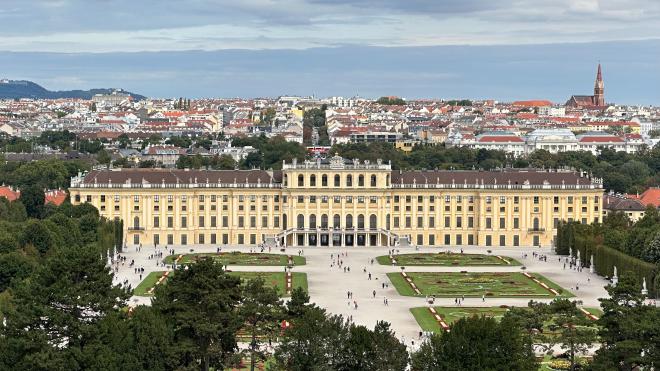
This is Schönbrunn Palace viewed from the top of the Gloriette hill.
After leaving the Palace grounds we walked through a nearby neighbourhood where Lisa used to live, and stopped for a traditional Austrian lunch at a small restaurant.
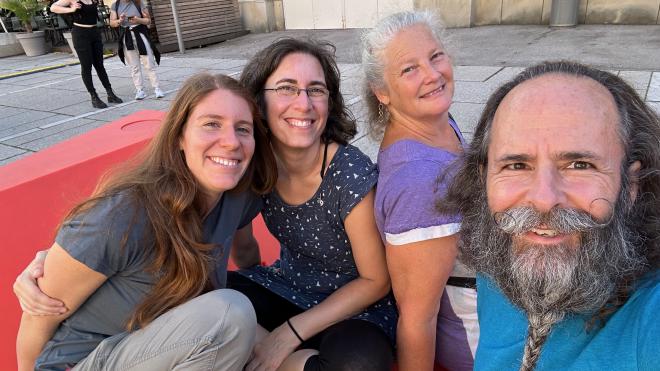
On the way back into the city we met up with Helene, who was done work for the day. We stopped briefly in the MuseumsQuartier courtyard and hung out with the “cool kids” on the benches. There are nine museums and a performance hall in the MQ, with two more large museums just outside. We visited none of them. Someday we’ll have to spend at least a month in Vienna and see them all properly.
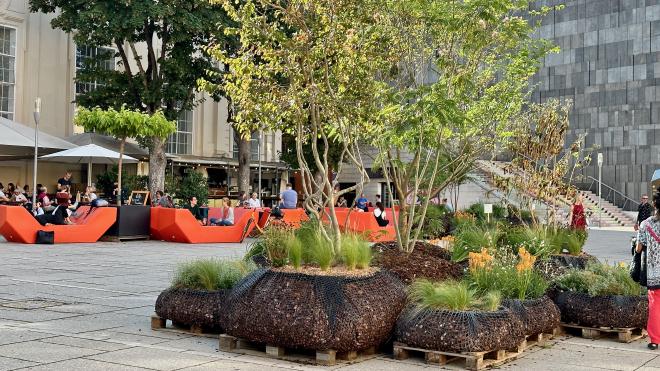
The MuseumsQuartier courtyard is entirely floored in stone, which is unpleasantly hot in the summer. There’s a long-term plan to create permanent garden spaces in the court for shade and cool, and to move toward renewable energy and a “climate neutral site” by 2030. In the short term, the courtyard has been provided with “temporary greening”. The intent is that these same plants will become part of the permanent garden.
From the MuseumsQuartier we walked once more through the centre of town, stopping at Aida near St. Stephen’s for coffee and the obligatory Sachertorte. (Verdict: nice, but way too sweet for Greg’s taste and a little rich for Karen’s.) Then it was back towards Helene’s.
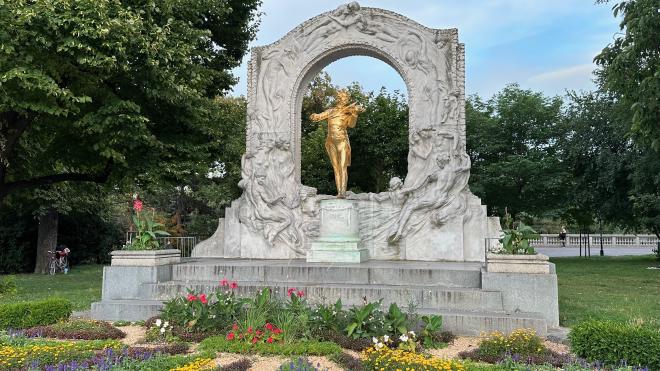
On the way we passed yet another monument to a famous Viennese artist: this time Johann Straus.
And the next day, it was farewell to Helene and Vienna, and on the train for Budapest.