Our next stop after Visby was Stockholm, where we stayed with our friend Staffan in Södermalm, formerly a working class area, now widely regarded as the “hipster” part of the city. Gunnar dropped us off right at Staffan’s building and we said a fond farewell to the Kjelldahl’s, most of whom live in Norttällje, about 70 km to the north-east.
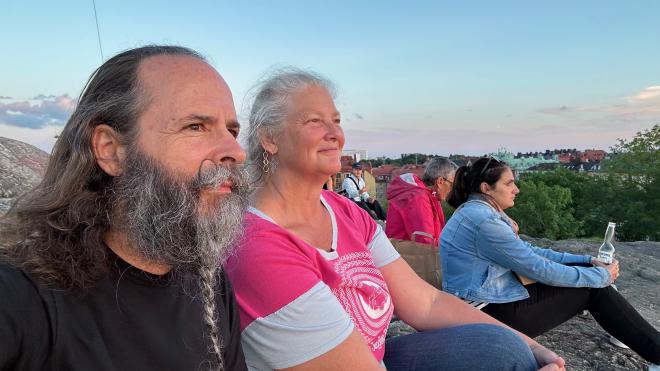
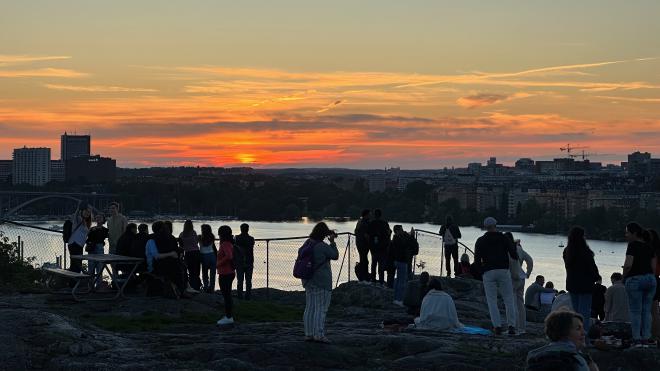
Staffan suggested we start our visit by walking to the top of Skinnarviksberget, a hill in Skinnarviksparken on the north coast of Södermalm island, and watching the sunset. For those who aren’t aware (we weren’t) Stockholm is a city built on islands – fourteen of them, where Lake Mälaren meets the Balitc Sea.
As promised, the sunset was worth the climb. Most of the other people there appeared to be locals, who were eating, chatting, and drinking beer while they watched the sun go down. There were also a few other more-or-less-obvious tourists.
After sunset we met Staffan at a pub-restaurant he recommended called Blå Dorren (the Blue Door) for some authentic Swedish food and good beer. Staffan is a bit of a beer connoisseur and a dedicated brewer, so we were happy to take his recommendation.
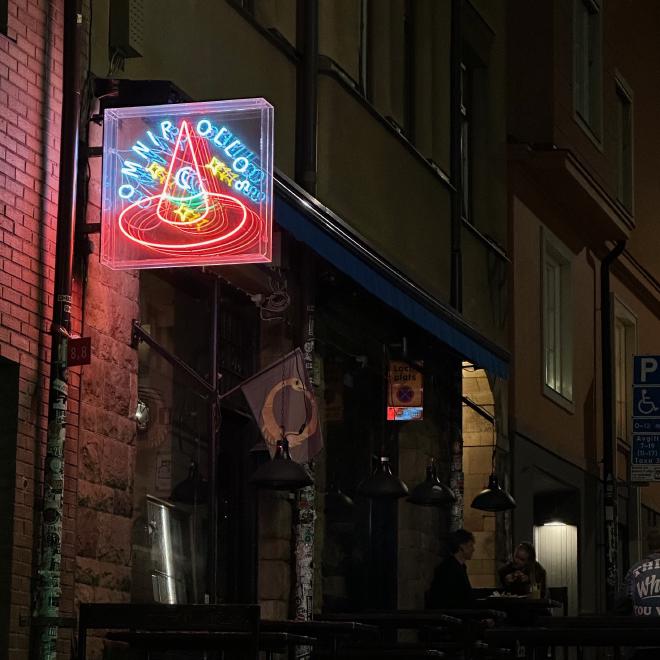
On the way back to Staffan’s place we passed Omnipollo Hatt, which is one of two pubs owned by the Omnipollo brewery. Omnipollo is the largest Swedish craft brewer, and you can occasionally find their beer in Canada. Staffan isn’t a huge fan, as he thinks many of their brews are “stunt beers” with overly strong flavours. Greg has had a couple and tends to agree. We didn’t stop in, but the sign looked nice.
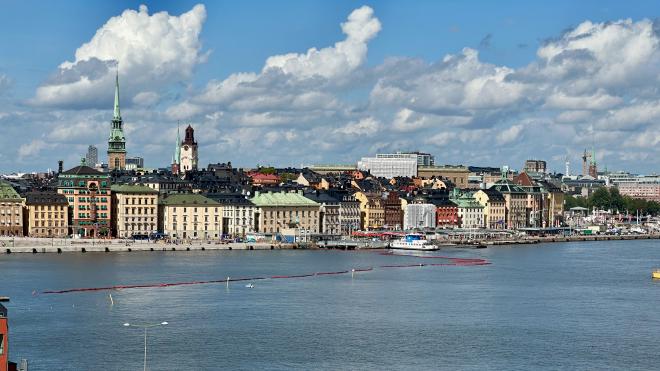
The next morning we decided to take a walking tour, to learn a bit about the city and its history. The tour started in Gamla Stan, which is original old city, an island just north of Södermalm. This is a view of Gamla Stan from the north east coast of Södermalm.
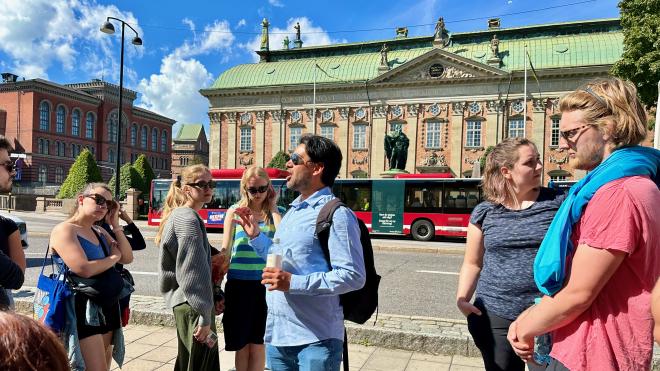
Our tour guide was quite animated and did a good job of describing the history and geography of Stockholm through the centuries. We walked across most of the island of Gamla Stan and the island of Riddarholmen, which form the core of the original city.
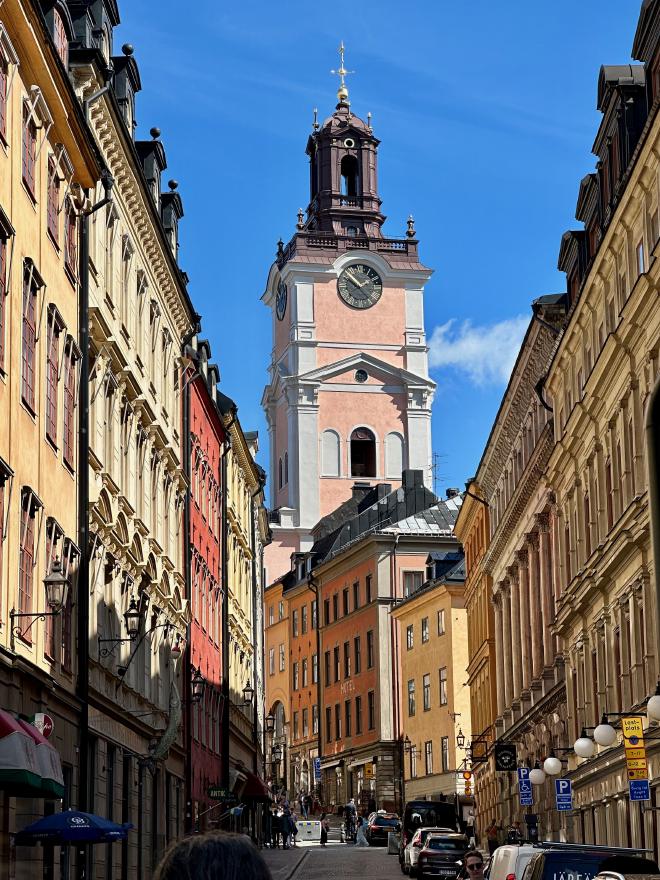
This is the tower of Storkyrkan, also known as Stockholm Cathedral or the Church of Saint Nicolas. It is the oldest church in Stockholm, built in the 13th century and consecrated in 1306. In front of it is a typical Gamla Stan street scape. Much of Gamla Stan is pedestrian-only, but there are also many streets where cars are permitted.
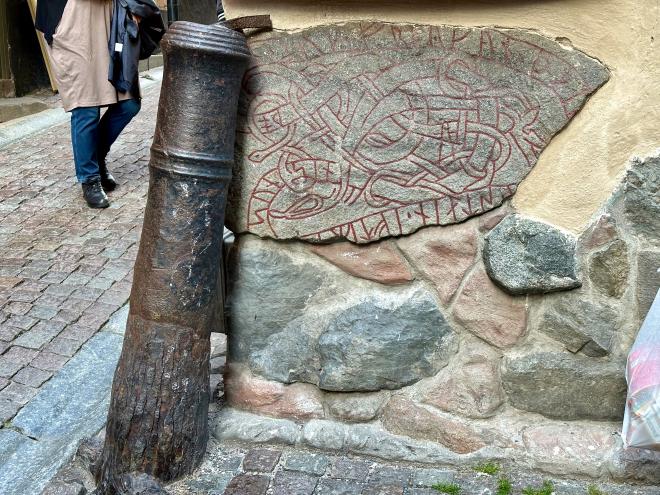
This rune stone has been embedded in the wall of this building for centuries. The cannon was placed in front of it to give protection from traffic.
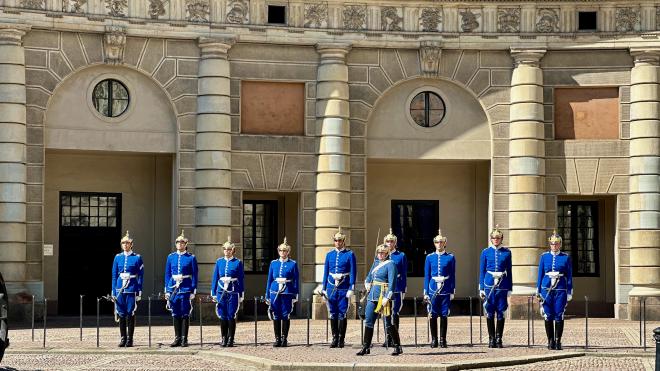
As our tour went past the palace complex, there was a small ceremony taking place. It appeared to be a minor changing of the guard.
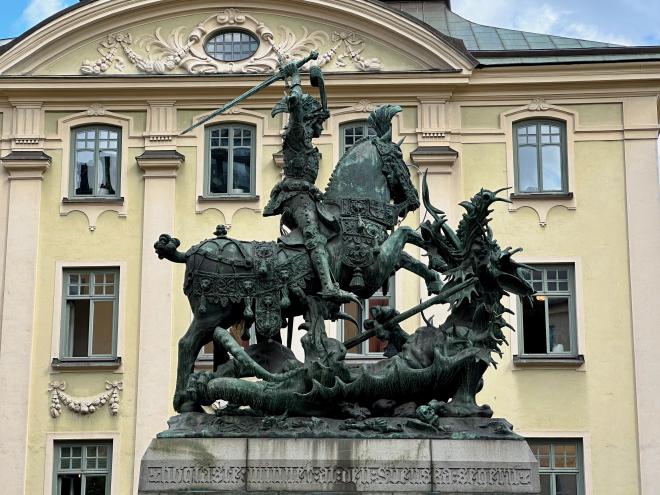
This impressive statue of Saint George slaying the dragon is near the palace complex in Gamla Stan. You can compare it with the one we saw in Berlin, twelfth picture down.
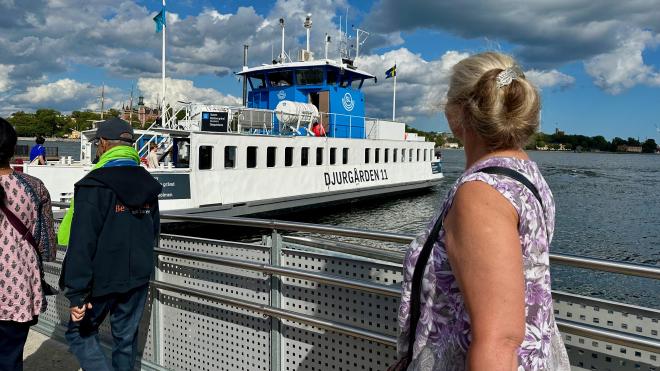
Following the tour, we decided to visit the Vasamuseet (the Vasa Museum), which had been recommended by Jared, Staffan, Maria, and Jay. The museum is on Djurgården island, which would have been rather a long walk, so we hopped one of the ferries that forms part of the Stockholm public transport system.
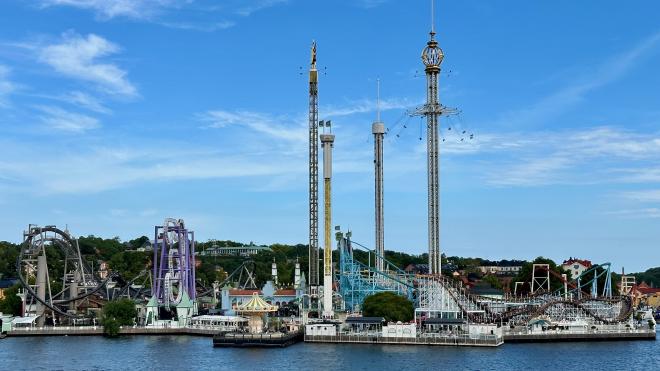
Beside the ferry dock on Djurgården is the Gröna Lund amusement park, which we skipped. We also walked right past the Abba Museum without breaking stride. (Don’t get us wrong, we’re both “of a certain age” and enjoy Abba’s music in the right context. But a museum? No, lets leave that for the trufans.)
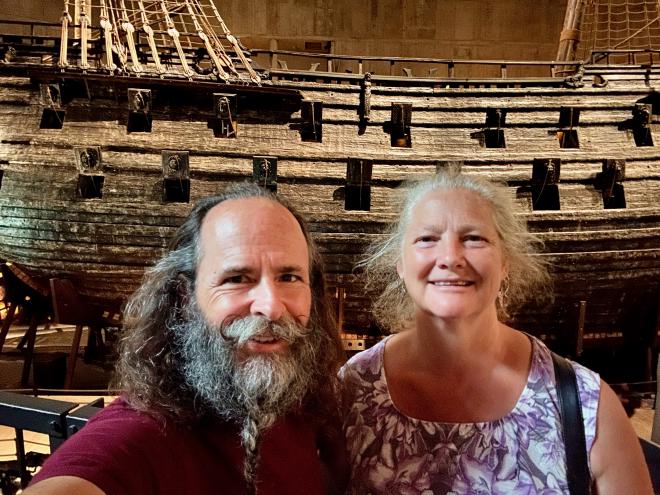
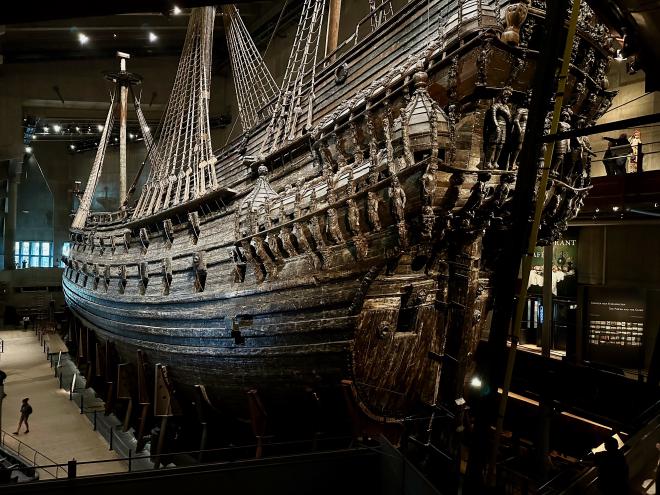
The Vasa Museum is unique in that it’s dedicated to a single ship, the Vasa. Constructed between 1626 and 1628, the Vasa floundered and sank about 1300 metres into her maiden voyage with significant loss of life. The brackish water of the Stockholm harbour preserved her beautifully. Had the water been any fresher, the wood would simply have rotted. Had it been any saltier, shipworms would have eaten her. Being in a very special Goldilocks zone, she lay undisturbed, intact, and largely forgotten until her location was rediscovered in the 1950s and she was successfully raised in 1961.
The Vasa was commissioned by King Gustavus Adolphus as part of a naval expansion in the late 1620s. She was designed to be the largest and mightiest ship ever built. Unfortunately the King’s desires exceeded his naval architect’s competence and the Vasa was dangerously narrow and top-heavy. Once launched, the first wind stiffer than a breeze that she encountered was enough to capsize and sink her. If you look at the bottom left of the picture you’ll see a person walking the museum floor, which gives a sense of her enormous scale.
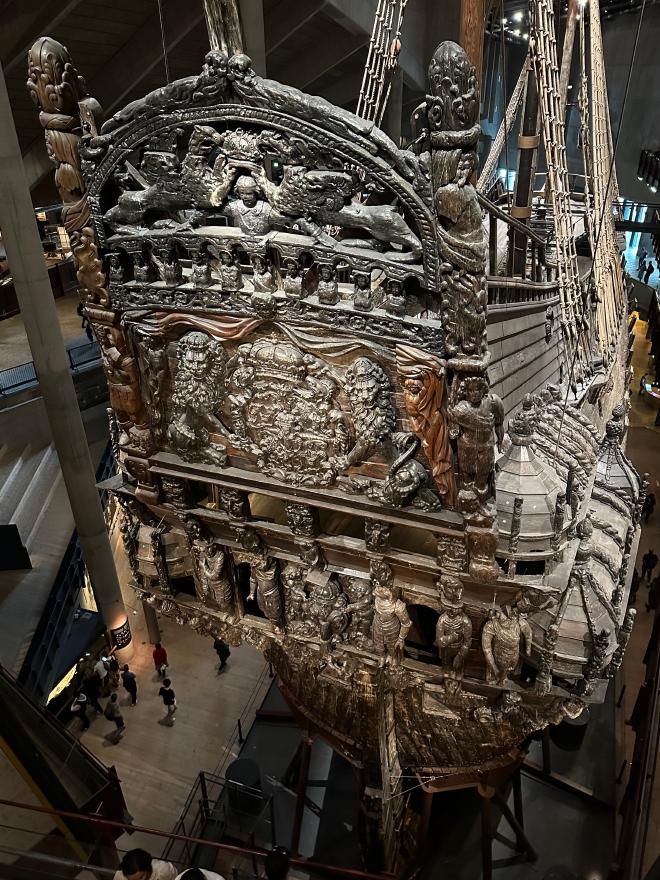
Not only was the Vasa to be large and heavily armed, she was also designed as an explicit statement of Sweden’s might and her King’s ambitions, nicely illustrated by the elaborate carvings on her stern. Almost everything you see here is the original Vasa; only the few pieces of lighter-coloured wood are reconstructions. The original wood has been preserved by soaking for several years in polyethylene glycol, to drive out the water, and all the bolts holding her together have been replaced with stainless steel. The museum has ongoing monitoring and conservation activities designed to keep her from deteriorating further. The next planned major change will be placing her in a redesigned cradle to better support the structure – currently she’s slumping at a rate of about 1 millimetre per year.
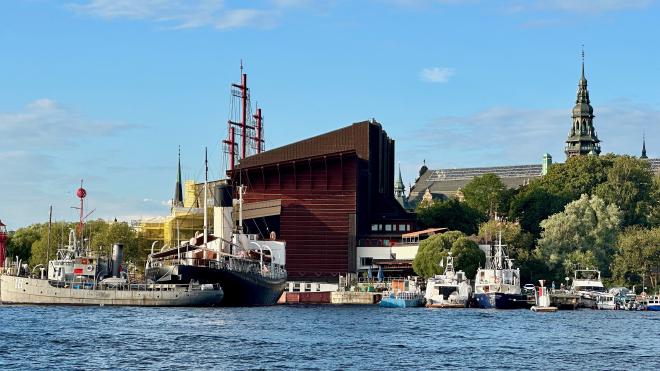
The large brown building is the Vasamuseet seen from the ferry. In addition to the ship itself, the Vasamuseet has many interpretive exhibitions about life on board, displays of artifacts recovered from the wreck, descriptions of what we know or can surmise about some of the victims of the sinking whose skeletons and effects were recovered, and the modern recovery and conservation efforts.
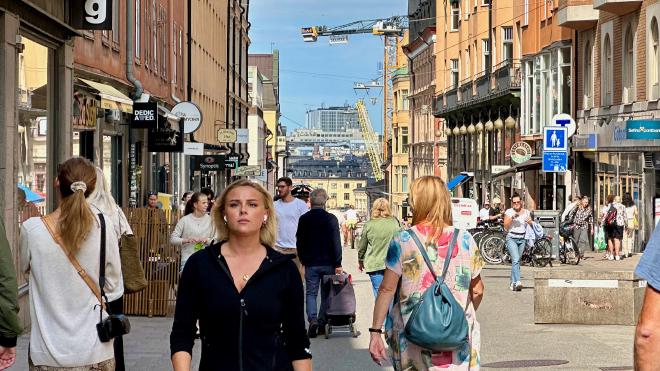
The next morning we decided to walk from Staffan’s to the Swedish History Museum, located about 3.7 km away in Östermalm. (Spoiler: we didn’t make it!) This photo is Gögatan, the main pedestrian street leading north from Staffan’s towards Gamla Stan, near the start of our walk. And by “pedestrian street” I mean “watch your ass for crazy cyclists.”
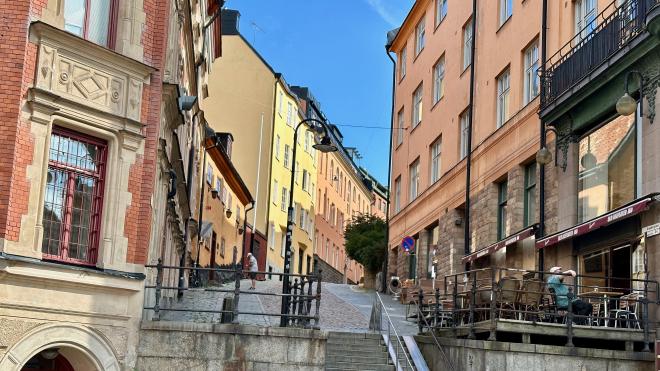
This is Urvädersgränd, a side street in Södermalm that we both thought was particularly cute.
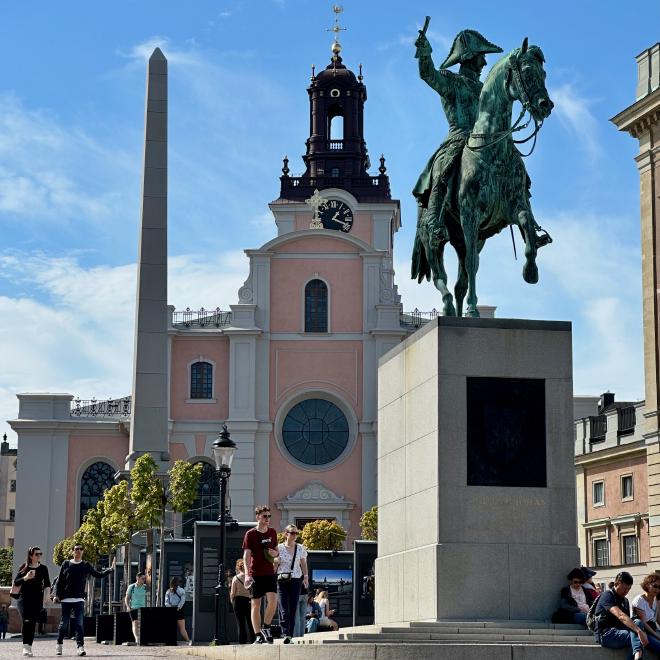
We walked through the centre of Gamla Stan on our way. This is Slottsbacken, with Karl XIV Johan’s statue, Gustav III’s obelisk, and the other side of Storkyrkan.
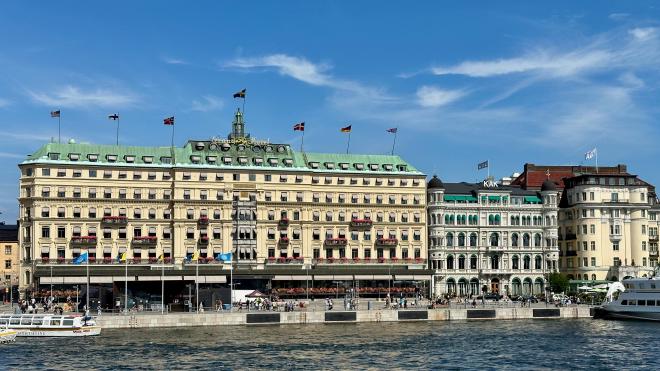
Stockholm’s Grand Hotel is just one of many impressive buildings on the edge of Norrmalm.
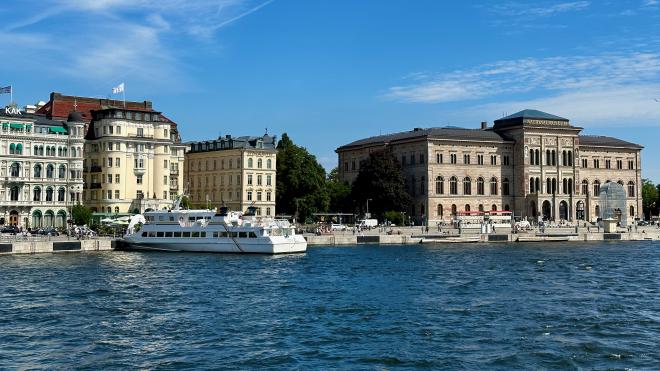
The National Museum anchors the end of the street, on a small rectangular peninsula.
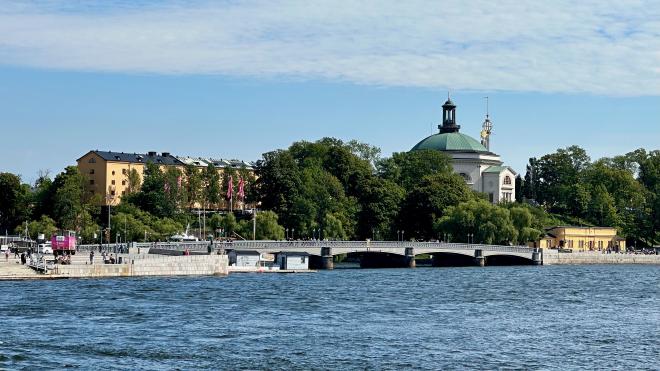
Beside the National Museum there’s a small bridge that connects to Skeppsholmen, a small island that was once an important naval centre. We decided that, since we were in the neigbourhood, we might as well take a wander around. It turns out that in some ways Skeppsholmen is like a living museum. There’s a walking path all the way around the shoreline, with plaques every few metres explaining the history of the island and its buildings, and how their use has evolved over time. We’re both suckers for explanatory plaques (always read the plaque), so what could have been a quick stroll turned into something rather longer and slower.
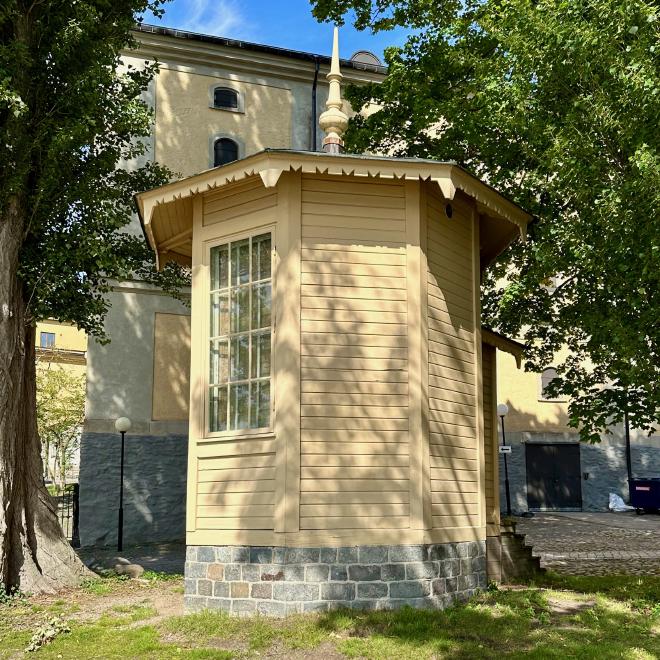
This unassuming building is the Mareograph, used to measure the level of the water. Water level measurements have been carried out in Stockholm since 1774 – longer than anywhere in the world – first at Slussen and then on Skeppsholmen. The current Mareograph was constructed in 1889 and is still in use, ’though now with modern radio-based sensors that measure the level once a minute.
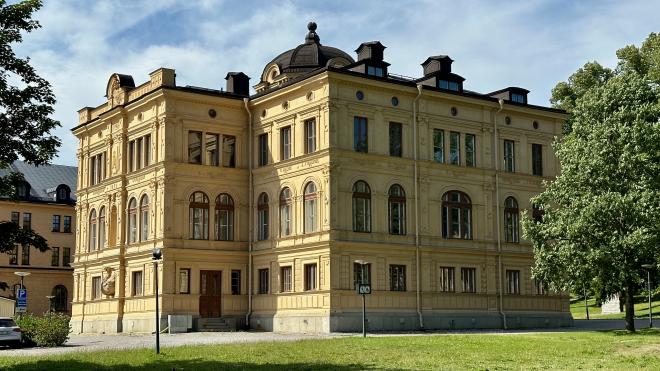
This building housed the the Royal Swedish Naval Academy from 1889 through 1943, when operations were moved to a larger facility. Greg is a sucker for other people’s military academies.
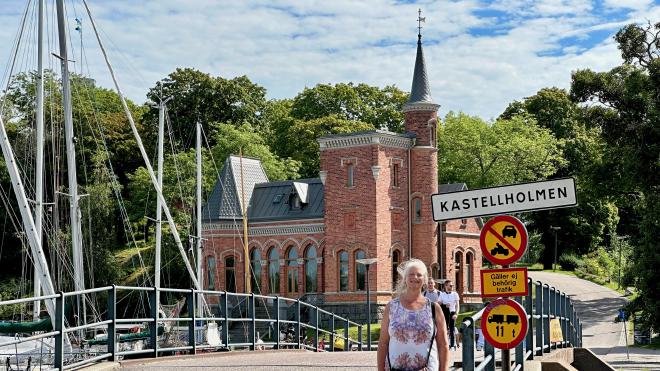
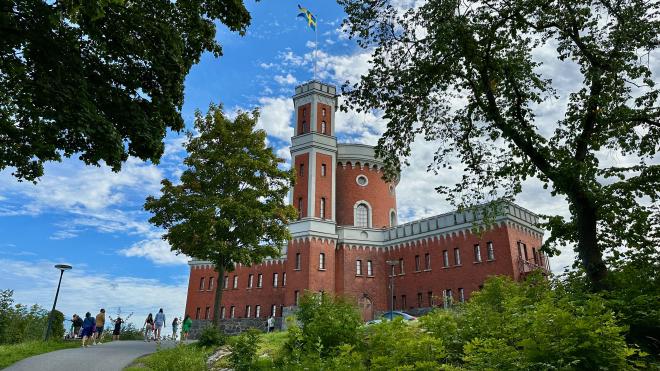
From Skeppsholmen you can walk to Kastellholmen, an even smaller island that’s home to a small brick castle. (That’s not the castle behind Karen.) So, of course, we did.
This is Kastellet Stockholm, on the top of Kastellholmen’s hill. It’s now used mainly as a conference and event centre.
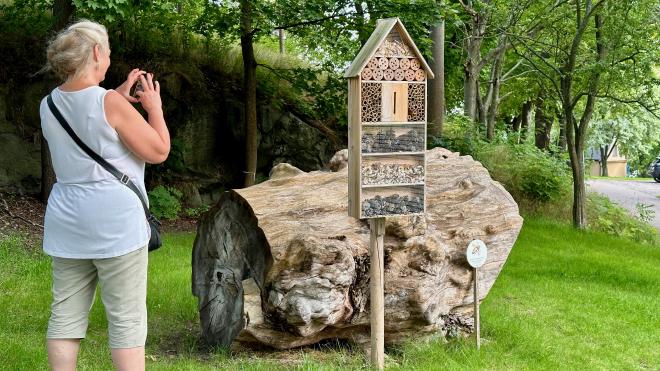
Kastellholmen also provides a castle for solitary bees, important polinators. This is another in our ongoing series of “pictures of Karen taking pictures of things”.
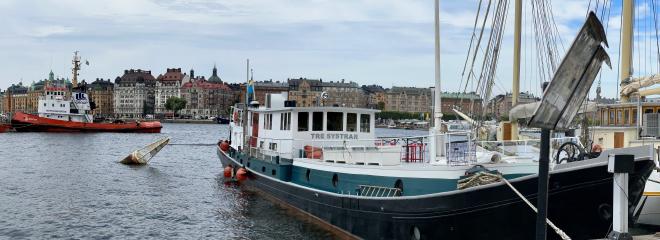
Along the north east side of Skeppsholmen is a large collection of carefully preserved old boats, all privately owned. Some are available for charter.
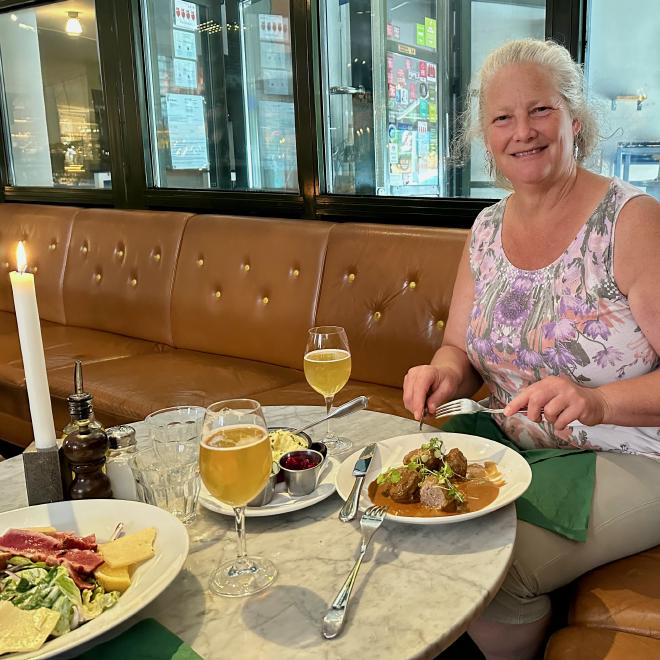
By the time we got near the museum it was after 3 pm and we were starved. We decided to grab a quick meal, which ultimately turned into a slow meal of traditional Swedish meatballs (much better than Ikea!) and a Caesar salad with seared tuna. We weren’t done until after 4 pm. The museum was closing at 5 pm, and we decided it was better to give it a miss than try to rush through it.
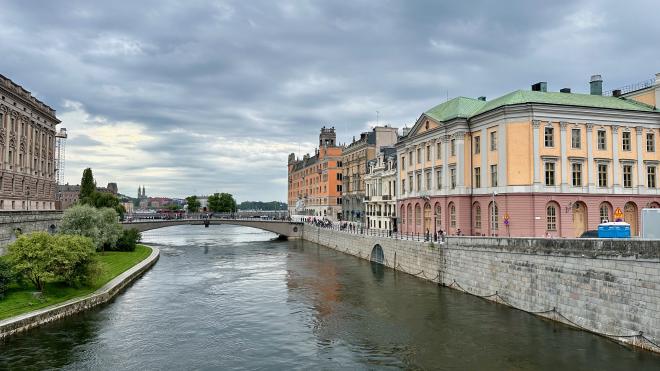
We walked back through Ostermalm and Norrmalm, enjoying the city. This was taken from the bridge that joins Norrmalm to Helgeandsholmen, which is a small island just to the north of Gamla Stan that houses the Riksdaghuset or Swedish Parliament Buildings, the grey building on the left.
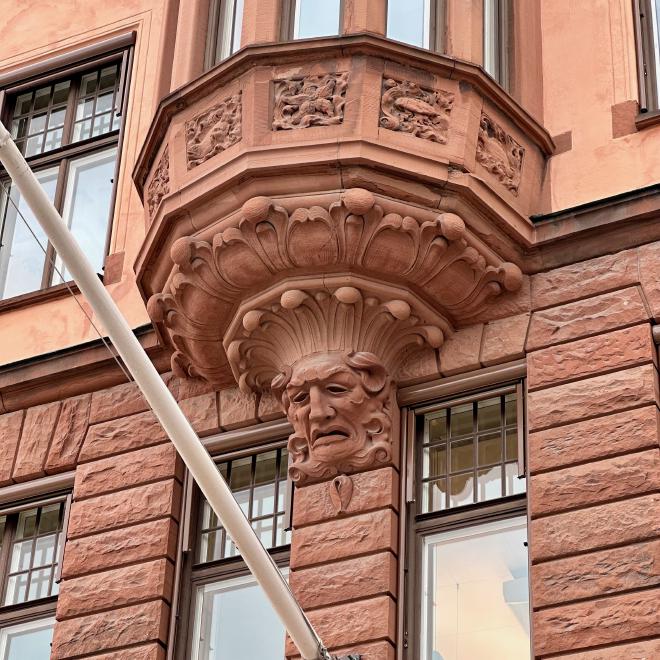
On our way back through Gamla Stan we hunted down a building decoration we’d seen on Atlas Obscura called The Cuckhold of Skeppsbron. You can read about it on their site. Unfortunately the weather was dry when we found it, so we didn’t get the full effect.
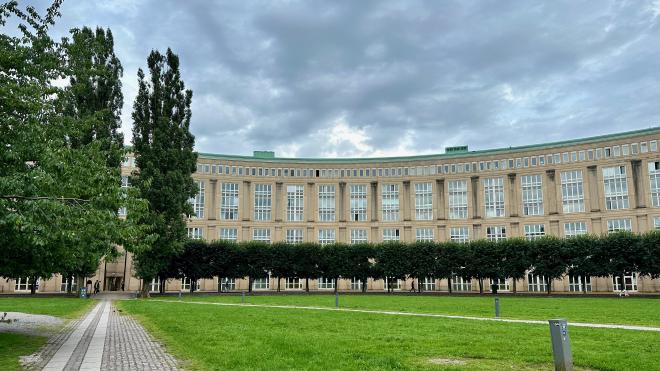
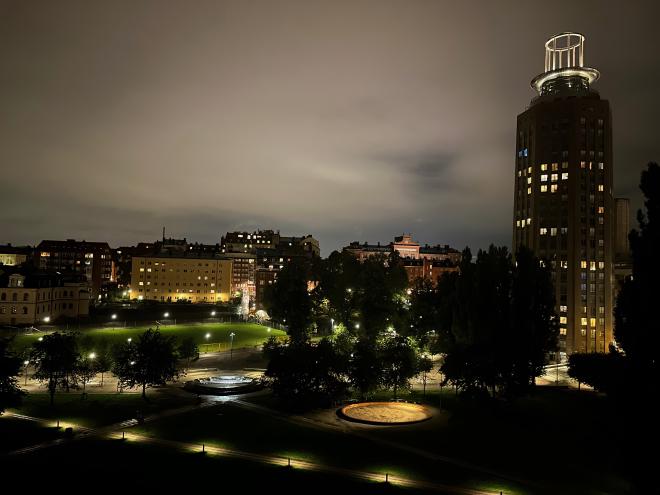
This is Staffan’s apartment building and the park (Fatbursparken) it half encloses. The building is a semi-circle, with apartments spanning the thickness of the building, front to back. Staffan is on the top floor.
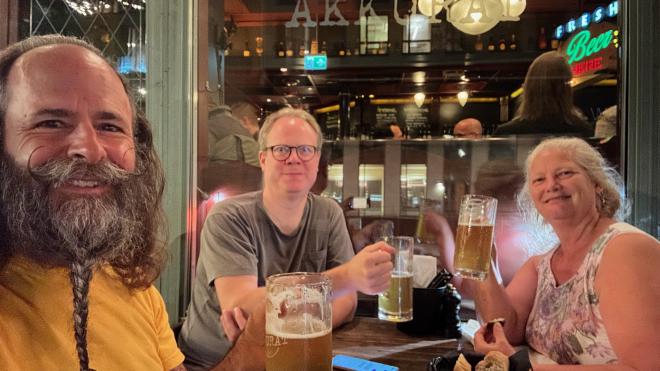
Since we’d eaten lunch (or whatever that meal was) quite late, we were in no hurry for more food. Also, it had started raining rather heavily. So, when Staffan got home from work, we hung out in his living room and chatted. He decided we needed to try one of the beers he’d brewed, a brown ale, so he hooked up the keg and we had some. It was great! Eventually we were getting hungry, so we headed out to find a restaurant, the primary criteria being open late and not too far to walk in the rain. We ended up at Akkurat, which has a wide selection of beer (because we needed more beer) and quite good food. After we got back to Staffan’s he decided we needed to try an Imperial porter he’d brewed (because we needed more beer), which was also lovely – we split a small bottle three ways. And then, just when we were ready to go to bed, Staffan asked us to try a version of the porter that had been conditioned with “something” (because we needed more beer and he wanted us to guess what the something was). It turned out to be raspberry and licorice root, which was a little odd but good.
This is the view from Staffan’s apartment, looking north over the park and Södermalm.
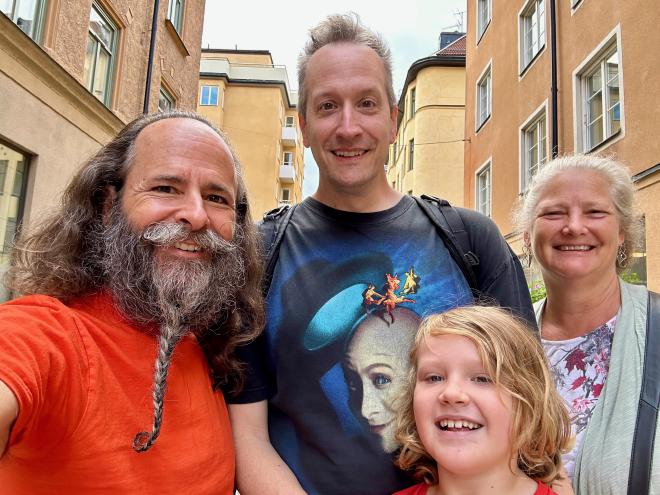
When we realized we were going to Stockholm, Greg reached out to Jay Gilligan, who’s been a friend for almost 25 years. Jay is originally from Ohio, but has been working in Europe as a juggler and juggling instructor for ages. Despite living in Stockholm with his family, Jay is rarely in the city – the life of a professional juggler involves a lot of travel. And in fact Jay was in Iceland up until the day we arrived, and leaving for again Riga on the Wednesday evening. However, he had a hole in his schedule on the Wednesday morning, so we arranged to meet for brunch at a cafe near Staffan’s place. We had a great time catching up on life and our families, and Greg and Jay geeked out talking a bit of juggling theory. A highlight for us was meeting Jay’s son Sindri for the first time. He seems like an awesome kid! Unfortunately Jay’s wife Mirja, who is also a circus artist, was away on a contract in France.
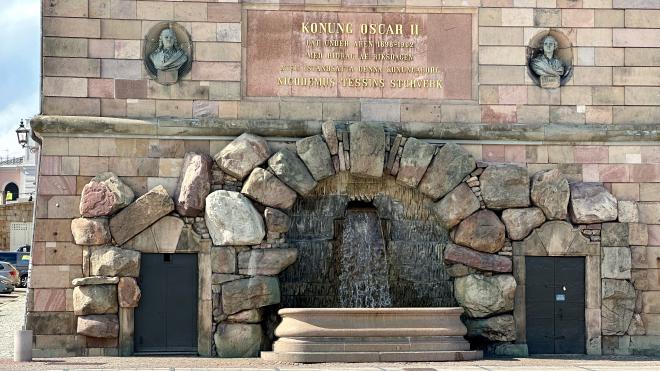
After breakfast we decided to walk to the History Museum, for real this time. This fountain is on the shore end of Kungliga slottet, the Royal Palace.
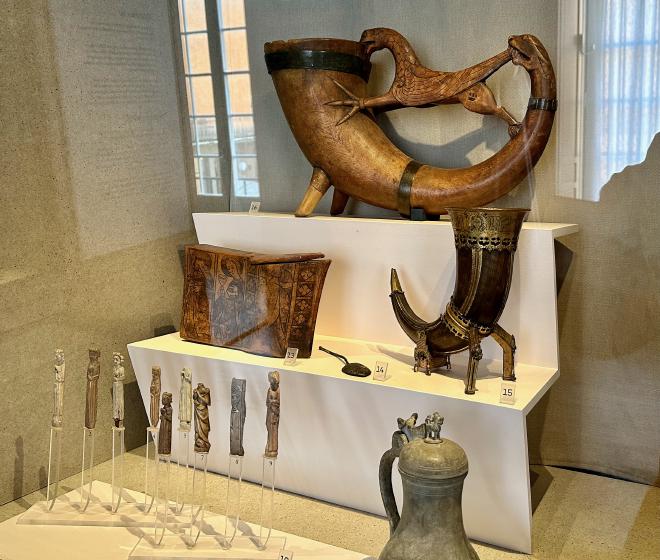
This time we actually made it to the Swedish History Museum, and spent several hours there. It has a large collection of artifacts from most of Sweden’s history and pre-history, and a terrific interpretive exhibit on the history of the country.
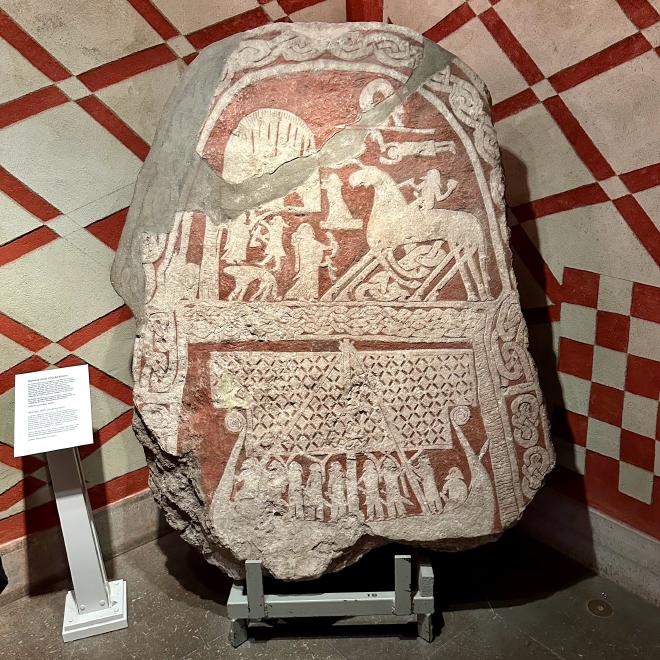
This picture stone, from 8th centruy Gotland, is one of the larger in the collection. The museum describes it “A woman with a drinking horn in one hand is standing in front of a horseman. He has ridden from the ship depicted at the bottom of the stone, which has taken him over the sea. The woman – a Valkyrie – has mead in the drinking horn and is welcoming the man to Valhalla, the abode of the god Odin and the warriors’ paradise. The man has fallen in battle and is one of those admitted to Valhalla. The Valkyrie is the domestic hostess, mediator and diplomat.”
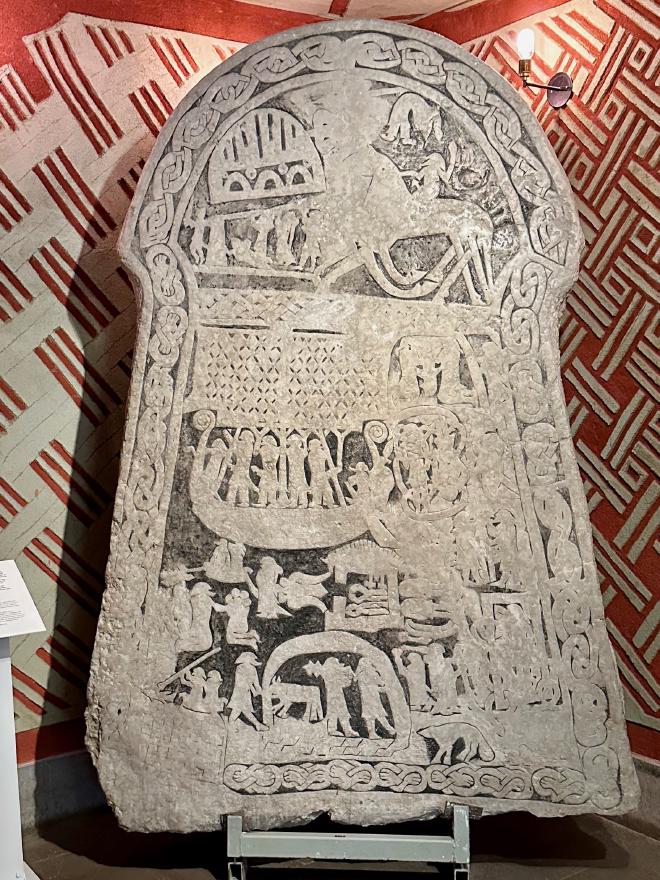
This stone is also from 8th century Gotland. “The Volund stone of limestone, Ardre VIlI, was found year 1900 and is one of eight rune- and picture stones that were found during the restauration of the floor in Ardre church, in Ardre parish on Gotland. The stone shows several motifs from Norse mythology. In the upper part of the stone we see Oden on his eightlegged horse Sleipnir. In the middle is a longship with a crew and rigged with a sail. From the story of Volund the smith (Wayland) we see him flee from King Nidad in the form of a bird and behind the smithy, lays the beheaded sons of the king. In the bottom left corner is a fishing scene.”
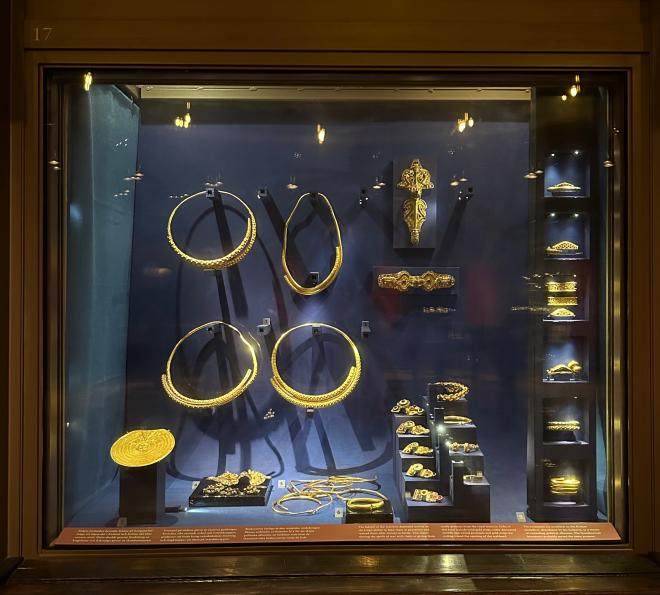
The museum’s basement houses an extremely large collection of gold artifacts, most dating from the Viking era.
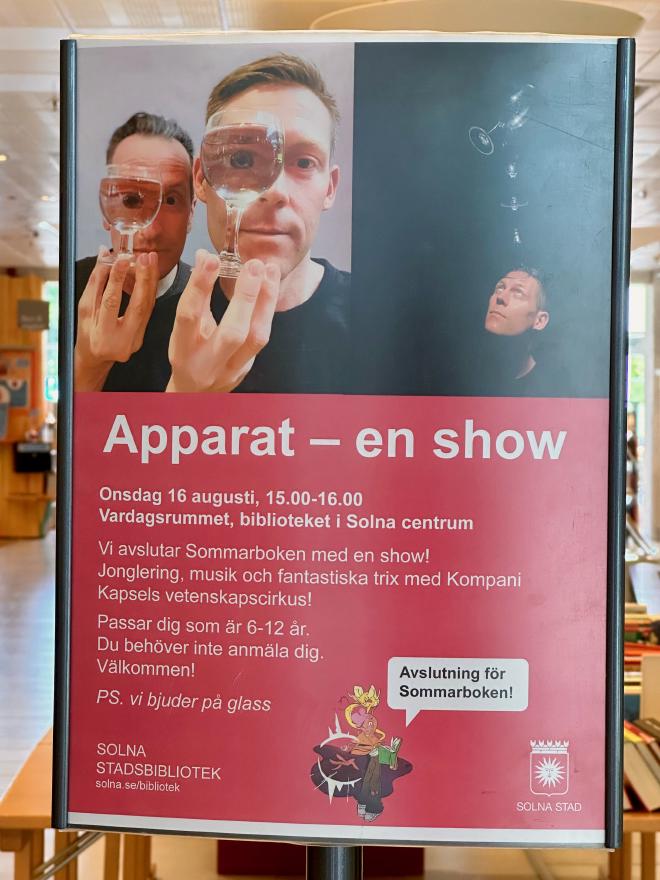
From the museum we hopped the Tunnelbana (the Stockholm Metro) and zipped to a library in a shopping mall north-west of the centre, where we’d heard these guys had a rare in-Stockholm show booked. (Actually we only went because the poster said vi bjuder pà glass, meaning that there would be ice cream). And hey, look, it’s Jay, again, along with Erik Åberg.
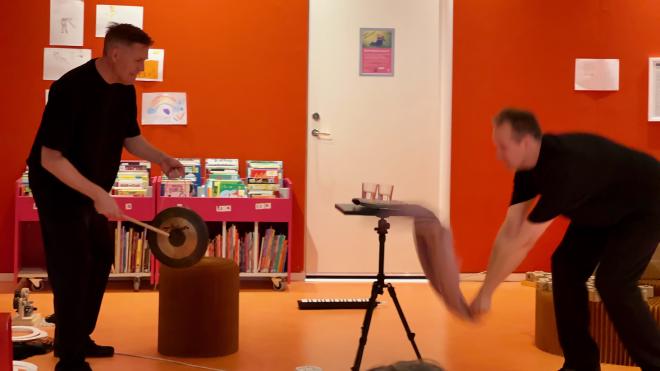
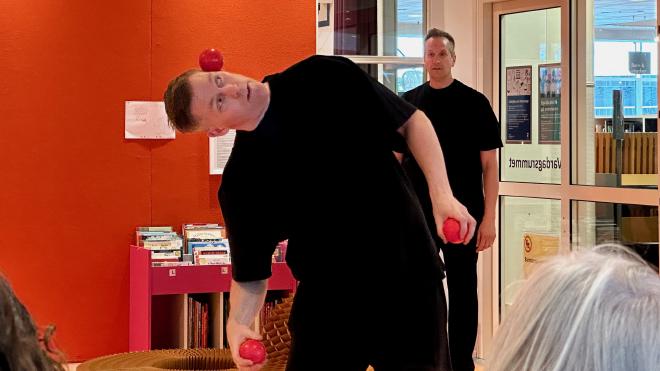
Here are a few pictures from the show, Apparat. The lighting was terrible, so it was hard to get good shots. There were about thirty people in the audience, mostly kids with their adults, plus two American couples who are also friends of Jay’s and happened to be in town (and us). This was the classic table-cloth pull.
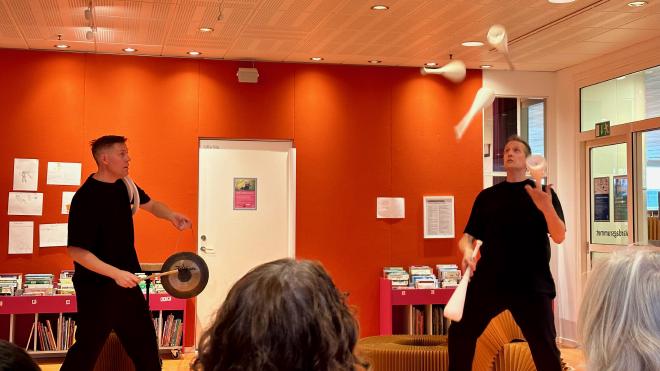
Apparat is mostly aimed at kids, and Erik and Jay sell it mainly into the library and elementary school market. Because they had a few friends in the audience, they also added a few extra things at the end of the show. Those who’ve seen Jay’s show Reflex will recognize this piece.
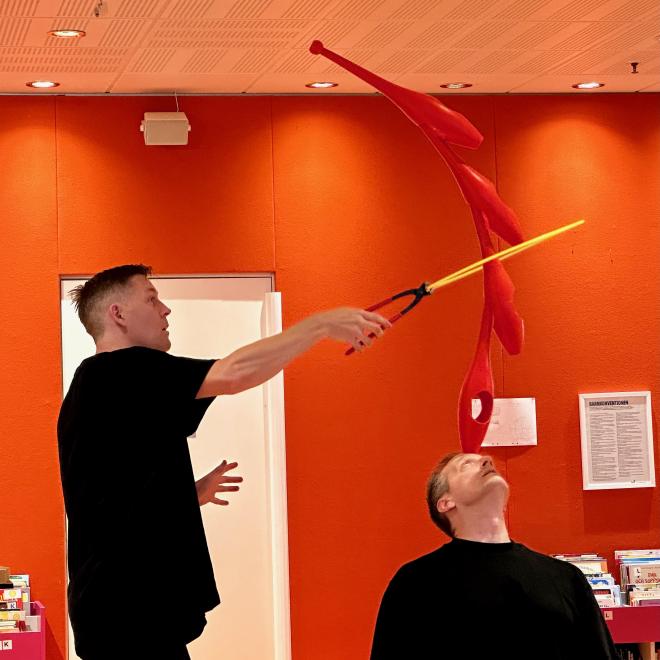
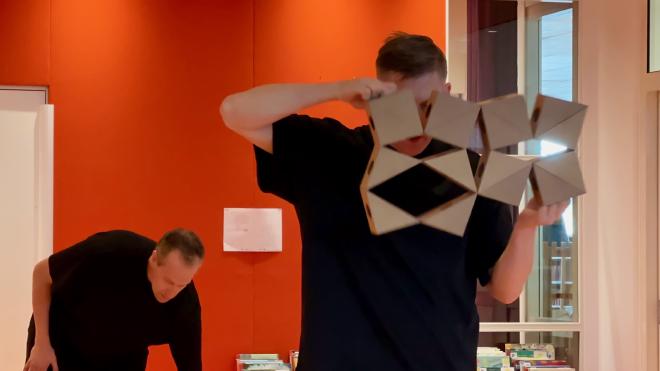
Of course Erik performed with his moving sculptures, which are always mesmerizing. Greg backed Erik’s Ghostkube Kickstarter project a few years ago and has had a lot of fun playing with the kit. And, exciting news: Erik has a new version coming out, produced by a major toy company, and debuting at the New York Toy Fair this fall.
Jay juggling five CupHead cubs (the original version) under a very low ceiling.
Erik doing a three ball piece with head rolls. We had a great time watching the show and chatting with Jay and Erik afterwards. And yes, at the end of the show there was ice cream.
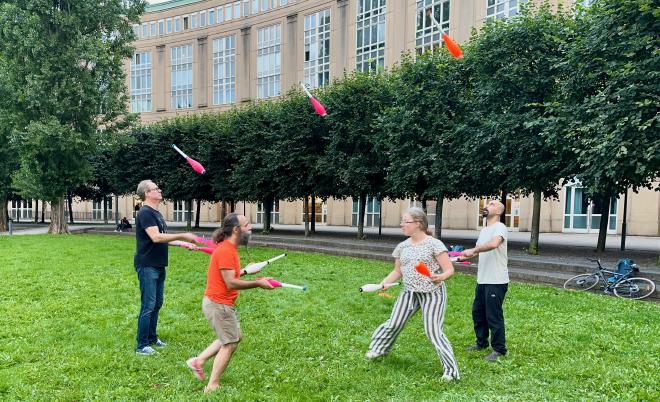
After the show we took the Tunnelbana back to Staffan’s place. The Stockholm juggling club hasn’t really been meeting over the summer, but Maria organized one that evening specifically because we were visiting. Thanks, Maria! The club meets in the park right outside Staffan’s apartment building, which is very convenient for him (and us). This is Staffan, Greg, Maria, and Serkan juggling Ambled 3. Karen did a bit of poi swinging. And another juggler, Joakim (we think), showed up towards the end of the meeting. After juggling we all went to the Loch Ness Tavern, which is effectively Staffan’s local, for some beer and food. No pictures, because everyone knows that pictures of Loch Ness never work out.
And the next morning we were on a train to Copenhagen!